Your Trusted Partner from Prototyping to Mass Production, Email Us:info@highlymachine.com
Please Choose Your Language


Views: 222 Author: Ann Publish Time: 2026-01-09 Origin: Site


Content Menu
● Origins of SMT Machines in Manual Era
● Emergence of Semi-Automated SMT Machines
● Revolution of Fully Automated SMT Machines
● Industry 4.0 and Smart SMT Machines
● Key Technological Milestones in SMT Machines
● Challenges Overcome by Modern SMT Machines
● Future Horizons for SMT Machines
● FAQ
>> 1. What defines modern SMT machines?
>> 2. How do SMT machines support high-mix production?
>> 3. What AI features enhance SMT machines?
>> 4. Why partner with Highlywin for SMT machines?
>> 5. What trends shape future SMT machines?
Surface Mount Technology (SMT) has fundamentally reshaped electronics manufacturing, enabling the production of compact, high-performance circuit boards essential for modern devices. SMT machines have progressed from rudimentary manual setups to sophisticated automated systems, dramatically increasing speed, precision, and scalability. This evolution mirrors the industry's relentless push toward miniaturization, efficiency, and smart manufacturing.
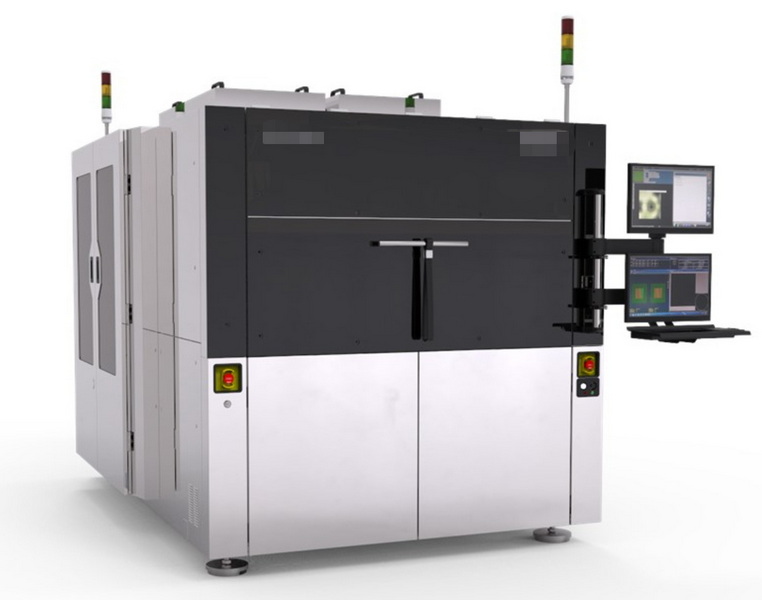
The story of SMT machines begins in the 1960s, driven by aerospace and military needs for smaller, lighter electronics. Early SMT machines were entirely manual, relying on skilled technicians who used tweezers, soldering irons, and magnifiers to place surface-mount components onto bare printed circuit boards (PCBs). These primitive SMT machines handled only basic resistors and capacitors, with placement accuracy limited by human dexterity—often no better than 0.5mm tolerances.
Manual SMT machines dominated because through-hole technology (THT) was the norm, but pioneers recognized SMT's potential for density. Soldering in these early SMT machines involved hand-applying flux and molten solder, a process prone to bridges, cold joints, and inconsistencies. Production rates hovered at mere dozens of boards per shift, constrained by fatigue and error rates exceeding 15%. Despite limitations, manual SMT machines laid the groundwork, proving that leadless components could yield reliable connections without drilled holes.
Transitioning from pure hand-assembly, innovators introduced basic jigs and fixtures to stabilize boards in SMT machines. Stencil screens emerged by the late 1960s, allowing technicians to squeegee solder paste uniformly—a small but critical step forward for SMT machines. These tools reduced variability, yet manual placement remained the bottleneck, highlighting the need for mechanization in SMT machines.
The 1970s marked the dawn of semi-automated SMT machines, blending human oversight with mechanical aids. Solder paste printers became the first true automated component in SMT machines, using metal stencils and squeegee blades to deposit precise paste volumes. Operators aligned boards manually, but the printers boosted consistency, cutting paste-related defects by half in SMT machines.
Pick-and-place mechanisms entered SMT machines next, featuring single-axis robotic arms or turret systems that could position 1,000-2,000 components per hour. These semi-automated SMT machines supported mid-sized parts like 1206 resistors, far beyond manual capabilities. Reflow soldering ovens, integral to modern SMT machines, also matured, employing infrared or convection heating to melt paste without overheating delicate components.
By the 1980s, semi-automated SMT machines incorporated rudimentary vision systems—simple cameras and LEDs—to verify placement before reflow. This era's SMT machines handled dual-sided boards, doubling density while maintaining throughput. Defect rates plummeted to under 5%, as SMT machines minimized human touchpoints. Companies began integrating conveyor systems into SMT machines, enabling continuous flow from printing to inspection.
High-mix environments tested semi-automated SMT machines, where frequent changeovers disrupted production. Quick-change feeders addressed this in SMT machines, allowing swaps in minutes rather than hours. Global adoption surged as consumer electronics boomed, demanding reliable SMT machines for TVs, computers, and appliances.
The 1990s ushered in fully automated SMT machines, transforming assembly lines into high-volume powerhouses. High-speed chip shooters in SMT machines placed tiny passives at 20,000-50,000 components per hour (CPH), using flying heads and linear motors. Flexible placers complemented them, handling larger ICs and odd-form parts in SMT machines with sub-50µm accuracy.
Core subsystems defined these advanced SMT machines: solder paste inspection (SPI) used laser profiling to ensure deposit height and alignment; automated optical inspection (AOI) post-placement scanned for offsets; and X-ray systems verified hidden joints in ball-grid arrays (BGAs). Nitrogen-purged reflow ovens in SMT machines prevented oxidation, achieving void-free solders critical for high-reliability applications.
Software became the brain of SMT machines, with CAD-to-machine programming automating feeder setups. Dual-lane SMT machines processed different products simultaneously, slashing idle time. Throughput soared to millions of placements daily, making SMT machines indispensable for smartphones and automotive electronics.
Scalability shone in enterprise SMT machines, supporting everything from prototypes to mass production. Modular designs allowed users to expand SMT machines incrementally, adding heads or feeders as needed. Energy-efficient drives and closed-loop controls optimized SMT machines for 24/7 operation.
The 2010s brought Industry 4.0 to SMT machines, infusing AI, IoT, and data analytics. Smart SMT machines feature self-learning algorithms that predict feeder jams or nozzle wear, reducing unplanned downtime by 30%. Machine-to-machine (M2M) communication links SMT machines into "lights-out" factories, where MES (manufacturing execution systems) orchestrate production.
AI-powered vision in SMT machines detects anomalies like tombstoning or insufficient paste at 99.9% accuracy, far eclipsing traditional AOI. Edge AI processes images locally on SMT machines, enabling real-time corrections without cloud latency. Digital twins—virtual replicas of SMT machines—simulate runs, optimizing parameters virtually to minimize waste.
Modular SMT machines now support high-mix/low-volume strategies, vital for customization in EVs and IoT devices. Collaborative robots (cobots) integrate with SMT machines for kitting or odd-form insertion, blending flexibility with speed. 5G connectivity enables remote diagnostics on SMT machines, allowing experts to troubleshoot globally.
Sustainability drives SMT machine innovation: low-temperature solders reduce energy in reflow; recyclable materials extend feeder life; and AI optimizes airflow for 20% less nitrogen use. Highlywin exemplifies this, supplying cutting-edge SMT machines alongside AI peripherals, full-service support, and spares for seamless global operations.
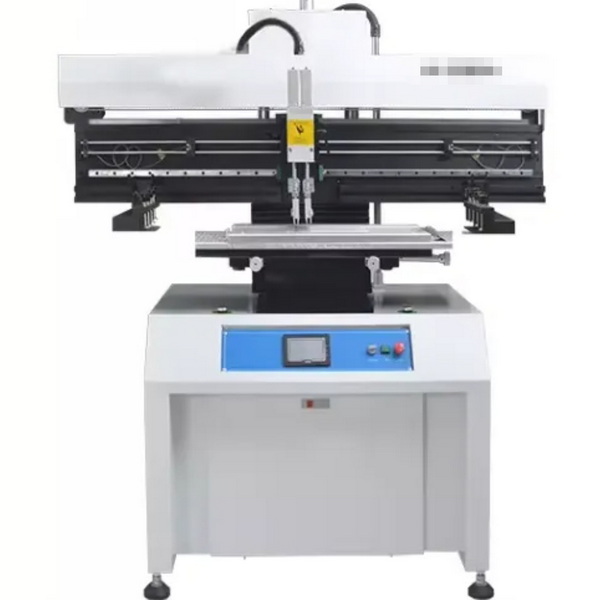
SMT machines evolved through distinct phases:
- 1960s: Manual SMT machines pioneer leadless assembly for aerospace.
- 1970s: Printers automate paste in semi-automated SMT machines.
- 1980s: Vision-guided placers hit 5k CPH in SMT machines.
- 1990s: Chip shooters exceed 50k CPH; AOI/SPI standardizes SMT machines.
- 2000s: Fine-pitch SMT machines handle 01005 parts and BGAs.
- 2010s: Smart SMT machines integrate IoT and predictive maintenance.
- 2020s: AI-driven SMT machines enable flexible, sustainable production.
These leaps underscore SMT machines' role in shrinking devices from room-sized computers to wearables.
Miniaturization challenges SMT machines with 0201 chips and 0.3mm pitches. High-res cameras and active alignment compensate, maintaining yields above 99%. Board warpage in large panels—common in servers—requires dual-sided reflow and clamping in SMT machines.
Supply volatility disrupts SMT machine feeders; diversified sourcing and smart inventory software mitigate this. Thermal management for high-power LEDs and SiPs demands zoned ovens in SMT machines. Cybersecurity protocols protect networked SMT machines from hacks, ensuring data integrity.
Looking ahead, SMT machines will embrace flexible substrates for foldables and wearables, using adaptive grippers. Quantum computing and photonics may spawn hybrid SMT machines merging photonics placement. 8K displays and AR glasses accelerate demand for micro-LED handling in SMT machines.
Green initiatives push lead-free, low-melt alloys in SMT machines, alongside recycled PCBs. Highlywin stays ahead, offering next-gen SMT machines, peripherals, and one-stop services tailored for evolving needs.
The evolution of SMT machines from manual soldering stations to AI-orchestrated factories represents a triumph of engineering ingenuity. Early limitations in speed and accuracy gave way to today's high-precision, data-driven SMT machines capable of assembling billions of components annually. This progression has democratized advanced electronics, fueling innovations in telecom, automotive, medical, and consumer sectors. Providers like Highlywin continue this legacy, delivering comprehensive SMT machines, AI tools, peripherals, services, and spares for global one-stop solutions. As Industry 5.0 emphasizes human-machine collaboration, SMT machines will further integrate cobots and sustainability, ensuring electronics manufacturing remains agile, efficient, and eco-friendly.
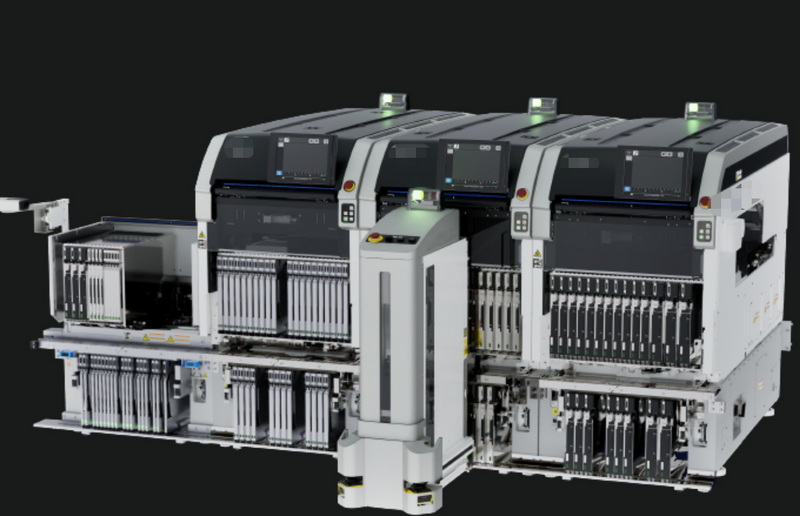
Modern SMT machines integrate pick-and-place, inspection, reflow, and AI analytics into seamless lines, achieving 100k+ CPH with 99.9% yields.
Modular feeders and rapid setup software in SMT machines enable changeovers in under 10 minutes, ideal for customized runs.
AI in SMT machines provides predictive maintenance, anomaly detection, and optimization, cutting defects and downtime significantly.
Highlywin offers end-to-end SMT machines, services, AI/peripherals, and spares, ensuring reliable global support and minimal disruptions.
Expect flexible electronics handling, sustainable processes, and 5G/IoT integration in next-gen SMT machines for emerging tech.


