Your Trusted Partner from Prototyping to Mass Production, Email Us:info@highlymachine.com
Please Choose Your Language


Views: 222 Author: Ann Publish Time: 2026-01-09 Origin: Site


Content Menu
● Introduction to SMT Machines in PCB Assembly
● Core Components and Mechanisms of SMT Machines
● Advanced Vision Systems in SMT Machines
● Solder Paste Printing and Precision Control
● High-Speed Pick-and-Place Operations
● Reflow Soldering and Thermal Precision
● Inspection and Quality Assurance with SMT Machines
● Handling Complex and High-Density Assemblies
● Software Integration and Industry 4.0 in SMT Machines
● Economic and Performance Benefits of SMT Machines
● Highlywin: Your Partner in Precision SMT Solutions
>> 1. What accuracy levels do modern SMT machines achieve?
>> 2. How do vision systems enhance SMT machines?
>> 3. What component sizes can SMT machines handle?
>> 4. Why partner with Highlywin for SMT machines?
>> 5. How do SMT machines lower manufacturing costs?
SMT machines revolutionize PCB assembly by delivering unparalleled accuracy and efficiency in component placement. These advanced systems ensure minimal defects and optimal performance in modern electronics manufacturing. Highlywin, a leading provider of SMT/AI/peripheral equipment and comprehensive SMT services, empowers global clients with one-stop SMT solutions.

Surface Mount Technology (SMT) has transformed the electronics industry since its widespread adoption in the 1980s. SMT machines enable the direct mounting of components onto the surface of printed circuit boards (PCBs), eliminating the need for leads that pass through holes. This fundamental shift allows SMT machines to pack more components into smaller spaces, achieving higher circuit densities and improved electrical performance.
The precision of SMT machines stems from their ability to handle miniaturization trends driven by consumer demand for compact devices like smartphones, wearables, and IoT gadgets. Modern SMT machines can place components as small as 01005 resistors (0.4mm x 0.2mm) with positional accuracy better than ±25 microns. Highlywin's range of SMT machines supports this evolution, providing reliable equipment for high-volume production worldwide.
Beyond placement accuracy, SMT machines integrate seamlessly into automated assembly lines, synchronizing with printers, ovens, and inspection systems. This holistic approach ensures that every stage of PCB assembly benefits from the precision inherent in SMT machines, reducing variability and enhancing yield rates to over 99.5% in optimized setups.
At the heart of every high-performance SMT machine lies the pick-and-place head, a sophisticated mechanism that retrieves components from feeders and positions them on the PCB. Turret-style SMT machines, for instance, feature rotating heads with multiple nozzles that change automatically, enabling continuous operation at speeds exceeding 100,000 components per hour (CPH). Each nozzle in these SMT machines uses vacuum or mechanical grippers calibrated for specific component sizes, ensuring gentle handling without damage.
SMT machines also rely on intelligent feeder systems that supply components in tape, tray, or tube formats. These feeders in SMT machines communicate with the central controller via real-time protocols, adjusting pitch and speed dynamically to prevent starvation or jams. Highlywin supplies a variety of feeder types compatible with major SMT machines, allowing clients to customize lines for mixed production runs.
Conveyor systems in SMT machines transport PCBs smoothly between stations, often with edge clamping or mesh belt options to minimize warpage. Dual-lane SMT machines double throughput by processing two boards simultaneously, ideal for high-mix, low-volume manufacturing environments.
Vision technology represents the cornerstone of precision in contemporary SMT machines. High-resolution cameras—often numbering in the dozens per SMT machine—capture images of components, PCBs, and fiducial marks at rates up to 100,000 per minute. Software algorithms in SMT machines analyze these images using pattern recognition, edge detection, and machine learning to determine orientation, polarity, and exact positioning offsets.
Dual-beam vision systems in advanced SMT machines separate the pickup and placement inspections, allowing for independent corrections. For example, if a component is rotated by 5 degrees during pickup, SMT machines detect and compensate before placement, maintaining alignment within 10 microns. 3D vision modules in SMT machines add height profiling, crucial for stacking components like Package-on-Package (PoP) devices without collisions.
Highlywin's SMT machines incorporate the latest AI-enhanced vision from leading brands, enabling predictive maintenance by spotting early signs of nozzle wear or lens contamination. This proactive capability extends mean time between failures (MTBF) significantly.
Stencil printing is the first critical step where SMT machines apply solder paste, and precision here dictates downstream success. Laser-cut stencils in these SMT machines feature apertures with tolerances under 10 microns, aligned to PCBs via high-speed cameras. Vision systems in SMT machines register fiducials and perform automatic squeegee pressure adjustments, achieving paste height uniformity of ±10%.
Post-print Solder Paste Inspection (SPI) integrated into SMT machine lines uses 3D laser scanning to measure volume, area, and height on every pad. Deviations trigger automatic pauses or corrections, preventing bridging or insufficient solder in subsequent reflow. Highlywin offers fully automated stencil printers as standalone SMT machines or inline modules, complete with SPI for zero-defect starts.
Variable squeegee speeds in SMT machines adapt to stencil thickness and board topology, ensuring clean releases even on warped panels. This level of control from SMT machines supports lead-free alloys and fine-pitch applications down to 0.3mm.
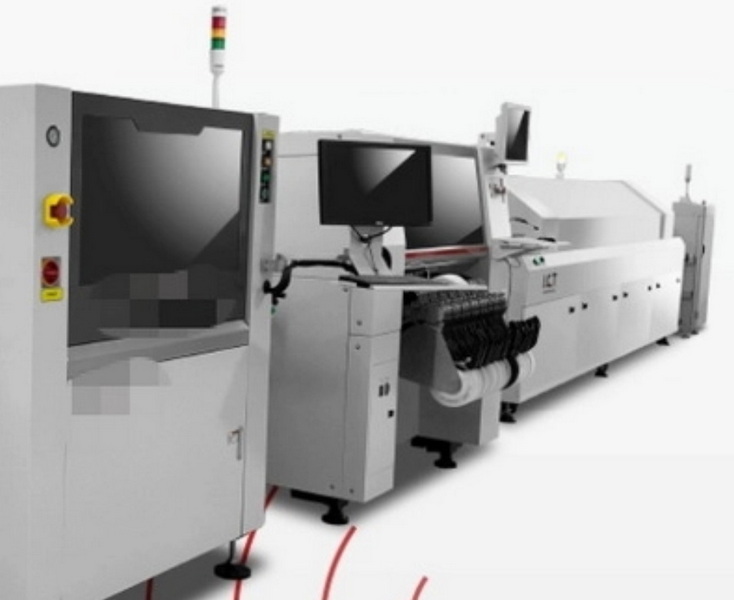
Pick-and-place SMT machines excel in speed-precision balance through multi-head architectures. High-speed SMT machines like those from Samsung or Yamaha employ flying heads that move in optimized patterns, minimizing travel time between pick and place. Intelligent software in SMT machines calculates optimal paths using genetic algorithms, reducing cycle times by up to 30%.
Nozzle calibration routines in SMT machines run periodically, compensating for thermal expansion and wear. For odd-form components, specialized grippers on SMT machines ensure secure handling of tall capacitors or connectors up to 50mm high. Highlywin's portfolio includes modular SMT machines that scale from prototyping to mass production.
Feeder setup optimization in SMT machines groups similar components to cut changeover times, vital for just-in-time manufacturing. Smart diagnostics in SMT machines alert operators to low stock or misalignment, maintaining uninterrupted flow.
Reflow soldering ovens, vital SMT machines in the assembly chain, create controlled thermal profiles with up to 12 independently heated zones. Forced convection in these SMT machines ensures uniform heat distribution, hitting peak reflow temperatures of 245-260°C precisely for SAC305 alloys. Nitrogen purging prevents oxidation, yielding shiny, reliable joints.
Thermal profilers in SMT machines log data from thermocouples placed on test boards, allowing recipe fine-tuning. Cooling zones in SMT machines use variable-speed fans to solidify solder gradually, reducing thermal shock and microcracks. Highlywin provides reflow SMT machines with Industry 4.0 connectivity for remote monitoring and MES integration.
Inline SPI post-reflow verifies joint quality, feeding data back to upstream SMT machines for process corrections. This closed-loop system elevates overall line precision.
Automated Optical Inspection (AOI) systems embedded in SMT machine workflows scan at full production speed. 2D/3D AOI in SMT machines detects tombstoning, bridging, and missing parts with false call rates under 100 PPM. Programming SMT machines for AOI uses CAD data or golden samples for rapid golden board creation.
X-ray inspection complements AOI for hidden defects like BGA voids in SMT machines. 3D slice imaging in these SMT machines quantifies void percentages, ensuring compliance with IPC-A-610 standards. Highlywin bundles AOI and X-ray as turnkey SMT machine add-ons.
Post-assembly functional testing via flying probes or bed-of-nails in SMT machines verifies electrical integrity, closing the quality loop.
SMT machines master high-density interconnect (HDI) boards with microvias and embedded components. Flexible SMT machines adjust Z-axis dynamically for heights from 0.1mm to 25mm, supporting fan-out wafer-level packaging. Warpage compensation algorithms in SMT machines use real-time leveling via servo motors.
Multi-platform SMT machines process large panels up to 510mm x 510mm, optimizing material use. Nesting software in SMT machines simulates layouts to minimize travel and feeder swaps. For rigid-flex boards, specialized fixtures in SMT machines prevent bending during placement.
Highlywin's SMT machines handle automotive and medical-grade assemblies, meeting AEC-Q100 and ISO 13485 requirements through validated processes.
Traceability software in SMT machines logs serial numbers, positions, and timestamps for every component, enabling root-cause analysis. AI-driven analytics in SMT machines predict yield drops from feeder data or environmental factors. Digital twin simulations validate programs offline, slashing ramp-up times.
MES/ERP connectivity standardizes data flow across SMT machines, supporting lights-out factories. Highlywin's SMT machines feature open APIs for seamless integration with client systems.
Cloud-based recipe management in SMT machines allows global teams to share optimized setups instantly.
Precision SMT machines cut rework by 85-95%, directly boosting profitability. Miniaturization enabled by SMT machines reduces PCB size by 50%, lowering material costs. Cycle times under 5 seconds per component accelerate time-to-market.
Reliability improves as SMT machines eliminate hand-soldering variability. Energy-efficient SMT machines comply with RoHS and REACH, future-proofing operations. Highlywin's cost-effective SMT machines deliver ROI within 12-18 months.
Scalability of SMT machines supports growth from prototypes to millions of units annually.
Highlywin stands out by offering Samsung, Yamaha, and Fuji SMT machines alongside peripherals like screen printers and conveyors. Full-service support includes installation, training, and 24/7 spares for 99.9% uptime. Tailored SMT machine configurations meet diverse client needs, from consumer electronics to aerospace.
SMT machines have elevated PCB assembly to new heights of precision, speed, and reliability, powering the electronics revolution. From vision-guided placement to AI-optimized reflow, every facet of SMT machines contributes to defect-free production. Highlywin delivers comprehensive SMT solutions, ensuring clients thrive in competitive markets.
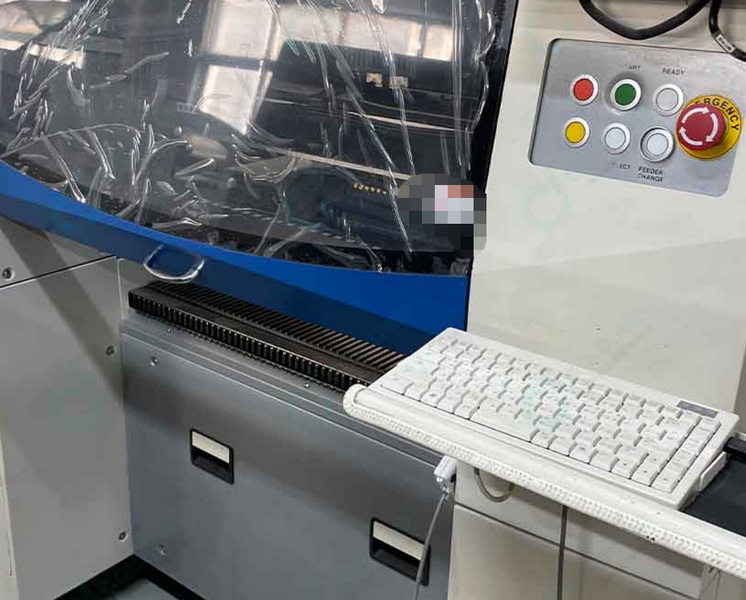
SMT machines deliver ±0.025mm placement accuracy, with vision systems enabling sub-10 micron alignments for fine-pitch components.
Vision systems in SMT machines inspect components pre- and post-placement, correcting errors and achieving 99.99% yields through AI pattern recognition.
SMT machines process from 01005 chips to 75x75mm connectors, using adaptive nozzles and feeders for versatility.
Highlywin provides one-stop SMT solutions with equipment, spares, and global services, maximizing uptime and efficiency.
SMT machines automate precision processes, reducing scrap, labor, and rework for up to 25% cost savings in volume production.


