Your Trusted Partner from Prototyping to Mass Production, Email Us:info@highlymachine.com
Please Choose Your Language


Views: 222 Author: Ann Publish Time: 2026-01-06 Origin: Site


Content Menu
● How SMT Machines Lower Manufacturing Costs
>> 1. Automation Reduces Labor Dependency
>> 2. Speed and Throughput Optimization
>> 3. Precision Minimizes Material Waste
>> 4. Compact Designs Reduce Raw PCB Costs
>> 5. Lower Defect and Rework Rates
>> 6. Energy and Space Savings
>> 7. Smart Data and Predictive Analytics
>> 8. Lower Inventory and Material Handling Costs
>> 9. Seamless Integration with AI and Robotics
>> 10. Faster Prototyping and Product Customization
● Comparative Cost Efficiency: Manual vs. SMT Assembly
● The Highlywin Approach: One-Stop SMT Solutions
● Case Study: Real-World SMT Cost Optimization
● Environmental and Sustainability Advantages
● Future Outlook: Where SMT Technology Is Heading
● FAQs
>> 1. What does SMT mean in manufacturing?
>> 2. How do SMT machines help cut labor costs?
>> 3. Can SMT machines support different component types?
>> 4. What regular maintenance is needed for SMT machines?
>> 5. How fast is the return on investment for SMT systems?
In modern electronics manufacturing, efficiency and cost reduction have become strategic imperatives. Every manufacturer, from global OEM giants to small EMS providers, competes in a market that demands faster production, higher precision, and lower operational costs. One of the technologies that has reshaped this environment is Surface Mount Technology, or SMT.
SMT machines have significantly transformed how printed circuit boards (PCBs) are assembled, enabling higher production output while dramatically lowering manufacturing costs. At Highlywin, we have spent years helping customers integrate advanced SMT systems, AI technology, and peripheral equipment to achieve smarter, leaner, and more cost-effective manufacturing lines.
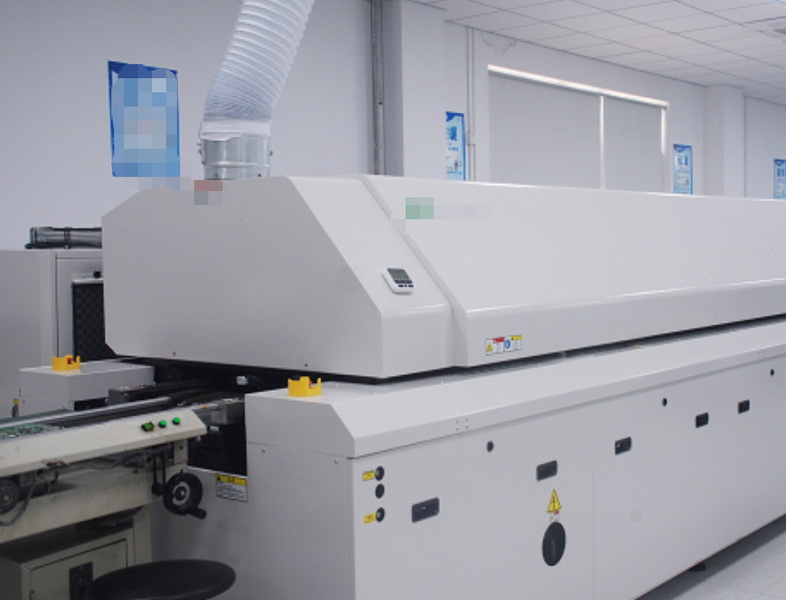
SMT machines automate the process of placing and soldering electronic components directly onto PCB surfaces. This simple concept has revolutionized production efficiency because it removes many manual stages.
The full SMT assembly line typically includes:
- Solder Paste Printing Machine: Applies solder paste onto pads of the PCB through a stencil.
- Pick and Place Machine: Automatically picks up components and places them accurately onto the PCB.
- Reflow Oven: Heats the board so the solder paste melts, bonding components firmly to the copper tracks.
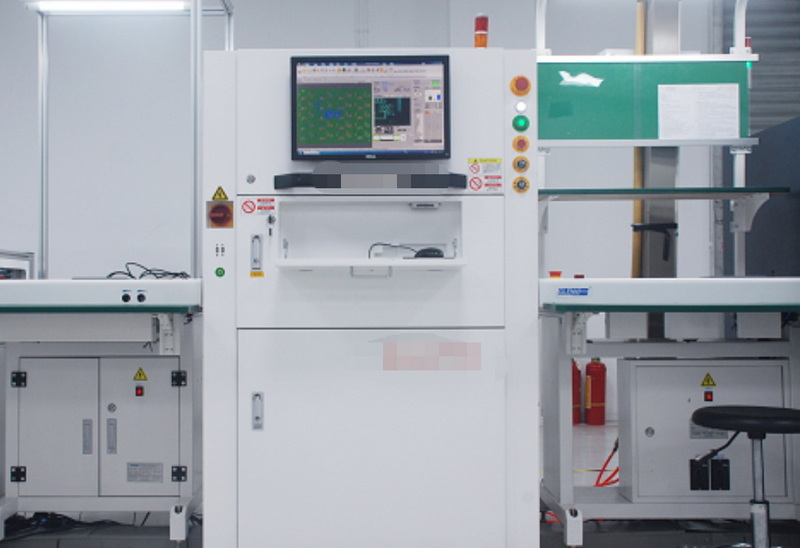
- Inspection Machines (AOI and SPI): Verify solder quality and component alignment to ensure reliability.
Together, these systems transform raw PCBs into fully assembled boards ready for integration into finished electronic products.
One of the largest cost advantages that SMT machines bring is automation. Traditional manual assembly requires numerous workers to handle placement and soldering, often resulting in fatigue-related errors. SMT automation allows a single trained operator to supervise multiple machines simultaneously.
Benefits include:
- Dramatically reduced labor costs.
- Fewer human errors and rework.
- Lower training requirements for new operators.
The labor savings multiply at scale, making SMT systems essential for cost-sensitive mass production.
In electronics manufacturing, time is money. SMT machines are designed for unmatched speed — some can mount over 150,000 components per hour. This extraordinary throughput means that what once took hours can now be achieved in minutes.
By streamlining production:
- Order lead times shrink substantially.
- Production lines can handle more variations without downtime.
- Manufacturers can meet high-demand cycles without outsourcing.
Faster production cycles allow companies to ship products sooner and reduce inventory holding costs, directly improving cash flow.
Every misplaced component or excessive solder deposit leads to wasted materials and higher rework rates. SMT machines use precise vision systems, laser alignment, and servo control motors to eliminate such inefficiencies. Automatic stencil printers, for example, control the thickness and volume of solder applied, optimizing both material usage and performance consistency.
Less waste means:
- Lower material consumption.
- More predictable cost per unit.
- Higher yield rates on every lot.
Over time, these savings become substantial, particularly when multiplied across thousands of boards.
SMT technology allows components to be placed closer together and on both sides of a board. This density enables the production of smaller, lighter, and more compact circuit boards.
Reduced board size means:
- Fewer raw materials are needed per unit.
- Packaging and shipping costs decline.
- Product design can be optimized for performance and miniaturization.
In mobile devices, wearables, and compact industrial controllers, these advantages translate into measurable cost and space efficiency.
Automated AOI (Automated Optical Inspection) and SPI (Solder Paste Inspection) systems detect solder issues immediately after printing or reflow. Early error detection reduces costly rework by catching defects before the assembly proceeds to subsequent stages.
Because defects are identified in real-time, SMT machines can adjust automatically or alert operators to make process corrections instantly. High first-pass yield ratios help manufacturers avoid unscheduled downtime, ensuring consistent and predictable production quality.
In industries like automotive electronics or medical devices, this precision means not only lower costs but higher reliability, significantly reducing warranty claims or product recalls.
Compared with large-scale manual assembly lines, SMT lines require far less physical space. A compact SMT production line combines printing, placement, reflow, and inspection into a clean, optimized layout.
Additionally, modern SMT systems are engineered for energy efficiency. They use intelligent heat management, standby modes, and sensors to minimize energy consumption. When combined with automation, they reduce climate control requirements and overall factory energy costs by up to 30–40%.
For facilities in regions where industrial space and electricity are expensive, these savings meaningfully lower long-term operational costs.
In the era of Industry 4.0, SMT machines have become intelligent systems capable of collecting and analyzing process data in real time.
Benefits of smart SMT integration:
- Predictive maintenance: Identifies potential issues before machine failure.
- Traceability: Records every component, process parameter, and production step.
- Process optimization: Automatically adjusts placement strategies for efficiency.
Data-driven manufacturing reduces unplanned downtime, shortens product changeover time, and enables managers to make strategic corrections based on accurate performance metrics.
Modern SMT lines are often paired with smart feeders, component storage systems, and automated guided vehicles. These peripherals maintain efficient component supply to the line while reducing manual handling.
This enhancement lowers:
- Inventory error rates.
- Time spent locating material.
- Component damage caused by manual processes.
As a result, material logistics become leaner, and production schedules remain uninterrupted, yielding better output consistency at reduced overhead cost.
Advances in machine learning have expanded what SMT machines can accomplish. Using AI algorithms, placement heads can now optimize component paths in real time, positioning parts with near-zero error.
AI-based inspection cameras also identify solder and component defects faster and more accurately than human inspectors. When combined with robotic component handling and packaging, manufacturers achieve a “lights-out” smart production floor that minimizes manual intervention and maximizes consistency.
At Highlywin, our AI-enabled SMT systems integrate seamlessly with MES and ERP software, creating fully automated data-driven environments designed to reduce cost-per-unit while enhancing traceability.
Traditional manual assembly makes prototyping costly and time-intensive. SMT machines, however, shorten product development time due to their flexibility in programming and batch production.
Manufacturers can produce small prototype runs, gather performance feedback, and reconfigure setups with minimal downtime. This agility makes it easier to adapt product lines to market trends or customer customization requests — all while keeping development costs low.
When viewed over one year of production, the financial benefits of SMT equipment become clear.
Key comparisons show:
- Labor reduction: SMT lines require at least 70% fewer workers than manual setups.
- Defect control: Automatic inspection decreases rework by 80–90%.
- Speed: SMT throughput can exceed manual speed by 50 to 100 times depending on complexity.
- Resource optimization: Reduced waste of solder paste, flux, and components.
- Long-term cost: Initial investment is offset within 12–18 months through savings in labor, time, and materials.
These combined advantages underscore why shifting to SMT-based lines is the logical step for manufacturers focused on competitive pricing and production scalability.
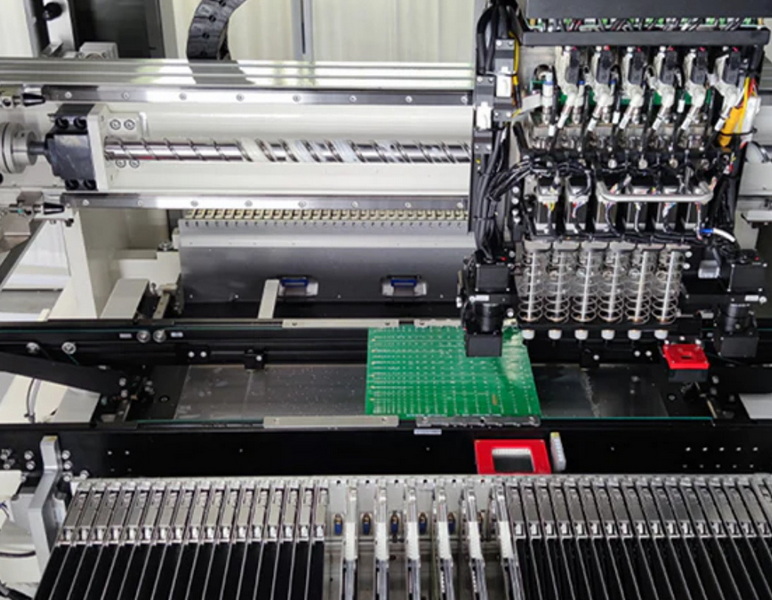
At Highlywin, our mission is to empower global manufacturers with intelligent, cost-effective production capabilities. We offer comprehensive solutions that extend beyond selling equipment — we deliver full-line integration, technical support, and consultation services.
Our scope includes:
- SMT pick and place machines.
- Screen printers and reflow ovens.
- AOI/SPI inspection systems.
- Feeders, conveyors, and storage modules.
- Spare parts supply and preventive maintenance programs.
We don't just supply machines — we analyze your workflow, suggest optimized configurations, and help your team maximize cost savings. Our engineers ensure that every setup aligns with the client's production goals, whether it's high-volume consumer electronics or specialized industrial circuits.
A mid-sized LED driver manufacturer partnered with Highlywin to upgrade their manual assembly line to a fully automated SMT setup. Over a six-month implementation period, the client saw measurable transformation:
- Labor cost reduction: 45%
- Production speed increase: 320%
- Defect rate decrease: from 3.8% to 0.4%
- Return on investment: Within 11 months
By integrating fully automated placement, soldering, and inspection, the customer nearly quadrupled throughput without additional workforce. The same model has since been replicated in several other client locations across Asia and Europe.
In addition to cost reduction, SMT systems contribute to sustainable manufacturing. Modern machines use refined heat control, lead-free soldering options, and closed-loop ventilation designs that reduce emissions.
Waste reduction is another crucial benefit. Because SMT machines are engineered for accuracy, scrap materials and defective boards drop dramatically. Combined with lower energy use and reduced packaging demands, SMT-based manufacturing aligns with green production goals increasingly required by global supply chains.
The next generation of SMT machines will deepen cost efficiency through continuous innovation. Key upcoming trends include:
- AI-based predictive algorithms that further optimize placement and printing.
- Adaptive feeders that automatically adjust for part height, shape, and texture.
- Micro-SMT processing for ultra-miniature components (such as 008004 packages).
- Fully digitalized factories integrating AGVs, IoT dashboards, and real-time data analytics.
These advancements will make SMT systems more autonomous, energy-efficient, and connected than ever before. Manufacturers who adopt these innovations early will continue to enjoy competitive advantages in both cost and performance.
SMT machines have fundamentally changed the economics of electronics manufacturing. By merging automation, intelligence, and flexibility, they lower labor requirements, minimize waste, increase production speed, and consistently improve yield quality.
The transformation from manual to fully automated SMT lines is not simply an upgrade; it is a strategic investment that defines the future of manufacturing. Companies adopting advanced SMT systems position themselves to achieve sustainable growth, higher competitiveness, and long-term cost leadership.
At Highlywin, we remain dedicated to providing integrated SMT and AI-driven equipment solutions that help manufacturers realize these benefits. Our global experience, professional engineering support, and full-range SMT product offerings make us a trusted partner for transforming production efficiency across every sector.
SMT (Surface Mount Technology) refers to the process of mounting electronic components directly onto the surface of PCBs using automated equipment, resulting in higher efficiency and lower manufacturing costs compared to traditional insertion methods.
SMT machines automate placement and soldering, allowing a single operator to manage multiple systems. This reduces manpower needs and eliminates repetitive manual work, lowering per-unit labor expenses.
Yes. Modern SMT equipment can handle everything from micro resistors to large integrated circuits and even flexible or double-sided boards. Advanced vision systems ensure each placement remains highly accurate.
Routine maintenance includes nozzle and feeder cleaning, vision calibration, and software updates. IoT-enabled models support predictive diagnostics that alert technicians before performance drops occur.
The ROI timeline depends on production scale, but most manufacturers achieve payback within 12 to 18 months through reduced labor, improved throughput, and lower material consumption.


