Your Trusted Partner from Prototyping to Mass Production, Email Us:info@highlymachine.com
Please Choose Your Language


Views: 222 Author: Ann Publish Time: 2026-01-06 Origin: Site


Content Menu
● What Is SMT Machine Technology?
● The Evolution of SMT Machines
● How SMT Machines Are Transforming Electronics Manufacturing
>> Miniaturization and Component Density
>> Speed, Efficiency, and Scalability
>> AI Integration and Intelligent Operation
>> Sustainability and Energy Efficiency
● Understanding the Components of a Complete SMT Line
>> SMT Loader
>> Solder Paste Inspection (SPI)
>> Reflow Oven
>> AOI (Automated Optical Inspection)
>> Unloader
● The Role of SMT Machines in Industry 4.0
● Future Trends in SMT Technology
>> Modular and Scalable Design
>> 3D Soldering and Inspection
>> Eco-Friendly Reflow and Materials
>> Cybersecurity for Smart Lines
● Application of SMT Machines in Different Industries
● The Advantages of Partnering with Highlywin
● FAQ: Surface Mount Technology (SMT Machines)
>> 1. What are SMT machines used for?
>> 2. How do SMT machines differ from traditional assembly methods?
>> 3. What equipment is included in a typical SMT production line?
>> 4. How does AI improve SMT machine performance?
>> 5. Why choose Highlywin as your SMT solutions partner?
In the current era of rapid technological progress, SMT machines (Surface Mount Technology machines) have become indispensable to the electronics manufacturing ecosystem. Their precision, speed, and adaptability allow manufacturers to assemble sophisticated devices that define our connected world—smartphones, wearables, EV control systems, IoT devices, and more.
The future of electronics manufacturing depends on how efficiently companies can combine SMT automation, artificial intelligence (AI), and data analytics to produce high-quality products at scale. For decades, Highlywin has specialized in SMT/AI/peripheral equipment and has helped customers worldwide implement one-stop SMT manufacturing solutions. Today, we explore how this technology is reshaping the global electronics landscape.

SMT (Surface Mount Technology) refers to the process of directly mounting electronic components—called surface-mount devices (SMDs)—onto the surface of a printed circuit board (PCB). This contrasts with through-hole technology, where component leads are inserted into drilled holes.
SMT allows for compact designs, reduced material waste, and much faster production speeds. Modern SMT machines automate nearly every stage of PCB assembly, including solder paste printing, component placement, soldering, and inspection.
Key equipment categories in an SMT line include:
- Solder Paste Printer – Applies solder paste accurately onto the PCB pads through a metal stencil.
- Pick-and-Place Machine – The core of any SMT line, responsible for automatically placing SMD components at ultra-high speed and precision.
- Reflow Oven – Heats the PCB to melt solder paste and permanently bond components.
- Inspection Systems – SPI (Solder Paste Inspection) and AOI (Automated Optical Inspection) units that detect defects early in the process.
- Conveyor Systems, Loaders & Unloaders – Control smooth board transfer while maintaining a compact footprint in the production line.
By combining mechanical precision and automation, SMT machines facilitate high-volume electronic assembly with extraordinary accuracy and minimal human intervention.
The first SMT processes began during the 1960s, but it wasn't until the 1980s that they became commercially widespread. Early surface mount lines were semi-automatic and slow, but they represented a critical shift from manual soldering.
Over time, SMT machines evolved in both functionality and intelligence:
- 1980s: Introduction of basic pick-and-place automation. Machines relied on mechanical alignment and limited vision systems.
- 1990s: Improved mechanical feeders and early optical recognition systems led to higher throughput.
- 2000s: Manufacturers adopted multi-head placement systems, significantly boosting the number of components placed per hour.
- 2010s: Software-driven lines integrated with networked systems and big data analytics.
- 2020s and beyond: AI-enhanced operation, real-time diagnostics, modular scalability, and fully connected smart factories.
Every generation of SMT machines has lowered defect rates, improved yields, and shortened product lead times. Today's systems feature advanced servo control, real-time monitoring, and self-optimization algorithms that adapt automatically to production conditions.
Consumer demand for smaller, thinner, and more powerful devices pushes manufacturers to create increasingly compact circuit boards. SMT machines can accurately place components as small as 01005 (0.4 mm × 0.2 mm), maintaining functionality even under high-density conditions. High-resolution vision alignment systems ensure accuracy within a few microns, enabling seamless miniaturization.
Modern SMT pick-and-place machines can handle up to 150,000 components per hour, making them ideal for large-scale production. Combined with advanced software, this allows for rapid programming changes, batch traceability, and minimal downtime during product switching.
Artificial intelligence is revolutionizing PCB production. AI-powered SMT machines analyze placement accuracy, component orientation, nozzle wear, and solder joint quality in real time. Highlywin integrates AI and machine learning algorithms into its automation systems, enabling operators to predict issues before they occur. This not only enhances yield but also lowers operational costs.
Industry 4.0 emphasizes intelligent data exchange. Through IoT connectivity, modern SMT machines can communicate across the manufacturing chain—from MES (Manufacturing Execution Systems) to ERP (Enterprise Resource Planning). Real-time feedback ensures that each assembly stage maintains peak efficiency. Remote dashboards provide engineers with unified monitoring across multiple lines, improving productivity and visibility.
Sustainability is now a key metric for industrial operations. SMT machines support eco-friendly initiatives by reducing solder paste waste and optimizing reflow oven heat profiles. Precision component feeders minimize material loss, while digital process control reduces power consumption. Green manufacturing benefits both the environment and long-term cost performance.
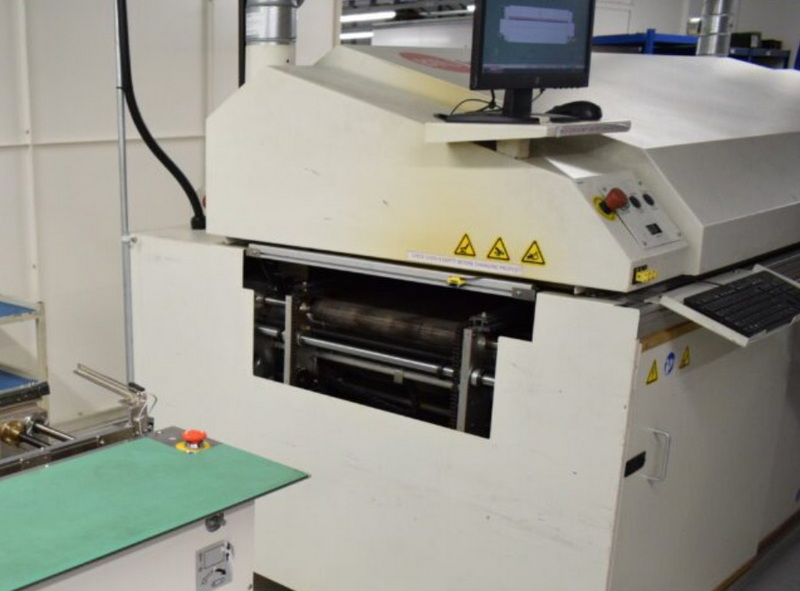
A fully automated SMT production line consists of interconnected units that operate in synchronization to achieve efficient and accurate PCB assembly. Each system contributes to establishing a seamless workflow:
Feeds PCBs automatically into the line, ensuring standardized batch handling.
Deposits solder paste through a fine metal stencil according to PCB pad layouts. Uniform paste distribution determines strong solder joints and consistent processing.
Uses 3D vision technology to measure solder paste height, volume, and position. Defects caught here reduce rework time later.
Acts as the center of the line, picking components from feeders and placing them precisely on solder-pasted pads. Multi-nozzle heads operate in continuous motion for maximum efficiency.
Executes thermal soldering under controlled profiles. It melts solder paste and gradually cools boards to solidify solder joints without generating stress.
Scans each finished PCB for defects like missing components, insufficient solder, or misalignment. AOI ensures only flawless boards proceed to functional testing.
Carefully collects completed boards, marking the end of the automated process.
A properly balanced SMT line improves yield, maximizes throughput, and supports mixed production volumes—from prototype runs to mass production.
The fourth industrial revolution merges data analytics with physical manufacturing. SMT machines now serve as intelligent nodes within digital ecosystems. Their sensors and cameras generate large amounts of production data, which form the basis for analytics-driven optimization.
Key integrations include:
- Predictive Maintenance: Real-time monitoring detects early signs of machine wear, automatically scheduling preventive actions.
- Remote Supervision: Engineers can remotely control lines and adjust parameters from any location, reducing response times.
- Digital Twins: Virtual replicas of SMT machines simulate production conditions for optimization before hardware changes occur.
- Data Feedback: Production results feed directly into design systems, accelerating new product development and reducing time-to-market.
The combination of automation, robotics, and connectivity allows manufacturers to achieve high consistency even in complex assemblies, demonstrating how SMT machines define the next era of electronics production.
The continuing evolution of SMT machines reflects the growing complexity of modern electronics. Looking ahead, several trends are shaping this field:
Future SMT systems adopt modular architectures that allow quick scalability. Manufacturers can start with a single production module and add capacity as demand grows, ensuring flexibility and reduced investment risk.
AI-driven defect detection and auto-correction systems bring production closer to zero-defect targets. Machine learning continuously refines placement parameters for perfect results.
Next-generation SMT machines incorporate 3D cameras and advanced alignment algorithms to handle uneven PCB surfaces or irregular component shapes.
Energy-efficient ovens and lead-free solder materials support global sustainability goals while maintaining solder joint quality.
As production data travels across networks, protecting sensitive manufacturing information is essential. Secure data encryption and access control systems safeguard factory information.
The fusion of AI, robotics, and environmentally conscious engineering ensures that SMT machines will remain critical to industrial growth over the next decade.
SMT machines are applicable far beyond consumer electronics. Their adaptability suits a wide range of sectors:
- Automotive Industry: Supports advanced driver assistance systems (ADAS), infotainment consoles, and EV battery control modules.
- Medical Devices: Enables precision electronics for diagnostic and wearable health-monitoring equipment.
- Telecommunications: Facilitates mass production of routers, 5G modules, and fiber-optic systems.
- Industrial Automation: Powers factory sensors, controllers, and robotic management systems.
- Aerospace and Defense: Produces rugged boards that meet strict reliability and durability standards.
Each sector benefits from the precision, consistency, and scalability SMT machines provide, ensuring that electronics meet both performance and safety requirements.
Highlywin provides an all-in-one service solution for global manufacturers seeking cutting-edge SMT equipment, spare parts, and technical support. Our approach combines reliability, technical depth, and professional customization to help clients gain a competitive edge.
Key advantages include:
- Comprehensive SMT Solutions: From machine supply to full SMT line integration and operator training.
- Global Support Network: Technical experts available for on-site service and remote diagnostics.
- Spare Parts and Maintenance: Fast, reliable supply for all major SMT brands.
- Process Optimization Consultation: Help customers upgrade productivity through data-driven process improvements.
- Innovation Partnership: Co-developing new automation strategies and AI-enhanced production systems.
With decades of experience in SMT technology, Highlywin continues to empower factories worldwide to achieve efficient, intelligent, and sustainable manufacturing performance.
SMT machine technology has transformed the electronics industry from manual assembly to intelligent automation. Its precision and speed drive the growing demand for compact, high-performance devices that define our modern world.
In the age of Industry 4.0, where digital connectivity and real-time analytics redefine production, SMT machines are more than assembly tools—they are the foundation of smart electronic manufacturing. Companies leveraging automation, such as those supported by Highlywin, are well-positioned to lead global innovation, reduce operational costs, and ensure future-ready production environments.
The path forward is clear: smarter machines, greener operations, and sustainable growth powered by advanced SMT solutions.
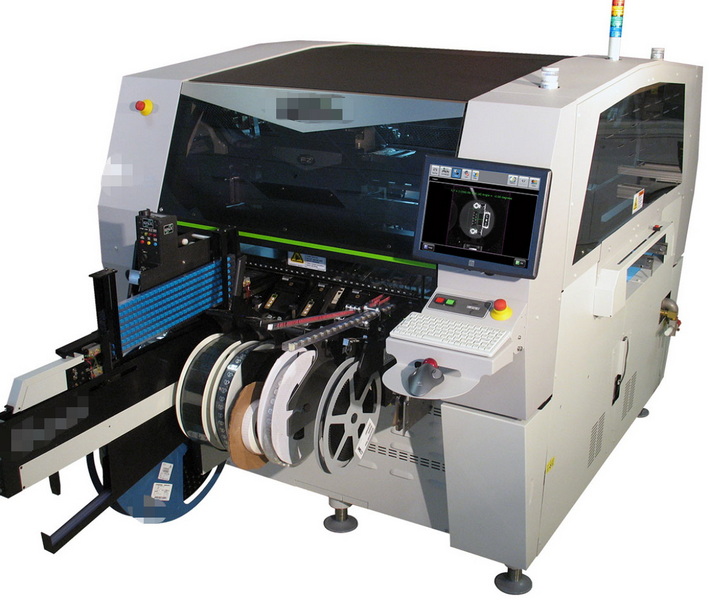
SMT machines are automated tools used to mount and solder electronic components onto PCBs efficiently. They are essential for producing printed circuit boards in electronics used worldwide.
Traditional through-hole assembly requires drilling and manual component placement. In contrast, SMT machines mount components on the surface, reducing size, speeding up production, and enabling full automation.
A complete line includes a loader, solder paste printer, pick-and-place machine, reflow oven, SPI/AOI systems, and an unloader—all integrated for continuous, high-speed throughput.
AI enhances SMT machines by predicting defects, optimizing placement sequences, adjusting nozzles automatically, and analyzing vast data in real-time to improve process stability.
Highlywin offers one-stop SMT support—equipment, spare parts, engineering services, and modernization consulting—helping customers boost productivity and achieve smart manufacturing excellence.


