Your Trusted Partner from Prototyping to Mass Production, Email Us:info@highlymachine.com
Please Choose Your Language


Views: 222 Author: Ann Publish Time: 2026-01-06 Origin: Site


Content Menu
● Why SMT Technology Matters in Automotive Manufacturing
>> Miniaturization and Weight Reduction
>> Heat Resistance and Long-Term Reliability
● How SMT Machines Enhance Safety-Critical Electronics
● The Automotive SMT Assembly Process
● Categories of SMT Machines Used in Automotive Production
● Advantages of SMT Machines for Automotive Electronics
● Integration of SMT Machines with Industry 4.0
● SMT Machines and Electric Vehicle Electronics
● Quality Control and Reliability Testing
● Highlywin: Providing a One-Stop SMT Solution
● FAQ
>> 1. What are SMT machines used for in automotive manufacturing?
>> 2. How do SMT machines improve production efficiency?
>> 3. Can SMT machines handle components used in electric vehicles?
>> 4. What quality standards apply to SMT manufacturing in automotive electronics?
>> 5. How will SMT machines evolve in the future?
The rise of automotive electronics has transformed vehicles from simple transportation machines into complex systems of integrated computing, sensing, and communication. Advanced driver-assistance systems (ADAS), infotainment modules, tire pressure sensors, and electric control units (ECUs) all rely on precisely assembled printed circuit boards (PCBs) that function reliably in demanding environments.
At the heart of this transformation are SMT machines (Surface Mount Technology machines). These automated systems assemble electronic components with high precision, speed, and flexibility. They allow manufacturers to produce compact, durable, and high-performance automotive systems that meet both quality and safety standards.
In this article, we'll explore the crucial role of SMT machines in automotive electronics manufacturing—from process and technology integration to quality management and future advancements.
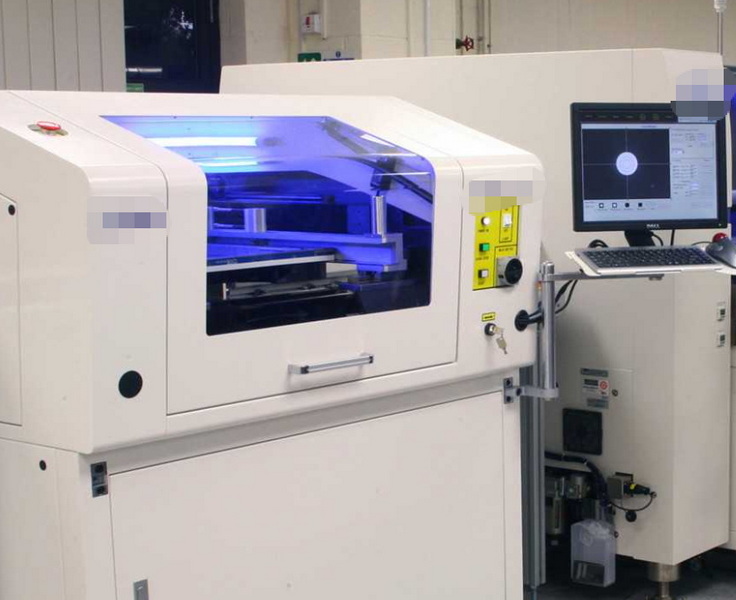
SMT machines are automated assembly systems designed to mount electronic components directly onto PCB surfaces. This process is known as surface mount technology, differing from older through-hole assembly methods that required inserting component leads into holes.
A complete SMT production line typically consists of:
- Solder paste printer – Applies solder paste to designated PCB pads using a stencil.
- Pick-and-place machine – Accurately positions components onto the solder paste pattern.
- Reflow oven – Heats the assembly so that solder melts and forms electrical and mechanical connections.
- Inspection system – Verifies solder volume, alignment, and positioning through AOI (Automated Optical Inspection) or 3D SPI (Solder Paste Inspection).
In the context of automotive electronics, precision, stability, and repeatability are vital. SMT machines ensure consistent performance across thousands of circuit boards, eliminating human variability and guaranteeing reliability in mission-critical systems such as ECUs and safety sensors.
Modern vehicles integrate numerous sensors and modules that must fit into limited spaces. SMT machines allow manufacturers to place miniature components, such as resistors and microchips, on compact PCBs. This reduces overall size and weight while enhancing functionality.
Automotive components often operate in harsh environments, with temperature fluctuations ranging from -40°C to 125°C or even higher near engines. SMT joints, when properly soldered, provide excellent thermal and mechanical stability, ensuring reliable operation over years of vehicle use.
SMT machines can place tens of thousands of components per hour with placement accuracy in the micron range. For automotive production, this means high-volume scalability without compromising accuracy—making it possible to produce millions of identical, high-quality units efficiently.
Safety-critical systems such as braking control units, airbags, radar modules, and ADAS units demand fail-safe electronic assemblies. The precision offered by SMT machines is not only desirable but mandatory to meet stringent global automotive quality standards.
Today's automotive SMT production lines often integrate multiple quality and tracking layers:
- 3D inspection technologies detect height variations and solder anomalies.
- Laser measurement systems verify paste thickness.
- Data traceability connects each PCB's assembly history for full process transparency.
- Automatic rework systems correct detected deviations within seconds.
These capabilities align with industry standards like ISO/TS 16949 and IPC-A-610 Class 3, ensuring maximum reliability in all manufactured electronic modules.
A modern SMT machine workflow in automotive electronics includes multiple coordinated stages:
1. Stencil printing – The process starts with applying solder paste to the PCB's pads. The quality of this step determines final solder joint strength.
2. Component placement – Pick-and-place SMT machines position resistors, capacitors, ICs, and sensors precisely using vacuum nozzles and optical alignment systems.
3. Reflow soldering – Controlled heating in multi-zone ovens melts the solder particles, forming durable connections.
4. Inspection and testing – AOI, SPI, and electrical tests ensure the assembly meets mechanical and electrical criteria.
5. Conformal coating and protection – Many automotive PCBs are coated with protective layers to resist moisture, vibration, and dust.
Each phase demands not only advanced machines but also data synchronization. Manufacturing execution systems (MES) often control the entire SMT line, linking all equipment to ensure stable production, traceability, and continuous improvement.
Modern SMT assembly relies on multiple categories of equipment, each serving a specialized purpose:
- Chip placers: High-speed machines capable of positioning thousands of small chips and passive components per minute.
- Flexible placer systems: Designed for large or irregularly shaped components such as connectors or power MOSFETs.
- Screen printers: Deposit uniform layers of solder paste to create consistent joints.
- Reflow ovens: Provide controlled multi-zone temperature gradients to form stable and repeatable solder joints.
- Inspection systems: AOI and X-ray inspection ensure all solder joints meet strict reliability criteria.
- Conveyor and handling systems: Enable continuous, automated transfer between production modules, ensuring smooth workflow.
Integrating these SMT machines into one synchronized production line enables electronics manufacturers to meet the automotive industry's rigorous demands for flexibility, quality, and efficiency.
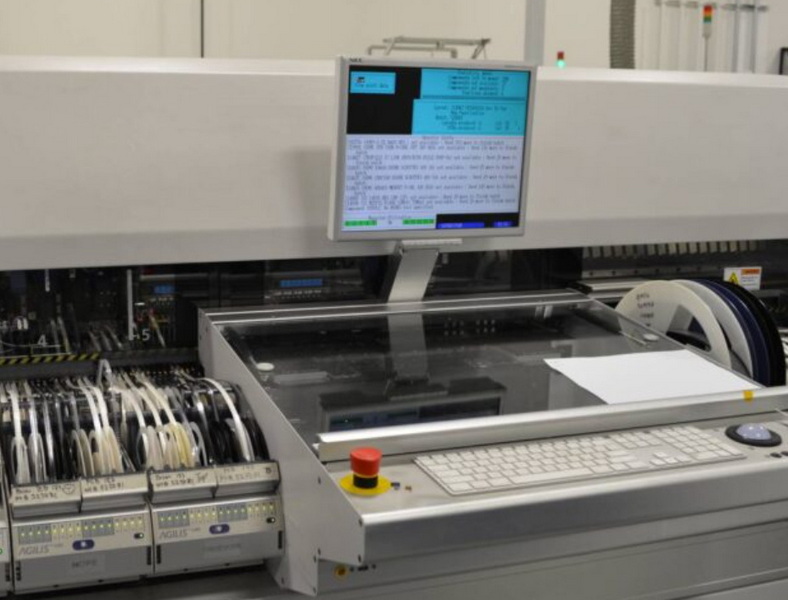
1. High Efficiency: SMT machines enable continuous, automated assembly, dramatically increasing throughput.
2. Ultra-Precision: Vision-guided placement systems achieve micron-level accuracy.
3. Adaptability: They can handle a wide range of component sizes, from 01005 resistors to BGA and QFN packages.
4. Durability of Joints: SMT soldering provides exceptional resistance to vibration and temperature extremes.
5. Consistency and Quality Control: Automated inspection reinforces consistency, minimizing rework and waste.
6. Cost Reduction: By minimizing manual labor and rework, SMT lines lower long-term production costs.
These advantages make SMT machines indispensable for automotive electronics, where reliability and performance are central to safety and customer satisfaction.
The advent of Industry 4.0 has changed the way SMT manufacturing lines operate. Today's SMT machines are more than mechanical assemblers—they are intelligent, connected systems that continuously communicate, adapt, and self-optimize.
Every machine generates valuable process data—about temperature, placement position, paste thickness, or vibration—which is uploaded in real-time for analysis. Operators gain continuous visibility into performance metrics for improved decision-making.
Integrated sensors track wear levels, motor speed, and component lifespan. Predictive analytics powered by AI anticipate maintenance requirements before failures occur, preventing downtime and reducing costs.
Next-generation SMT machines adjust their parameters automatically. For example, they can recalibrate placement alignment or feeder tension based on real-time feedback, eliminating the need for manual tuning.
These innovations contribute to “smart factories,” where SMT machines form the digital backbone of efficient, self-optimizing production environments.
As the automotive industry transitions toward electric and intelligent vehicles, the role of SMT machines becomes even more crucial. Electric vehicles (EVs) contain complex electronic control systems responsible for battery management, charging, motor control, and safety.
To meet these demands, SMT technology evolves in several directions:
- Higher component density: EV power modules and BMS (Battery Management Systems) require high-density PCB layouts achievable through advanced SMT assembly.
- Thermal management improvements: Specialized solder alloys and reflow profiles are used for high-temperature tolerance.
- Wide component compatibility: SMT machines now handle components with diverse heights and materials, ideal for EV architectures.
- Environmental sustainability: Energy-efficient SMT lines consume less power and achieve higher yield, aligning with green manufacturing goals.
The continuous improvement of SMT machines empowers EV manufacturers to produce compact, efficient, and reliable electronics essential for next-generation mobility.
In automotive electronics, each SMT-assembled PCB undergoes comprehensive quality testing before integration into vehicles. Manufacturers employ several methods:
- AOI (Automated Optical Inspection): Detects misalignment, solder bridges, and missing components.
- X-Ray Inspection (AXI): Examines hidden joints under BGAs and QFNs.
- In-Circuit Testing (ICT): Verifies electrical functionality and component connectivity.
- Burn-in Testing: Assesses durability under elevated temperature and power load.
- Environmental Simulation: Evaluates resistance to vibration, heat, and humidity.
Consistent performance across these tests verifies that SMT machines maintain production integrity, minimizing defects and warranty claims.
At Highlywin, we specialize in delivering complete SMT/AI equipment and peripheral systems for automotive electronics manufacturing. We provide full-cycle support—from machine sales and installation to spare parts supply and technical training.
Our mission is to help global automotive manufacturers implement efficient, reliable, and intelligent production lines using advanced SMT machines. Whether for new energy vehicles, ADAS systems, or infotainment modules, our customized solutions ensure maximum quality and productivity.
SMT machines have redefined the landscape of automotive electronics manufacturing. Their precision placement, consistent soldering, and integration with smart data systems ensure high-quality production for everything from simple sensors to advanced control modules.
As automotive technology evolves—with electric mobility, automation, and connectivity—SMT machines remain at the forefront, enabling innovation through precision manufacturing. By harnessing their potential, manufacturers can achieve higher yields, greater efficiency, and cutting-edge product reliability in the fast-changing automotive electronics industry.
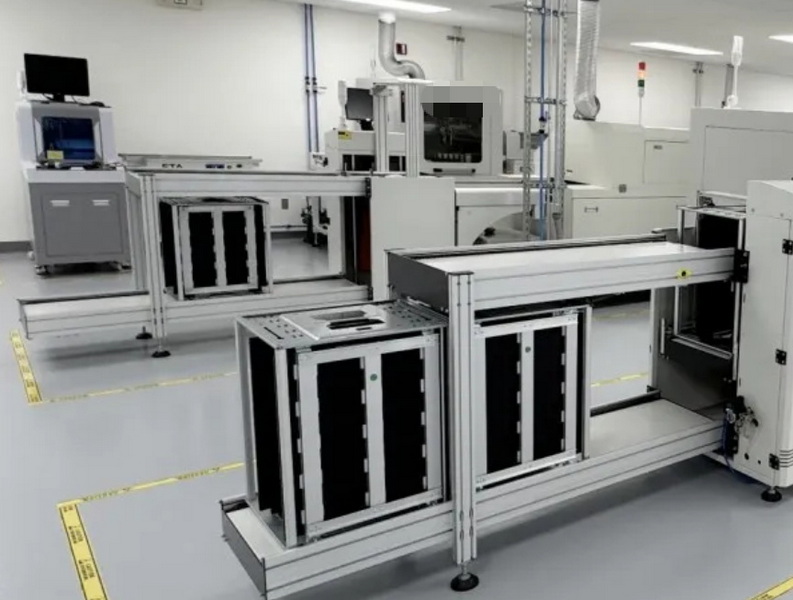
SMT machines assemble electronic components on PCBs for systems like airbag controllers, ECUs, and infotainment units, providing speed, accuracy, and reliability.
They automate placement and soldering, drastically reducing human labor while achieving consistent results at high speed.
Yes. Modern SMT systems are designed to handle wide-ranging components, including high-power devices and heat-resistant materials for EV circuits.
Typical standards include IPC-A-610, ISO/TS 16949, AEC-Q100, and other automotive-grade quality regulations.
Future SMT machines will adopt AI optimization, predictive maintenance, and multilayer 3D placement technology to enhance precision and adaptability in smart factories.


