Your Trusted Partner from Prototyping to Mass Production, Email Us:info@highlymachine.com
Please Choose Your Language


Views: 222 Author: Ann Publish Time: 2026-01-15 Origin: Site


Content Menu
● Introduction to SMT Machines and Performance Evaluation
● Throughput: The Core Measure of Output Capacity in SMT Machines
● Availability: Ensuring Uptime Reliability of SMT Machines
● Speed: Analyzing Actual Placement Rates in SMT Machines
● Performance Ratio: Benchmarking Efficiency in SMT Machines
● Overall Equipment Effectiveness (OEE): Holistic SMT Machine Assessment
● First Pass Yield (FPY) and Quality Metrics for SMT Machines
● Utilization, Changeover Time, and Flexibility in SMT Machines
● Energy Efficiency, Cost Metrics, and Advanced Analytics for SMT Machines
● FAQ
>> 1. What is the ideal OEE for SMT machines?
>> 2. How does throughput differ from speed in SMT machines?
>> 3. Why is FPY critical for SMT machines?
>> 4. What causes low utilization in SMT machines?
>> 5. How can Highlywin improve SMT machine metrics?
SMT machines form the backbone of modern electronics manufacturing, enabling precise component placement on PCBs for high-volume production. Evaluating their performance through key metrics ensures optimal efficiency, quality, and throughput across SMT production lines. Highlywin, as a premier provider of SMT machines, AI equipment, peripherals, and comprehensive service support including spare parts sales, delivers one-stop SMT solutions tailored for global clients seeking reliable SMT machines.

SMT machines have transformed surface mount technology by automating the placement, soldering, and inspection of electronic components onto printed circuit boards. These sophisticated SMT machines handle everything from microscopic 01005 components to large BGA packages, operating at blistering speeds in demanding production environments. Performance evaluation of SMT machines is essential because it identifies bottlenecks, reduces unplanned downtime, and maximizes return on investment for manufacturers relying on SMT machines.
The importance of monitoring SMT machines cannot be overstated in today's competitive electronics industry. Key metrics provide actionable data that helps operators fine-tune SMT machines for peak operation. Companies like Highlywin integrate advanced monitoring into their SMT machines, offering not just hardware but full lifecycle support—from installation to ongoing maintenance of SMT machines. Regular assessment ensures SMT machines consistently meet rigorous production targets, supporting scalability for high-mix, high-volume runs.
In practice, top-performing SMT machines achieve metrics that set industry benchmarks, such as sustained operation over 20-hour shifts with minimal intervention. By focusing on these metrics, manufacturers can predict failures in SMT machines before they occur, preventing costly disruptions. Highlywin's expertise in SMT machines extends to customizing performance dashboards that aggregate data from multiple SMT machines in a single facility.
Throughput, typically measured in components per hour (CPH), stands as the primary metric for assessing the output capacity of SMT machines. High-end SMT machines deliver between 50,000 and 200,000+ CPH, influenced by factors like feeder capacity, placement head configuration, and board complexity. Turbo placement modes in advanced SMT machines significantly boost throughput by optimizing travel paths between pickup and placement stations, reducing cycle times.
Several variables affect throughput in SMT machines, including component mix diversity, PCB panelization, and software algorithms for job sequencing. In mass production scenarios, modular SMT machines shine by allowing operators to scale throughput without halting the entire line. Highlywin's lineup of SMT machines emphasizes exceptional throughput, backed by readily available spare parts that minimize interruptions during peak demand periods.
Tracking throughput trends over time reveals patterns in SMT machines, such as degradation from worn nozzles or misaligned feeders. Real-world benchmarks indicate that elite SMT machines maintain 90% of their rated CPH throughout extended shifts, a testament to robust engineering. Optimizing throughput in SMT machines often involves feeder mapping software, which pre-loads components to eliminate wait states.
Furthermore, comparative analysis across SMT machines helps manufacturers select models suited to specific workloads. For example, high-throughput SMT machines excel in consumer electronics assembly, where volume trumps variety. Highlywin supports clients by providing throughput audits for their SMT machines, ensuring sustained high performance.
Availability quantifies the percentage of scheduled production time during which SMT machines are fully operational, calculated as (Actual Production Time / Planned Production Time) × 100. Industry standards target 95% or higher availability for SMT machines, accounting for planned maintenance while excluding unplanned failures like feeder jams or vacuum leaks.
Downtime in SMT machines frequently arises from seemingly minor issues, such as nozzle wear or sensor drift, which predictive maintenance can preempt. Highlywin elevates SMT machine availability through 24/7 global service networks and OEM-quality spare parts inventories, ensuring rapid resolution. IoT-enabled sensors embedded in modern SMT machines facilitate real-time availability monitoring, sending alerts for proactive interventions.
Achieving 98% availability marks the hallmark of world-class SMT machines, particularly in just-in-time manufacturing environments where delays propagate across supply chains. Low availability not only hampers individual SMT machines but cascades through entire production lines, amplifying losses. Highlywin's service packages for SMT machines include remote diagnostics, slashing response times and boosting overall line reliability.
Strategic improvements, like redundant feeders in SMT machines, further enhance availability. Regular calibration cycles prevent gradual performance erosion, keeping SMT machines at optimal levels.
Speed metrics evaluate how closely SMT machines adhere to their theoretical maximum placement rates during active production cycles, often expressed as effective CPH. Distinct from overall throughput, speed in SMT machines isolates performance during pure placement windows, excluding pauses for board changes or errors.
Premium SMT machines sustain 80-90% speed efficiency thanks to high-resolution vision systems and precision servo motors that minimize overshoot. Dynamic software in contemporary SMT machines adjusts speed profiles based on component fragility, preventing damage while maximizing pace. Highlywin's AI-augmented SMT machines employ machine learning to refine speed algorithms, yielding 15-20% gains over standard configurations.
Benchmarking speed across SMT machines pinpoints issues like head alignment drift or conveyor synchronization lags. Video-based analysis of SMT machines during operation uncovers station-specific variances, enabling targeted tweaks. Consistent speed maintenance in SMT machines directly correlates with meeting daily quotas.
For high-mix production, flexible speed modulation in SMT machines proves invaluable, adapting seamlessly to varying component geometries.
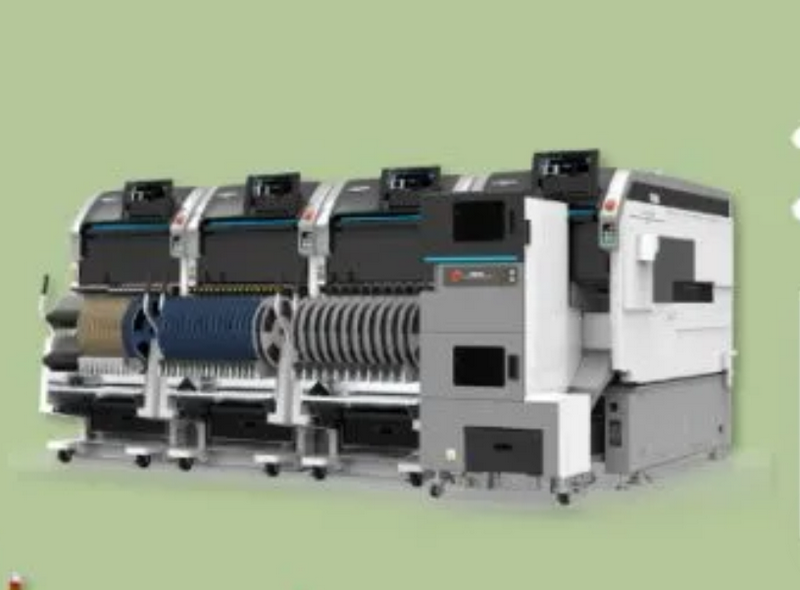
The performance ratio for SMT machines compares actual output to ideal targets, formulated as (Actual Placements / (Target CPH × Available Hours)) × 100. Leading SMT machines consistently achieve 85% or better, reflecting streamlined processes and minimal inefficiencies.
Derated targets in performance calculations for SMT machines accommodate real-world variables like setup times and minor stops. Highlywin tailors performance baselines for client-specific SMT machines, facilitating accurate tracking post-integration. Declining ratios signal maintenance needs, such as nozzle cleaning or vision recalibration in SMT machines.
This metric guides upgrade paths, like expanding placement heads on SMT machines to handle denser boards.
OEE integrates availability, performance, and quality into a single powerful metric for SMT machines: OEE = Availability × Performance × Quality. World-class SMT machines target 85%+ OEE, directly linking to profitability and competitive edge.
Decomposing OEE exposes weaknesses in SMT machines—for instance, subpar quality might stem from stencil printing inconsistencies. Highlywin's analytics platforms monitor OEE across SMT machine fleets, empowering data-driven optimizations. Routine OEE reviews transform SMT lines into lean operations.
Six major losses—breakdowns, setups, idling, reduced speed, defects, and startup—undermine OEE in SMT machines. Targeted countermeasures elevate overall effectiveness.
FPY measures the percentage of PCBs passing final inspection without rework after the first pass through SMT machines, with targets above 98%. Vision alignment precision and solder paste volume control profoundly influence FPY in SMT machines.
Highlywin enhances FPY via integrated SPI and AOI systems compatible with their SMT machines. Feeder vibrations or paste bridging often underlie low FPY in SMT machines, resolvable through process tuning.
Defect density, expressed as parts per million (PPM), targets under 50 for elite SMT machines. Common faults like tombstoning or bridging in SMT machines are intercepted by automated optical inspection.
Cp/Cpk statistical analysis validates process capability in SMT machines, aiming for values exceeding 1.67 to ensure stability.
Utilization assesses SMT machines' capacity exploitation: (Actual Output / Maximum Possible Output) × 100, with 80%+ indicating strong resource use. Aggregated line utilization across multiple SMT machines reveals imbalances ripe for correction.
Changeover time tracks job-switching speed in SMT machines, ideally under 30 minutes via smart feeders. Highlywin streamlines this for high-mix demands on SMT machines.
Flexibility metrics gauge SMT machines' adeptness at diverse components, from 01005 to odd-form parts.
Energy metrics monitor kWh per million placements in SMT machines, favoring models that cut consumption by 20%. Cost per board encompasses depreciation and labor for SMT machines, with low-cost variants accelerating ROI.
AI analytics predict failures in SMT machines using DPMO and Gage R&R methodologies. Highlywin deploys these for proactive SMT machine support.
MES integration standardizes dashboards for SMT machines, streamlining oversight.
Mastering key metrics like throughput, availability, OEE, FPY, and defect rates empowers manufacturers to unlock the full potential of SMT machines. Highlywin stands ready with superior SMT machines, AI tools, peripherals, comprehensive services, and spare parts to deliver unmatched one-stop SMT solutions. Implementing these evaluations future-proofs electronics production for global success.
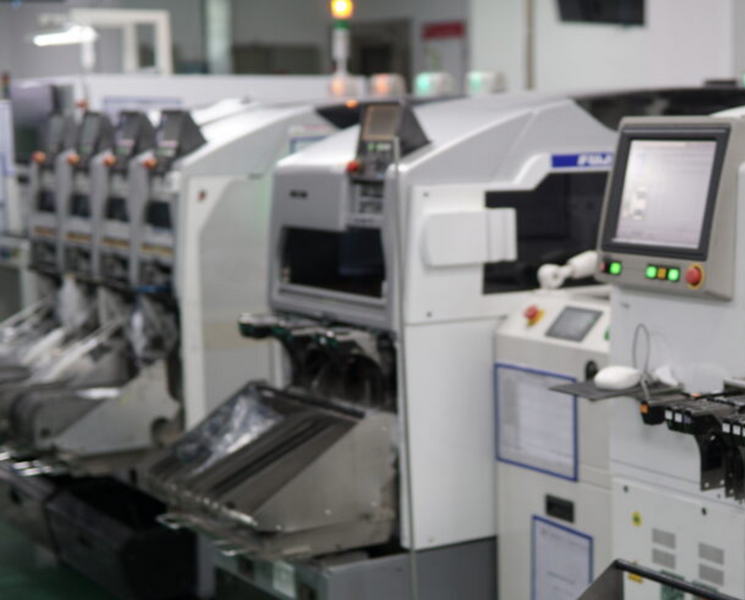
The ideal OEE for top-tier SMT machines exceeds 85%, achieved by multiplying availability, performance, and quality rates to gauge comprehensive operational health.
Throughput captures total components placed per hour across all time in SMT machines, whereas speed measures the rate solely during active placement cycles, excluding downtime.
FPY above 98% slashes rework and scrap expenses in SMT machines, delivering high-quality PCBs on the initial run and enhancing throughput.
Prolonged changeovers, feeder malfunctions, or suboptimal scheduling typically drive low utilization in SMT machines, correctable through software and maintenance optimizations.
Highlywin elevates SMT machine metrics with AI diagnostics, rapid spare parts delivery, and expert services, often yielding 30% efficiency improvements within the first year.


