Your Trusted Partner from Prototyping to Mass Production, Email Us:info@highlymachine.com
Please Choose Your Language


Content Menu
>> Pick-and-Place SMT Machines
>> Solder Paste Printers (Stencil Printers)
>> Reflow Ovens
>> Other Essential SMT Machines
● Key Components of SMT Machines
● Applications of SMT Machines
● Choosing the Right SMT Machine
● Future Trends in SMT Machines
● FAQ
>> 2. How Do SMT Machines Differ from THT Machines?
>> 3. What Are the Main Types of SMT Machines?
>> 4. Why Choose Highlywin for SMT Machines?
>> 5. How to Maintain SMT Machines?
Surface Mount Technology (SMT) machines are automated systems that revolutionize electronics manufacturing by precisely placing components directly onto the surface of printed circuit boards (PCBs). These SMT machines form the backbone of modern SMT production lines, enabling high-speed, high-precision assembly for industries worldwide. Highlywin, a leading provider of SMT machines, AI equipment, peripherals, and comprehensive SMT services, delivers one-stop SMT solutions to global clients, ensuring seamless integration of SMT machines into your operations.
SMT machines encompass a variety of specialized devices, including pick-and-place SMT machines, solder paste printers, reflow ovens, and inspection SMT machines, all working in harmony to streamline PCB assembly. As demand for compact, efficient electronics grows, SMT machines have become indispensable, offering superior speed and density compared to traditional through-hole methods. Imagine an SMT machine swiftly populating a bare PCB with tiny resistors and capacitors—that's the power of SMT machines at work.

The evolution of SMT machines traces back to the 1960s when surface mount technology first emerged as an innovative alternative to the bulky through-hole components that dominated early electronics. Pioneers in the industry recognized the need for smaller, lighter assemblies, leading to the development of initial SMT prototypes. By the 1980s, the first commercial SMT machines entered the market, with pick-and-place SMT machines leading the automation revolution by dramatically increasing placement speeds and accuracy.
Throughout the 1990s, advancements in SMT machine technology accelerated, incorporating computer vision and multi-head designs that allowed SMT machines to handle thousands of components per hour. This era marked a shift toward high-volume production, where SMT machines became essential for consumer electronics like pagers and early mobile phones. Today, cutting-edge SMT machines integrate artificial intelligence, machine learning algorithms, and robotic arms, capable of processing over 136,000 components hourly with sub-micron precision.
Highlywin builds on this rich history, supplying state-of-the-art SMT machines tailored for global manufacturers. These modern SMT machines not only honor past innovations but push boundaries with features like real-time adaptive placement and predictive maintenance systems. The progression from rudimentary SMT machines to sophisticated, AI-enhanced SMT machines underscores their indispensable role in scaling electronics production efficiently.
SMT machines are diverse, categorized by their specific functions within the assembly process, each optimized to contribute to a seamless SMT line. Pick-and-place SMT machines serve as the core, grabbing components from feeders and positioning them onto PCBs with extraordinary precision. Other critical SMT machines include solder paste printers, reflow ovens, inspection units, and auxiliary equipment like loaders and conveyors.
Pick-and-place SMT machines are the workhorses of any SMT production line, available in manual, semi-automatic, and fully automatic configurations. High-speed SMT machines, such as those offered by Highlywin, excel at handling ultra-small components like 01005 sizes, utilizing advanced vision systems for flawless alignment and error correction. These SMT machines feature multiple placement heads, servo-driven mechanisms, and intelligent feeders that support tape, tray, and tube inputs, making them versatile for diverse production needs.
Fully automatic pick-and-place SMT machines achieve placement rates exceeding 100,000 chips per hour, ideal for mass production environments. They incorporate flying optics for rapid component recognition and nozzle changers for handling varied part sizes seamlessly. Highlywin's range of pick-and-place SMT machines ensures minimal downtime through modular designs, allowing quick reconfiguration for different SMT projects.
Solder paste printers, vital SMT machines, apply precise deposits of solder paste through stencils onto PCB pads before component placement. These SMT machines use laser or vision alignment systems to achieve sub-micron accuracy, preventing common defects like solder bridging or insufficient volume. Automated stencil cleaners and paste dispensers in modern SMT machines enhance consistency across high-volume runs.
Highlywin provides stencil printers as part of its comprehensive SMT machine lineup, featuring 2D/3D solder paste inspection (SPI) integrated directly into the SMT machine for immediate quality feedback. This capability ensures that every PCB entering the subsequent SMT machine stages is perfectly prepared, optimizing overall line efficiency.
Reflow ovens represent another cornerstone among SMT machines, where they melt solder paste to form reliable electrical and mechanical joints through controlled heating profiles. Multi-zone SMT machines allow precise temperature ramp-up, soak, reflow, and cooling phases, essential for lead-free soldering processes that comply with global RoHS standards. Conveyor systems in these SMT machines enable continuous throughput, supporting inline integration with other SMT equipment.
Highlywin's reflow SMT machines incorporate nitrogen atmospheres to minimize oxidation, boosting joint quality in sensitive applications. Advanced thermal profiling software in these SMT machines monitors and adjusts parameters in real-time, preventing issues like tombstoning or overheating.
Inspection SMT machines, including Automated Optical Inspection (AOI), Solder Paste Inspection (SPI), and X-ray systems, safeguard quality by detecting defects post-placement and post-reflow. Post-placement AOI SMT machines scan for misalignments, while X-ray SMT machines reveal hidden flaws like voids or cracks beneath components. 3D inspection capabilities in these SMT machines provide volumetric data for comprehensive analysis.
Highlywin integrates multiple inspection SMT machines into its turnkey SMT solutions, ensuring zero-escape defects and high first-pass yields.
Beyond core types, SMT machines like wave soldering hybrids, conformal coating applicators, and PCB handling systems complete the ecosystem. Wave soldering SMT machines bridge SMT and through-hole processes for mixed-technology boards. Highlywin's peripheral SMT machines enhance line flexibility and reliability.
SMT machines collaborate in a highly synchronized sequence: solder paste printing, component placement, reflow soldering, and final inspection. The process begins with a stencil printer SMT machine depositing paste onto PCB pads. Pick-and-place SMT machines then retrieve components from feeders, using vision cameras to identify, orient, and place them accurately, compensating for board warpage or fiducial misalignments.
Reflow SMT machines heat the assembly in stages—preheat to activate flux, reflow to melt solder, and cool to solidify joints—typically peaking at 250°C. Inspection SMT machines follow, employing algorithms to flag anomalies. This orchestrated workflow of SMT machines eliminates manual intervention, achieving densities and speeds unattainable otherwise.
Software platforms unify control across SMT machines, enabling data logging, traceability, and optimization. Highlywin's expertise ensures your SMT machines operate as a cohesive unit, maximizing uptime and output.
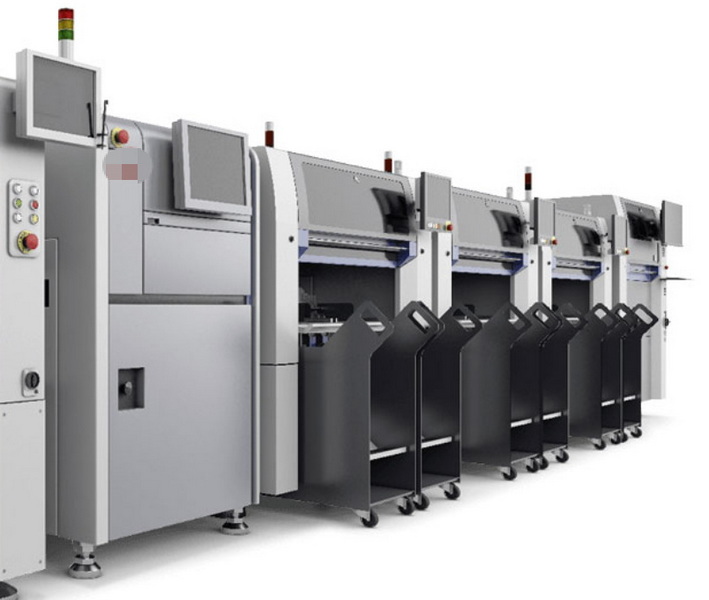
Core components define the performance of every SMT machine. X-Y-Z motion systems provide precise positioning, while vacuum nozzles and grippers handle component pickup. Optical centering cameras in SMT machines ensure alignment, and feeder systems deliver parts reliably.
Transmission belts and board grippers facilitate smooth PCB flow between SMT machines. Control software orchestrates it all, with IoT connectivity for remote monitoring. Highlywin equips its SMT machines with durable spindles and modular heads for longevity and adaptability.
SMT machines offer unmatched component density, enabling double-sided PCBs and miniaturization critical for smartphones, wearables, and IoT devices. Automation slashes labor costs and errors, while high-speed SMT machines boost throughput by orders of magnitude over manual methods.
Material efficiency reduces waste, and scalability supports low-to-high volumes. Reliability in SMT machines translates to fewer rework cycles and higher yields. Highlywin leverages these advantages to empower clients with competitive SMT production.
SMT machines drive innovation across sectors: consumer electronics for TVs and laptops, automotive for ECUs and sensors, telecommunications for routers, medical devices for imaging equipment, and aerospace for avionics. LED lighting, power supplies, and security systems all depend on precise SMT machine assembly.
Highlywin customizes SMT machines for these demanding applications, providing peripherals, spares, and services worldwide.
Factors like production volume, component mix, precision needs, and budget guide SMT machine selection. High-speed SMT machines suit mass production; flexible modular SMT machines fit prototyping. Evaluate feeder capacity, placement accuracy (often ±25µm), and integration compatibility.
Highlywin consults on optimal SMT machine configurations, including AI-enhanced models for smart factories.
Proactive maintenance sustains SMT machine performance: daily nozzle cleaning, weekly feeder calibration, and periodic software updates. Predictive analytics in modern SMT machines forecast failures, minimizing downtime.
Highlywin's service teams offer on-site support, spare parts, and training for all SMT machines.
AI and machine learning revolutionize SMT machines with self-optimizing placement and defect prediction. Flexible SMT machines handle odd-form and large components. Industry 4.0 integration enables digital twins and cloud-based monitoring.
Sustainability trends push energy-efficient SMT machines and recyclable materials. Highlywin pioneers these innovations for forward-thinking manufacturers.
SMT machines are the cornerstone of modern electronics manufacturing, delivering unparalleled speed, precision, and scalability that propel industries forward. From pick-and-place to inspection, each SMT machine in the line ensures flawless PCBs that power everything from everyday gadgets to mission-critical systems. Highlywin, as your trusted partner, provides premium SMT machines, AI/peripheral equipment, full-service support, and spares for comprehensive one-stop SMT solutions. Partner with Highlywin to harness the full potential of SMT machines and elevate your production to new heights.
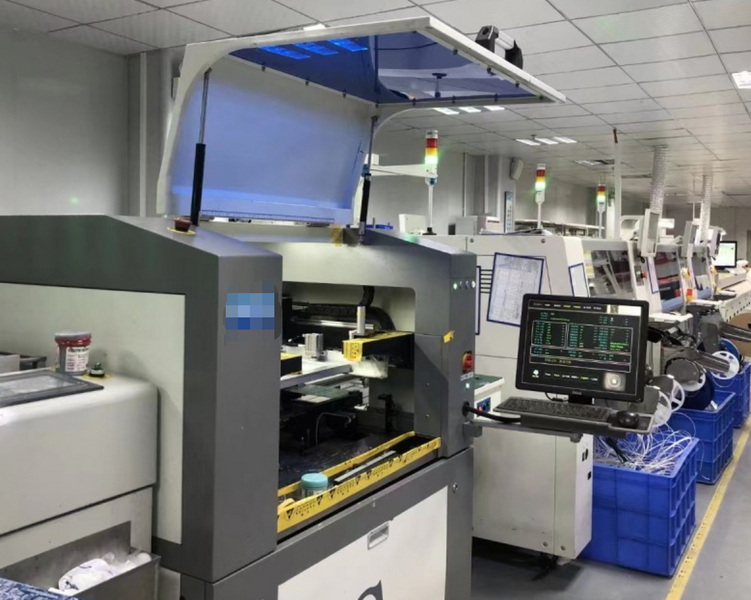
An SMT machine is automated equipment designed for surface mount assembly on PCBs, with pick-and-place SMT machines positioning components precisely for efficient production.
SMT machines mount components directly on PCB surfaces for higher density and speed, unlike through-hole (THT) machines that require drilled holes, making SMT machines ideal for compact designs.
Primary SMT machines include pick-and-place, stencil printers, reflow ovens, and AOI inspection units, forming complete SMT lines for end-to-end assembly.
Highlywin offers end-to-end SMT machines, AI equipment, peripherals, services, and spares, delivering reliable one-stop SMT solutions tailored for global clients.
Regular cleaning, calibration, and updates keep SMT machines optimal; Highlywin provides expert maintenance services to ensure long-term reliability.


