Your Trusted Partner from Prototyping to Mass Production, Email Us:info@highlymachine.com
Please Choose Your Language


Views: 0 Author: Ann Publish Time: 2026-03-15 Origin: Site


Content Menu
● Introduction: Why SMT Tray Feeders Matter in Africa
● Methodology: How This Ranking and Evaluation Was Built
● Core Evaluation Criteria for SMT Tray Feeders in Africa
>> 1. Technical Compatibility and Flexibility
>> 2. Stability, Throughput, and Yield
>> 3. Local Service and Spare Parts Availability
>> 4. Total Cost of Ownership (TCO) and ROI
● Practical Comparison: Key Dimensions to Rank SMT Tray Feeder Suppliers
● Customer‑Driven Rankings: How Top Vendors Stand Out
>> 1. Most Engineer‑Friendly Tray Feeder Solutions
>> 2. Best Local Service and Support for Africa
>> 3. Best Value and ROI Choices
● Highlywin as a One‑Stop SMT Solution Partner
>> What Highlywin Brings to African SMT Customers
● New Deep‑Dive Section 1: How to Evaluate an SMT Tray Feeder in 30 Minutes
● New Deep‑Dive Section 2: Common Pitfalls African Factories Face With Tray Feeders
● New Deep‑Dive Section 3: Example Use Cases in African SMT Factories
● Call to Action: How Highlywin Can Help You Next
● Frequently Asked Questions (FAQ)
>> Q1: Is an automatic SMT tray feeder always better than manual loading in African factories?
>> Q2: How should I choose between OEM tray feeders and third‑party suppliers?
>> Q3: What is the typical ROI period for investing in tray feeders?
>> Q4: How important is local spare parts availability in Africa?
>> Q5: Can Highlywin support both new lines and retrofits of existing SMT equipment?
The African electronics manufacturing landscape is entering a rapid expansion phase, driven by demand in telecommunications, solar, automotive electronics, and consumer devices. As more factories build or upgrade SMT lines, SMT tray feeders are becoming a key bottleneck or enabler of real productivity.
This article focuses on top SMT tray feeder manufacturers and suppliers serving Africa, but goes beyond basic parameter comparison. It emphasizes real customer experience, long‑term reliability, local service, and total cost of ownership (TCO)—the factors that actually determine whether a line runs smoothly or constantly fights downtime.
We also look at how a one‑stop SMT solution provider like Highlywin can help African factories evaluate, deploy, and maintain the right tray feeder solution as part of a complete SMT ecosystem.

To create a customer‑centric ranking, we structure our evaluation around three pillars:
1. Installed base and project track record
- Number and diversity of projects in Africa (telecom, automotive, solar, consumer electronics).
- Mix of new lines vs. retrofit on existing SMT equipment.
2. User feedback and real‑world performance
- Feedback from production engineers, maintenance teams, and plant managers.
- Data points such as unplanned downtime hours, feeder‑related defect rates, and changeover times.
3. Service, logistics, and long‑term support
- Availability of local partners, spare parts, and field service.
- Responsiveness to urgent breakdowns and process optimization requests.
Instead of treating brand size as the only indicator, we give significant weight to long‑term satisfaction: how often feeders are actually used on the line, how frequently they cause stoppages, and how quickly issues are resolved.
When African factories shortlist tray feeder suppliers, they consistently focus on a few critical experience‑based dimensions:
- Pick‑and‑place compatibility:
Whether the tray feeder works seamlessly with major brands such as Yamaha, JUKI, Fuji, Panasonic, ASM/Siemens, and Hanwha/Samsung.
- Tray and component range:
Support for JEDEC trays, custom trays, and a wide range of packages (BGA, QFN, QFP, connectors, large modules, odd‑form parts).
- Integration with existing lines:
Ease of retrofit on mixed‑brand lines common in Africa, where new and refurbished machines often coexist.
- Mechanical stability under continuous operation, vibration, and temperature changes.
- Consistency of pick position and repeatability, especially for fine‑pitch BGAs and small ICs.
- Impact on yield:
Whether the tray feeder reduces mispicks, dropped parts, and delicate component damage compared to manual tray handling.
In many African countries, logistics lead times and customs delays can be significant. For tray feeders, this makes:
- Local or regional stock of critical spare parts (motors, belts, sensors, control boards) crucial.
- On‑site or near‑site service technicians highly valuable.
- Remote diagnostics and training a strong differentiator, especially for facilities far from major cities.
Beyond the purchase price, factories look at:
- Maintenance frequency and cost.
- Unplanned downtime hours per year linked to tray feeder issues.
- Return on investment (ROI) from increased throughput and better use of high‑value placement machines.
A feeder that is slightly more expensive but significantly more stable often delivers better ROI over 3–5 years.
Below is a simplified comparison framework you can use to evaluate vendors serving Africa. The company names are examples of typical players you may encounter when sourcing equipment or turnkey solutions.
Instead of listing a simple "Top 10" by brand size, we categorize vendors into three customer‑oriented leaderboards. You can adapt or localize these in your own marketing content.
Engineers and line technicians prioritize:
- Ease of setup and calibration.
- Intuitive control interface.
- Fast changeover between different trays and products.
Vendors and solutions that often rank high for engineer satisfaction include:
- OEM tray feeders from major PnP brands when used on their own platforms (e.g., Yamaha tray feeder on Yamaha lines).
- Well‑designed third‑party feeders with simple yet robust mechanical design and clear operator interfaces.
- Solutions deployed through integrators like Highlywin, where training, English documentation, operator guides, and quick‑reference checklists are part of the package.
For African factories, service and parts can be as important as hardware specifications. Winners in this category typically:
- Maintain regional hubs (e.g., in South Africa, Egypt, Morocco, Kenya, Nigeria, Tunisia, or Ethiopia).
- Work with authorized local partners for on‑site support and first‑level diagnostics.
- Provide remote troubleshooting, process optimization, and periodic online training.
One‑stop solution providers such as Highlywin can play a strategic role here by:
- Acting as a single point of contact for multiple brands of feeders and SMT machines.
- Holding buffer stock of critical spare parts and offering standardized preventive maintenance programs tailored to African line conditions.
In many African markets, the best seller is not the lowest‑price feeder, but the one that balances:
- Moderate purchase cost.
- Solid mechanical quality.
- Acceptable service coverage through trusted system integrators.
This category is where Asian third‑party tray feeder manufacturers, combined with strong integration and after‑sales support from companies like Highlywin, often become the sweet‑spot choice for expanding SMT factories.
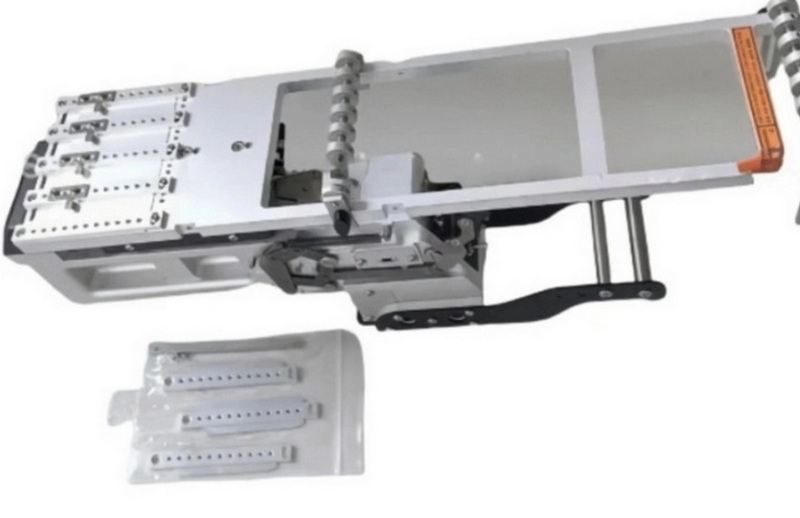
As a company that sells SMT / AI / peripheral equipment and provides comprehensive SMT services and spare parts, Highlywin is positioned not just as a hardware vendor, but as a long‑term technology partner.
1. End‑to‑End SMT Line Design
- Support for new greenfield factories or line upgrades.
- Balancing pick‑and‑place capacity, tray feeders, conveyors, SPI, AOI, reflow, and handling equipment.
- Advising on when to invest in automatic tray feeders vs. manual or semi‑automatic solutions.
2. Vendor‑Neutral Feeder Selection
- Ability to propose multiple brands and configurations, not limited to a single OEM.
- Matching tray feeder options to your existing machine brands, component mix, and production volumes.
3. Lifecycle Support and Continuous Improvement
- Spare parts management, stocking strategies, and standard maintenance kits.
- Training programs for engineers and operators in equipment operation, troubleshooting, and basic preventive maintenance.
- Assistance in measuring ROI: tracking downtime, defect rates, and throughput before and after tray feeder upgrades.
4. Support for Global and African Customers
- Remote service capabilities suitable for globally distributed factories.
- Experience in working with multi‑site EMS and OEM customers with lines in Asia, Europe, and Africa, aligning standards and processes.
To provide immediate practical value, here is a simple on‑site evaluation checklist you can use when you receive a demo or visit a supplier:
1. Mechanical Build Quality
- Check rigidity of the frame and tray guides.
- Move trays from end to end and feel for play or vibration.
2. Changeover Process
- Time how long it takes to switch from one tray type to another.
- Evaluate how many tools are needed (ideally none or few).
3. User Interface and Diagnostics
- Confirm how alarms are displayed and whether error messages are clear and actionable.
- Check if there is a maintenance menu showing cycle counts, motor hours, or recommended service intervals.
4. Integration with PnP Machine
- Observe how the tray feeder communicates with the pick‑and‑place: handshake signals, error handing, recovery from stops.
- Verify how pickup positions are taught and stored and how many products can be stored in memory.
5. Safety and Ergonomics
- Check guarding, interlocks, and emergency stops.
- Evaluate how easily operators can load/unload trays without awkward postures.
Using this checklist during vendor visits helps you separate marketing claims from real usability.
Despite investing in modern SMT equipment, many factories still struggle with tray feeders due to:
- Underestimating environmental conditions
- Dust, temperature, and humidity can affect sensors, belts, and lubricants.
- Lack of preventive maintenance routines
- Feeder maintenance is often treated as low priority until failures occur.
- Insufficient operator and technician training
- Misalignment, improper tray loading, and incorrect parameter settings all reduce performance.
A one‑stop partner like Highlywin can significantly reduce these risks by:
- Helping define maintenance checklists and recommended spare parts lists from day one.
- Offering remote audits of operating parameters and maintenance data.
- Providing standard training packages and documentation specific to each project.
To illustrate how tray feeder selection and support shape results, here are three typical scenarios (with anonymized factories):
1. North African Automotive Electronics Plant
- Challenge: High‑mix production of ECUs and control modules with multiple BGAs and QFNs per board.
- Solution: Combination of OEM‑brand tray feeders for critical components and third‑party feeders for secondary parts, integrated and supported by a single solution provider.
- Result: Reduced changeover times and stabilized output, enabling more product variants without sacrificing throughput.
2. West African Telecom and Networking OEM
- Challenge: Rapid ramp‑up for telecom base station boards using a mix of new and refurbished SMT machines.
- Solution: Flexible, brand‑agnostic tray feeders, selected and tuned to work across mixed PnP platforms, along with standardized training and shared spare parts strategy.
- Result: Lower capital expenditure and improved line utilization, despite equipment diversity.
3. East African Solar Inverter Manufacturing Line
- Challenge: Large power modules and heavy components that do not fit standard tape feeders.
- Solution: Heavy‑duty tray feeders and custom trays, plus line‑level engineering to ensure smooth conveyor and buffer integration.
- Result: Automation of previously manual steps, higher consistency, and reduced scrap on expensive power modules.
These examples show why vendor‑independent engineering support and holistic line thinking are as important as the tray feeder brand itself.
If you are planning a new SMT line in Africa or want to upgrade existing lines with higher‑performance tray feeders, you do not need to navigate the vendor landscape alone.
You can work with Highlywin as a one‑stop SMT solution provider for:
- Line design and equipment selection.
- Tray feeder integration across multiple PnP brands.
- Long‑term spare parts and maintenance support.
- By combining equipment sourcing, engineering, and lifecycle service, Highlywin helps you reduce technical risk, shorten ramp‑up time, and maximize ROI from your SMT investments.
Consider scheduling a project review or online consultation with Highlywin to discuss your current line configuration, component mix, and medium‑term production roadmap. With that information, a tailored tray feeder and SMT line optimization plan can be developed for your factory.
Contact us to get more information!
Not always. For low volumes or very simple boards, manual trays can be sufficient. For higher volumes, multi‑shift operation, or boards with many tray components, an automatic tray feeder usually offers better consistency, fewer handling defects, and improved utilization of high‑value pick‑and‑place machines.
If your line is built around a single PnP brand and you require maximum integration and stability, OEM feeders are often the first choice. If you run mixed equipment or need specific capabilities or cost structures, high‑quality third‑party feeders integrated and supported by a solution provider like Highlywin can be more flexible and cost‑effective.
The ROI depends on production volume, component cost, and current manual handling issues. Many factories see a positive return within 1–3 years due to reduced labor, fewer handling defects, and better use of existing SMT capacity. Calculating downtime reduction and scrap savings is key to building a solid business case.
Very important. Shipping times and customs processes can significantly extend downtime if critical parts are not available regionally. Working with partners who can stock key spares and provide rapid technical support is essential for stable, high‑utilization SMT lines in Africa.
Yes. Highlywin is experienced in new turnkey SMT lines as well as retrofit projects where new tray feeders, conveyors, or inspection equipment need to be integrated with existing PnP machines. This includes brand‑mix environments and factories that are migrating gradually from manual to automated feeding solutions.
1. IPC – Association Connecting Electronics Industries. "SMT Assembly and Equipment Best Practices."
https://www.ipc.org/
2. SMTA – Surface Mount Technology Association. "Technical articles and conference papers on SMT automation and component feeding."
https://www.smta.org/
3. JUKI Automation Systems. "Tray Feeder Solutions for High‑Mix SMT Production."
https://www.jukiamericas.com/
4. Yamaha Robotics SMT. "Component Feeding Systems – Trays, Tapes, and Sticks."
https://smt.yamaha-motor-im.com/
5. Industry case studies and solution briefs from global SMT line integrators and distributors (regional white papers and customer success stories, 2023–2025).


