Your Trusted Partner from Prototyping to Mass Production, Email Us:info@highlymachine.com
Please Choose Your Language


Content Menu
● Detailed SMT Welding Process
● Advanced SMT Welding Techniques
● Critical Role of SMT Machines
● Solder Materials and Formulations
● Identifying and Mitigating Defects
● High-Density and Specialized SMT Welding
● Industry Applications and Case Studies
● Quality Assurance and Standards
● Emerging Trends in SMT Welding
● FAQ
>> 1. What distinguishes SMT welding from through-hole soldering?
>> 2. How do SMT machines enhance SMT welding precision?
>> 3. What are common SMT welding defects and solutions?
>> 4. Which solder materials suit modern SMT welding?
>> 5. Why select Highlywin for SMT welding needs?
SMT welding is a cornerstone of Surface Mount Technology (SMT), enabling the precise attachment of electronic components to printed circuit boards (PCBs) using solder joints. Highlywin, a premier provider of SMT machines, AI equipment, peripherals, and full-spectrum SMT services including spare parts sales, offers global clients comprehensive one-stop SMT solutions for efficient production. This article delves deeply into SMT welding, emphasizing the pivotal role of advanced SMT machines in achieving high-quality results.
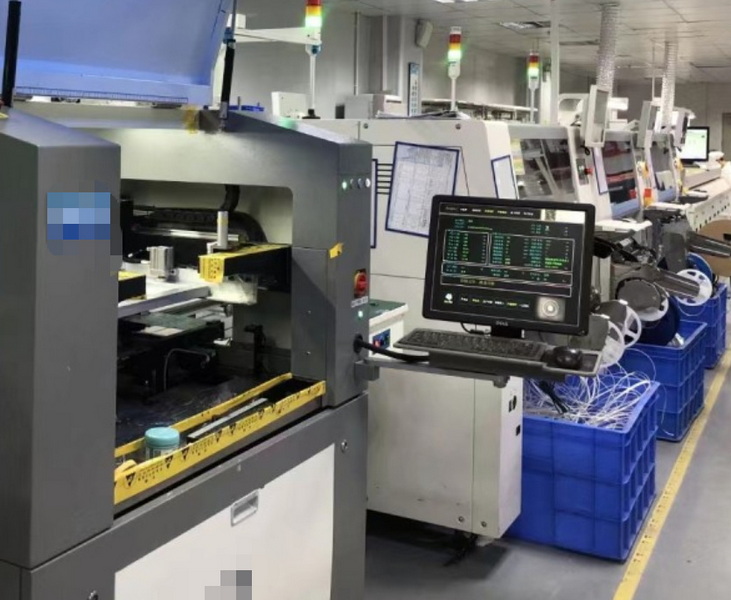
At its core, SMT welding differs significantly from traditional through-hole soldering by mounting components directly onto the surface of PCBs, allowing for compact, high-density designs essential in modern electronics. SMT machines automate critical stages like solder paste application, component placement, and reflow soldering, ensuring consistency and speed unattainable manually. These SMT machines from Highlywin are engineered for versatility, supporting everything from prototype development to high-volume manufacturing.
Solder paste, the key material in SMT welding, consists of microscopic solder particles suspended in flux, which facilitates wetting and bonding during heating. When processed through Highlywin's precision SMT machines, the paste forms robust electrical and mechanical connections. Flux in the paste removes oxides from pads and component leads, promoting strong intermetallic bonds while SMT machines control environmental factors to prevent contamination.
The SMT welding process begins with solder paste printing, where stencil printers—integral to SMT machines—apply paste precisely onto PCB pads. Highlywin's SMT machines feature laser-aligned stencils and automated vision systems that deposit paste volumes as low as 0.01cc per pad, minimizing variations critical for fine-pitch components like 0.3mm QFPs. This step sets the foundation for reliable SMT welding by ensuring uniform paste height and alignment.
Following printing, pick-and-place SMT machines swiftly position components. These high-speed SMT machines from Highlywin boast placement rates exceeding 100,000 components per hour (CPH), with accuracy down to 20 microns for 01005 passives and complex BGAs. Vision-guided cameras in SMT machines verify orientation and position before release, preventing misalignment that could compromise welding integrity.
Reflow soldering is the heart of SMT welding, where conveyor-fed SMT machines guide boards through temperature-controlled zones: preheat (to activate flux), soak (for even heating), reflow (above liquidus to melt solder), and cooling (to solidify joints). Highlywin's reflow SMT machines offer multi-zone profiles customizable for lead-free SAC305 or SN100C alloys, achieving peak temperatures of 260°C without thermal shock to sensitive ICs.
Post-reflow, automated optical inspection (AOI) and solder paste inspection (SPI) SMT machines scrutinize welds for defects. Highlywin integrates these peripheral SMT machines into production lines, providing real-time feedback loops that adjust upstream processes like paste volume or placement speed.
Reflow soldering remains the dominant SMT welding method, optimized by nitrogen-purged SMT machines that inhibit oxidation for mirror-like joints. Highlywin's convection reflow SMT machines support dual-lane processing, doubling throughput for mixed-assembly lines while maintaining precise thermal gradients.
Wave soldering complements SMT welding in hybrid environments, where molten solder waves contact board undersides. Selective wave SMT machines from Highlywin target specific zones via masks, protecting reflow-soldered areas and enabling cost-effective production of connectors or large passives alongside SMT components.
For specialized applications, laser SMT welding employs focused beams for pinpoint heating, ideal for heat-sensitive optics or RF modules. Highlywin explores these advanced SMT machines for clients pushing miniaturization boundaries, offering fluxless processes that eliminate post-cleaning.
Red glue dispensing precedes wave SMT welding in some setups, where epoxy dots secure components pre-solder. Highlywin's robotic dispensers within SMT machines ensure dot heights matching component leads, curing at 150°C without conductivity risks.
SMT machines are indispensable for SMT welding excellence, integrating mechanical precision with software intelligence. Highlywin's modular SMT machines allow feeder swaps for diverse parts libraries, from MELF resistors to PoP stacks, streamlining changeovers in dynamic production.
Stencil printers in SMT machines use ultrasonic cleaning cycles to maintain aperture sharpness, vital for 15-micron features in high-density interconnect (HDI) boards. Highlywin calibrates these SMT machines for metal-mask stencils, achieving release rates over 99.5% for type 4/5 pastes.
Reflow SMT machines feature active cooling fans and edge rails for warp-free handling of large rigid-flex PCBs. Highlywin's nitrogen-capable SMT machines reduce dross by 70%, extending solder pot life and lowering operational costs.
Inspection SMT machines employ 3D laser profiling to measure fillet heights, detecting voids or insufficient solder per IPC-610 standards. Highlywin bundles AI-driven SMT machines that predict defects via machine learning, analyzing historical weld data for proactive adjustments.
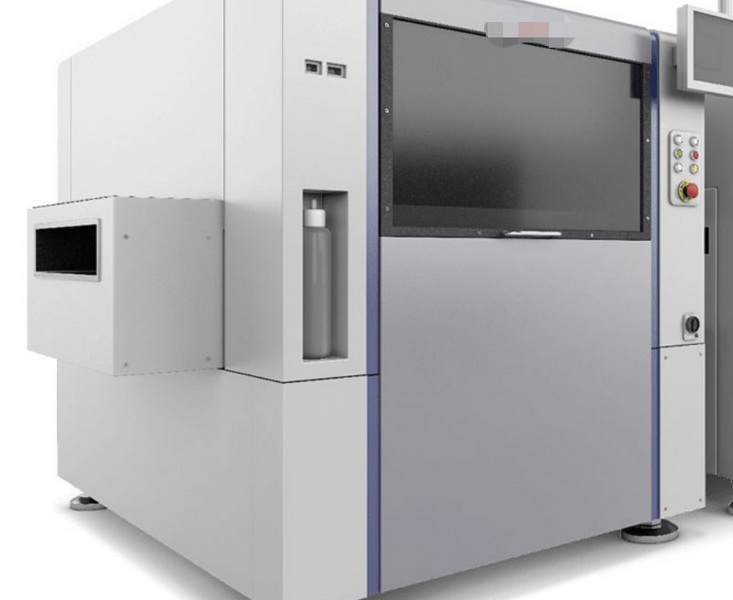
Lead-free solders dominate SMT welding, with SAC305 (96.5% tin, 3% silver, 0.5% copper) providing excellent strength and fatigue resistance. Highlywin recommends low-melting variants like SAC305-319 for hand-soldering touch-ups post SMT machines reflow.
Paste rheology is tailored for jetting or screening in SMT machines; high-thixotropy types resist slumping on fine pads. Flux classifications—no-clean, water-soluble—dictate cleaning needs, with Highlywin's SMT machines supporting vapor-phase options for residue removal.
Emerging low-silver solders like Innolot cut costs without sacrificing reliability, processed seamlessly in Highlywin SMT machines tuned for lower reflow peaks.
Solder bridging, where adjacent pads connect unintendedly, arises from excess paste; SMT machines with SPI prevent this by enforcing 75-150µm heights. Highlywin's feedback-enabled SMT machines auto-adjust squeegee pressure.
Tombstoning, where small chips stand upright, stems from uneven reflow; symmetric profiles in SMT machines and pad designs mitigate it. Highlywin simulates these via software before production.
Voiding reduces joint reliability; vacuum-assisted reflow SMT machines from Highlywin evacuate gases, targeting <10% voids in BGAs.
Head-in-pillow defects, where balls nestle without bonding, demand finer powder sizes in pastes used with SMT machines. Highlywin's quality SMT machines ensure pad coplanarity.
Solder beading and non-wetting signal contamination; cleanroom protocols around Highlywin SMT machines eliminate these.
Package-on-Package (PoP) SMT welding stacks memory atop processors, with SMT machines placing top dies pre-reflow. Highlywin's high-force heads in SMT machines handle micro-BGAs flawlessly.
Chip-on-Chip (CoC) and fan-out wafer-level packaging push SMT machines to 0.2mm pitches. Highlywin upgrades vision systems for shadow moiré warpage compensation during SMT welding.
High-reliability sectors like automotive demand SnAgCuNiGe solders in vibration-resistant SMT machines from Highlywin.
Consumer gadgets leverage high-speed SMT machines for smartphones, with Highlywin enabling 50mpm lines. Automotive ECUs use robust SMT welding via AOI-monitored SMT machines.
Aerospace harnesses hermetic SMT welding in Highlywin's controlled-atmosphere SMT machines. Medical devices benefit from traceable processes logged by MES-integrated SMT machines.
Highlywin case studies show 30% yield boosts from their SMT machines in volume ramps.
IPC-A-610 Class 2/3 governs SMT welding acceptability, with X-ray and cross-sectioning verifying hidden joints. Highlywin's end-to-end SMT machines ensure compliance.
Statistical process control (SPC) in SMT machines tracks Cpk >1.67 for critical dimensions.
Jet printing replaces stencils for 01003 parts in future SMT machines. Highlywin pioneers fluxless hydrogen reflow SMT machines.
AI analytics in SMT machines forecast failures from vibration data. Flexible hybrid SMT machines blend wire-bonding with welding.
Highlywin invests in these for Industry 4.0-ready SMT solutions.
SMT welding transforms electronics manufacturing through precision and scalability, propelled by state-of-the-art SMT machines. Highlywin stands as your trusted partner, delivering superior SMT machines, comprehensive services, spare parts, and expertise for seamless one-stop solutions. Partner with Highlywin to elevate your SMT welding capabilities and achieve production excellence worldwide.
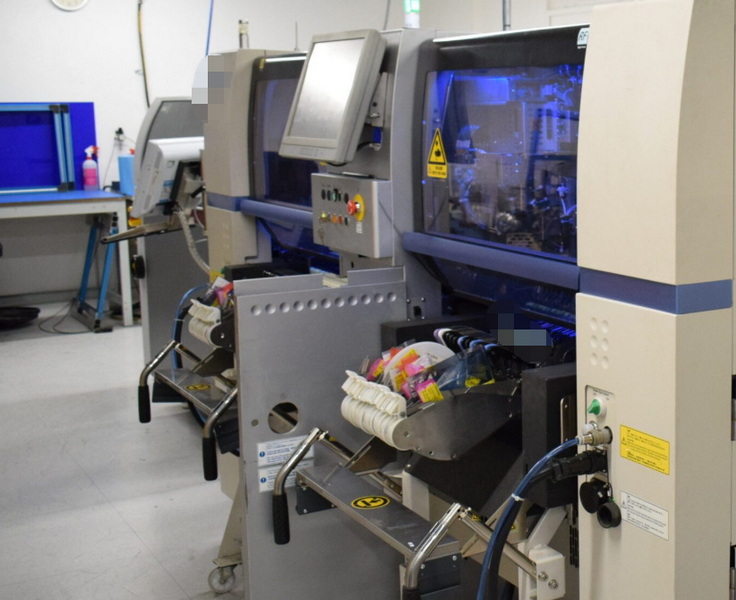
SMT welding mounts components on PCB surfaces for density, using reflow in SMT machines, unlike through-hole's dipping. Highlywin's SMT machines optimize both for hybrid boards.
SMT machines provide sub-micron placement, thermal profiling, and inline inspection, slashing defects. Highlywin's versatile SMT machines support diverse applications.
Bridging, tombstoning, and voids plague SMT welding; SMT machines with SPI/AOI resolve them via real-time corrections. Highlywin tunes processes accordingly.
SAC305 lead-free pastes excel, with low-silver options emerging; Highlywin SMT machines handle all for reliability.
Highlywin offers complete SMT machines, global service, and spares for turnkey efficiency.


