Your Trusted Partner from Prototyping to Mass Production, Email Us:info@highlymachine.com
Please Choose Your Language


Views: 222 Author: Ann Publish Time: 2025-12-24 Origin: Site


Content Menu
● Understanding Traditional Assembly
>> SMT Machine Workflow in Detail
>> Traditional Assembly Workflow in Detail
● Speed and Efficiency Comparison
● Component Density and Size Advantages
● Reliability and Performance Metrics
● Applications of SMT Machines
● Limitations and Hybrid Strategies
● Highlywin's Comprehensive SMT Solutions
● FAQ
>> 1. What are the main advantages of SMT machines over traditional assembly?
>> 2. Can SMT machines handle high-mix, low-volume production?
>> 3. How do SMT machines improve electrical performance?
>> 4. What maintenance is required for SMT machines?
>> 5. When should hybrid SMT and traditional assembly be used?
SMT machines revolutionize electronics manufacturing by enabling high-speed, precise component placement on PCBs, far surpassing traditional assembly methods. Highlywin, a leading provider of SMT machines, AI equipment, peripherals, and comprehensive SMT services, delivers one-stop solutions for global clients seeking efficiency and reliability.

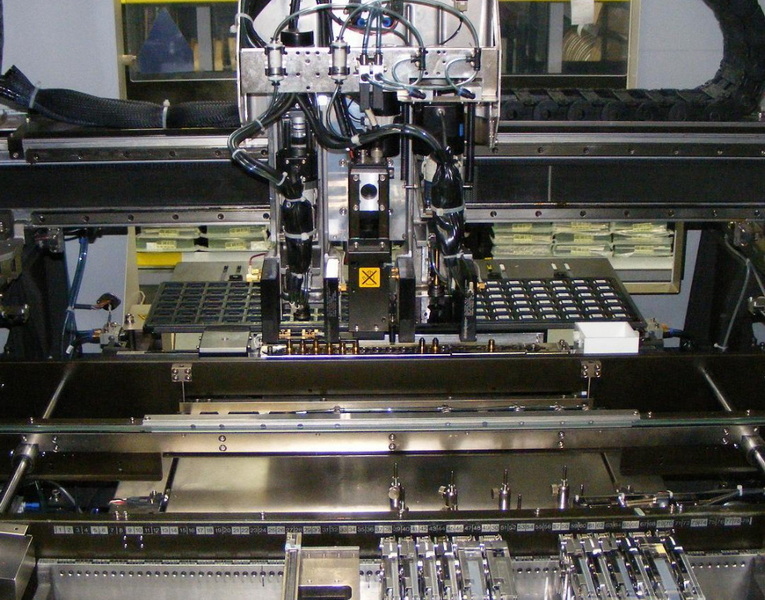
SMT machines, or Surface Mount Technology machines, represent the pinnacle of modern electronics assembly automation. These sophisticated SMT machines are designed to place electronic components directly onto the surface of printed circuit boards (PCBs) without the need for holes, allowing for unprecedented levels of miniaturization and efficiency. At the heart of SMT machines lies the pick-and-place system, which uses robotic arms equipped with vacuum nozzles to delicately grasp and position tiny surface-mount devices (SMDs) such as resistors, capacitors, and integrated circuits at astonishing speeds—often exceeding 50,000 components per hour in high-end models.
The process begins with solder paste being applied through a precision stencil printer, a critical step that SMT machines integrate seamlessly into their workflows. Following this, the high-speed placement heads on SMT machines scan fiducial marks on the PCB for alignment accuracy down to microns, ensuring flawless positioning even for ultra-fine pitch components like 0201 resistors or ball grid arrays (BGAs). After placement, the boards move into reflow ovens where controlled heating profiles melt the solder paste, forming reliable electrical and mechanical joints across the entire board simultaneously. This end-to-end automation in SMT machines not only boosts throughput but also minimizes human error, making them indispensable for high-volume production environments.
Highlywin's range of SMT machines stands out with advanced features like multi-head gantries, intelligent feeders that support tape, tray, and tube inputs, and integrated vision systems for real-time defect detection. These SMT machines are modular, allowing easy scalability from prototype runs to full-scale mass production. Moreover, SMT machines from Highlywin incorporate AI-driven algorithms for predictive maintenance, reducing downtime and extending equipment lifespan. In essence, SMT machines transform raw PCBs into functional assemblies with speed and precision that traditional methods simply cannot match.
Traditional assembly, commonly referred to as through-hole technology (THT) or plated-through-hole (PTH) assembly, relies on inserting the leads of components through pre-drilled holes in the PCB and securing them with solder on the opposite side. This method, which dominated electronics manufacturing for decades, involves manual or semi-automated processes where workers or machines bend, insert, and clinch leads before wave soldering or hand soldering takes over. While robust, traditional assembly is inherently labor-intensive, with each component handled sequentially, leading to cycle times that can stretch from hours to days for complex boards.
In a typical traditional assembly line, PCBs first undergo drilling—a time-consuming step that creates holes sized to match component leads. Components like axial resistors, pin headers, or large electrolytic capacitors are then inserted, often requiring fixtures or jigs to hold them in place during soldering. Wave soldering machines flood the underside with molten solder, which flows through the holes to form joints, followed by manual trimming of excess leads. This process excels in applications demanding high mechanical strength, such as power supplies or military hardware, where the long leads provide superior vibration resistance and heat dissipation.
However, traditional assembly faces significant limitations in today's fast-paced market. The need for drilling increases PCB fabrication costs and lead times, while the single-sided population restricts component density. Labor costs soar due to the manual dexterity required, and rework is cumbersome, often involving desoldering tools that risk board damage. Despite these drawbacks, traditional assembly remains relevant for low-volume prototypes or legacy designs where SMT machines might prove overkill.
The workflow of SMT machines is a symphony of precision engineering. It commences with the solder paste printer, where automated squeegees force paste through a stainless-steel stencil onto pad sites, achieving deposit volumes accurate to within 10%. Vision-guided SMT machines then verify paste height and position via solder paste inspection (SPI) before transferring boards to the pick-and-place station.
Here, feeder banks stocked with SMD reels supply components to turret or linear heads on SMT machines, which use dual cameras—one for part recognition and another for board alignment—to place parts at velocities up to 200,000 chips per hour (CPH). Post-placement, automated optical inspection (AOI) scans for defects like misplacements or bridges. Finally, reflow soldering in nitrogen-purged ovens follows predefined profiles: preheat to activate flux, soak for even heating, reflow above liquidus temperature (around 217-220°C for SAC305 alloy), and cool to solidify joints. This conveyorized process in SMT machines enables continuous flow production, with changeover times under 30 minutes for new jobs.
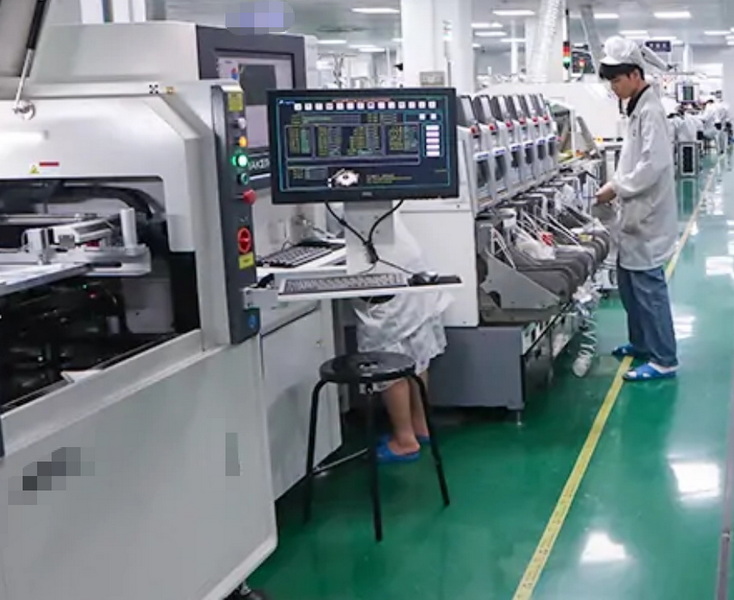
Highlywin enhances SMT machines with conveyor systems and stackers, ensuring 24/7 operation with minimal intervention.
Contrastingly, traditional assembly's workflow is more fragmented. PCB drilling precedes component insertion, often using carbide bits in CNC machines, creating holes from 0.8mm to several millimeters in diameter. Manual insertion stations follow, where operators load parts into holes, a bottleneck prone to fatigue errors.
Wave soldering immerses the board's underside in a solder fountain, capillary action filling holes as flux cleans oxides. Post-solder, lead cutters shear excesses, and functional testing occurs offline. For selective soldering, robots target specific areas, but overall throughput lags—typically 1,000-5,000 components per hour. This method demands extensive floor space for stations and generates more hazardous waste from lead trimming.
SMT machines eclipse traditional assembly in speed, processing entire boards in minutes versus hours. High-volume SMT machines handle 100,000+ CPH, ideal for consumer gadgets, while traditional lines cap at thousands due to sequential handling. Efficiency gains from SMT machines include 80-90% labor reduction, as robots replace dozens of workers.
Setup for SMT machines involves quick stencil swaps and recipe loading via software, versus drilling new hole patterns in traditional setups. Energy use is lower in SMT machines, with targeted reflow versus broad wave heating. Yield rates soar to 99.9% with inline inspections on SMT machines, versus 95% or less traditionally, slashing scrap costs.
SMT machines unlock double-sided, high-density layouts, packing 50-70% more components per square inch. Fine-pitch QFNs, LGAs, and 0.3mm BGA balls are commonplace on SMT machines, enabling slimmer profiles for IoT devices and EVs. No holes mean thinner boards (0.4-0.8mm), reducing weight by up to 70%.
Traditional assembly's bulky through-hole parts limit density, suiting only spaced-out designs like industrial controls. SMT machines support passive networks and embedded passives, shrinking footprints dramatically.
Initial capital for SMT machines is higher (lines start at $500K), but per-unit costs plummet in volume: PCBs save 20-30% sans drilling, materials drop with smaller SMDs, and automation amortizes over millions of units. Traditional assembly's low entry ($50K setups) favors prototypes, but scales poorly—labor at $20/hour multiplies expenses.
ROI on SMT machines hits within 6-12 months for mid-volume runs, per industry benchmarks. Highlywin's cost-effective SMT machines and service packages accelerate payback.
SMT machine joints offer low-profile reliability, with shear strength rivaling THT under vibration via underfill for BGAs. Shorter paths cut parasitic inductance by 50-80%, boosting signal integrity to 10GHz+. Thermal cycling tests show SMT machines enduring 1,000+ cycles.
Traditional assembly's interleaved leads provide superior pull strength (10-20kg vs. 5kg for SMT), ideal for high-current apps. However, SMT machines with via-in-pad designs bridge this gap.
SMT machines dominate consumer electronics, assembling smartphone motherboards with 2,000+ parts. In automotive, they build ADAS ECUs; medical for pacemakers; telecom for 5G routers. Highlywin's SMT machines excel in renewables, powering inverter controls.
Traditional assembly lingers in aerospace connectors and high-voltage rectifiers.
- Scalability: SMT machines ramp from 1K to 1M units effortlessly.
- Flexibility: Handle 10,000+ part types with smart feeders.
- Eco-Friendliness: Less lead, smaller boards reduce e-waste.
- Traceability: SMT machines log every placement for audits.
- Global Competitiveness: Faster time-to-market via SMT machines.
SMT machines struggle with very heavy components (>50g) without THT hybrids. For prototypes, traditional assembly's simplicity wins. Many lines blend both: SMT for SMDs, selective solder for THT.
Highlywin offers turnkey SMT machines—from printers to handlers—plus AI AOI, peripherals, spares, and global service. Our SMT machines integrate Industry 4.0 for real-time analytics, empowering clients in 50+ countries.
SMT machines have redefined electronics manufacturing, offering unmatched speed, density, cost savings, and performance over traditional assembly. While THT retains niches for mechanical robustness, the future belongs to SMT machines, especially with Highlywin's one-stop solutions driving innovation worldwide. Embrace SMT machines for your next project.
SMT machines deliver superior speed, higher density, automation, and cost-efficiency for high-volume production, while traditional methods offer mechanical strength for specialized uses.
Yes, modern SMT machines with flexible feeders and quick setups excel in high-mix scenarios, rivaling traditional assembly's versatility.
SMT machines minimize signal paths, reducing inductance and enabling high-speed signals up to multi-GHz frequencies.
Routine nozzle cleaning, vision calibration, and software updates; Highlywin provides predictive maintenance services.
Hybrids suit products needing both dense SMDs and robust THT components, like power electronics.


