


Views: 222 Author: Ann Publish Time: 2025-12-09 Origin: Site


Content Menu
● Understanding Statistical Machine Translation
● Historical Development of Statistical Machine Translation
● The Components of SMT Systems
● Modern AI Adoption in SMT and Translation Fields
● Real-World Applications of Statistical Machine Translation
● FAQ: Common Questions About Statistical Machine Translation
>> 1. What is the key principle behind Statistical Machine Translation?
>> 2. How does SMT differ from Neural Machine Translation?
>> 3. Is SMT still in use today?
>> 4. Can SMT concepts apply to SMT Machines in manufacturing?
>> 5. Why is SMT important historically?
In modern industries, the acronym SMT can refer to two very different yet remarkably similar worlds — Surface Mount Technology (SMT) Machines in manufacturing, and Statistical Machine Translation (SMT) in computational linguistics. Both are rooted in the same fundamental idea: precision automation through systematic data processing.
For businesses like Highlywin that provide one-stop SMT solutions — from SMT/AI/peripheral equipment to full-service support — understanding the parallels between industrial SMT and statistical SMT can help showcase how automation, probability, and data models power both language understanding and advanced manufacturing.
This article explores Statistical Machine Translation (SMT) in-depth: its principles, historical background, models, and relevance today. Along the way, it draws insightful comparisons to SMT Machines, showing how both share a DNA of precision, learning, and performance optimization.

Statistical Machine Translation (SMT) is a data-driven approach to automatically translating text between languages. Unlike rule-based translation systems that depend on manually written grammar rules, SMT derives translation knowledge from bilingual corpora — large datasets containing the same text in multiple languages.
The primary goal of SMT is to choose the most likely translation for a given sentence based on statistical probability. This makes translation not just a linguistic challenge but also a mathematical optimization problem.
In simple terms, SMT doesn't “know” language the way humans do. Instead, it computes how often words and phrases occur together across millions of examples and learns to predict the most probable matches. This probabilistic nature is much like how SMT Machines calculate optimal component placement paths to ensure flawless manufacturing precision.
The idea of using statistics for machine translation dates back to the early 1990s. IBM's research team pioneered the concept with their Candide Project, developing what became known as IBM Models 1–5. These models introduced frameworks for aligning words, computing probabilities, and learning mappings from bilingual text corpora.
Key milestones include:
- 1993–1997: IBM introduces aligned bilingual modeling systems, creating the foundation of SMT research.
- Early 2000s: SMT dominates machine translation, replacing traditional rule-based systems with more flexible probabilistic models.
- 2010 onward: The rise of neural networks leads to Neural Machine Translation (NMT), which surpasses SMT in fluency and contextual understanding, though SMT remains influential in academic and commercial settings.
The evolution of SMT mirrors the development of SMT Machines in manufacturing. Just as older pick-and-place systems gave rise to AI-enhanced smart factories, SMT evolved from statistical methods to AI-driven translation. Both demonstrate continuous improvement built upon earlier innovations.
A complete SMT architecture typically includes several main components, each playing a crucial role in generating an accurate translation.
The Language Model ensures that the generated translation sounds natural in the target language. It's trained on large monolingual text sets and assigns probabilities to word sequences. For example, the phrase “machine translation system” has a higher probability of occurring than “translation machine system,” guiding the model toward fluent sentence structures.
In the same way, modern SMT Machines rely on software models to determine the most efficient movement paths, ensuring logical sequencing and minimizing errors during high-speed production.
The Translation Model focuses on accuracy: how likely a given source phrase translates into a certain target phrase. It is built from large parallel corpora through word and phrase alignment, learning the relationships between linguistic patterns.
Decoders combine both language and translation probabilities to determine the best output. They search through millions of possible translations to find the one with the highest overall probability — a process similar to the optimization algorithms that drive SMT Machine operations to align and place components with micrometer-level precision.
Alignment is the process of mapping words between languages. For example, the English word “computer” aligns with the French “ordinateur,” even if their grammatical positions differ. SMT uses alignment tables to construct meaningful translation pairs — analogous to component mapping in PCB manufacturing.
Languages differ in syntax and word order. A reordering model adjusts phrase sequences so that the translation follows the grammar rules of the target language. This model is what helps SMT output readable, structured sentences rather than direct, awkward word-for-word conversions.
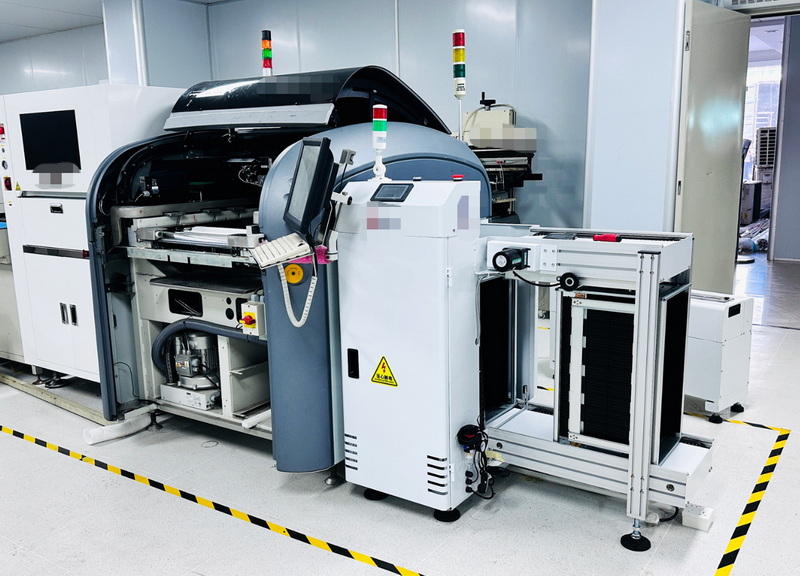
Over time, researchers have developed several types of statistical models, each building upon previous limitations.
The earliest type of SMT treats words as independent units. While simple and computationally lightweight, it neglects contextual and grammatical relationships between words, leading to choppy translations.
Phrase-based systems translate whole groups of words instead of single words. This approach dramatically improves fluency and remains one of the most successful forms of SMT due to its balance between accuracy and computational efficiency.
This method enhances phrase-based models by introducing hierarchical structures, allowing translation of nested phrases. Hierarchical SMT effectively captures long-range dependencies in languages with complex word orders.
Syntax-based systems employ linguistic parsing, analyzing sentence structure within both source and target languages. It provides a deeper understanding of grammar rules, enhancing translation quality for formal and technical documents.
Each generation of improvement parallels upgrades in SMT Machine design — from early mechanical pick-and-place devices to intelligent robotic arms capable of self-correction, high-speed multi-head operation, and automated learning.
- Scalable and Flexible: SMT models can be trained quickly on different language pairs.
- Efficient Learning: They rely on data patterns, not human rules, making domain adaptation faster.
- Transparent Models: Translation probabilities can be analyzed and tuned for better results.
- Automation: The entire process is data-driven, greatly reducing manual work.
- Customizable Output: Specialized corpora can improve accuracy for industries like healthcare, technology, and manufacturing.
Like an SMT Machine, SMT systems achieve consistency through automation while still allowing engineers to adjust parameters for optimal performance.
While SMT has advanced machine translation, several inherent challenges remain:
- Contextual Ambiguity: SMT struggles to interpret nuanced meanings and idioms.
- Data Dependency: Massive, high-quality parallel corpora are necessary for accuracy.
- Complex Grammars: SMT often fails with languages that have non-linear syntax.
- Fragmented Output: Translations can sound mechanical, especially for creative texts.
- Outdated Technology: Neural models now dominate due to their contextual deep learning capabilities.
Even with these limitations, SMT remains vital for low-resource languages and specialized corporate translation systems.
Artificial Intelligence has transformed how both forms of SMT operate:
- In language translation, AI enhances models with contextual awareness, real-time learning, and predictive text generation.
- In manufacturing, AI empowers SMT Machines with visual inspection, predictive maintenance, and automatic parameter calibration.
For a company like Highlywin, integrating smart analytics into SMT Machine operations demonstrates the same principles of continuous improvement that SMT once symbolized in computational linguistics — data, iteration, and precision.
SMT still finds applications today where interpretability, control, and scalability matter:
- Technical and Legal Documentation: Controlled sentence structures enhance reliability.
- Domain-Specific Translation: Industries like medical, financial, or manufacturing can fine-tune SMT models to their vocabulary.
- Low-Resource Languages: When limited data prevents neural training, SMT remains effective.
- Evaluation Benchmarks: Researchers still use SMT systems as baselines for testing new AI translation methods.
- Hybrid Production Pipelines: Combining SMT and NMT ensures both accuracy and fluidity.
This adaptability reflects the enduring relevance of SMT principles—maintaining precise control while embracing AI advancements, much like industrial SMT Machines evolve while retaining their core engineering logic.
Statistical Machine Translation (SMT) marked a turning point in computational linguistics by replacing manual rule design with probabilistic automation. Just as SMT Machines revolutionized manufacturing through automated placement and high-speed accuracy, SMT revolutionized translation by teaching computers to “learn” from data instead of following rigid instructions.
Although modern neural models dominate translation tasks today, SMT's influence persists — forming the conceptual backbone of current AI systems. Both forms of SMT, whether assembling electronic circuits or decoding human languages, embody the same timeless engineering principles: precision, learning from feedback, and the intelligent use of data.
For manufacturing enterprises and innovators, this shared foundation underscores why embracing statistical intelligence — in both equipment and algorithms — continues to shape the future of automation.
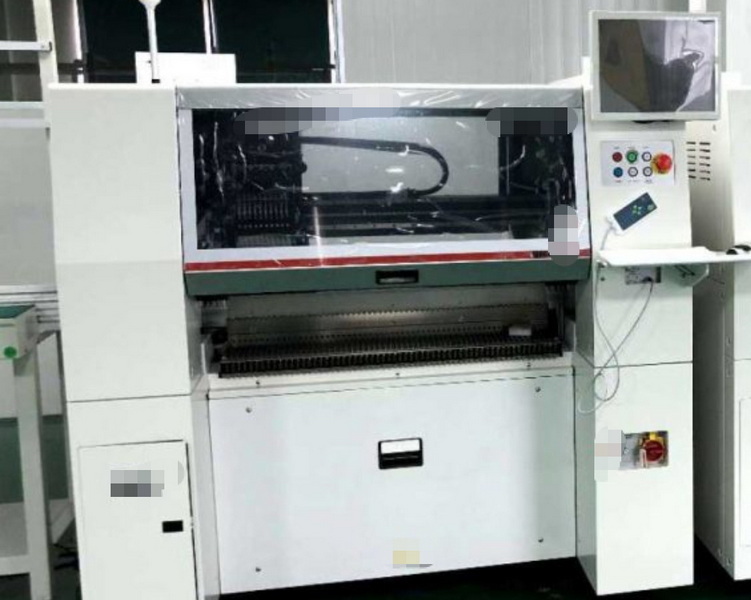
Statistical Machine Translation works by selecting the most probable translation for a given text using statistical models derived from bilingual data, instead of relying on manual grammar rules.
SMT relies on probability and alignment of phrases, while Neural Machine Translation uses neural networks to understand full sentence context. NMT produces more fluent translations but lacks SMT's transparency.
Yes. SMT remains relevant in specialized industries, research, and low-resource languages where neural networks are less effective or data is limited.
Absolutely. Both rely on data, modeling, and optimization algorithms to achieve precise output—whether in language or electronics assembly.
SMT paved the way for modern AI by demonstrating that computers can learn patterns statistically, influencing developments across machine learning, translation, and automation.


