Your Trusted Partner from Prototyping to Mass Production, Email Us:info@highlymachine.com
Please Choose Your Language


Views: 222 Author: Ann Publish Time: 2025-12-17 Origin: Site


Content Menu
● Understanding Calibration in SMT Pick and Place Machines
● Why Regular Calibration Matters
>> 1. Enhances Placement Accuracy
>> 2. Minimizes Production Downtime
>> 3. Reduces Rework and Material Waste
>> 4. Extends Equipment Lifespan
>> 5. Ensures Process Traceability and Compliance
● Factors That Influence Calibration Frequency
● The Calibration Process: Step-by-Step Guide
>> Step 1: Preliminary Inspection
>> Step 2: Mechanical Accuracy Test
>> Step 3: Feeder and Nozzle Calibration
>> Step 4: Vision System Calibration
>> Step 5: XY and Z Axis Correction
>> Step 6: Functional Verification
>> Step 7: Data Recording and Reporting
● Role of Professional SMT Service Providers
● Common Calibration Problems and Solutions
● Advanced Calibration Tools and Technologies
● Best Practices for Maintaining Calibration Stability
● Case Example: Achieving Cost Savings through Calibration
● The Economic Impact of Regular Calibration
● FAQ
>> 1. What are the risks of neglecting SMT Pick and Place Machine calibration?
>> 2. How often should an SMT Pick and Place Machine be calibrated?
>> 3. Can operators perform calibration themselves?
>> 4. What is included in a professional calibration service?
>> 5. How does calibration improve manufacturing efficiency?
In today's electronics manufacturing industry, Surface Mount Technology (SMT) has become the cornerstone of high-speed, high-precision production. Among the entire SMT line, SMT Pick and Place Machines serve as the heart of the assembly process—responsible for placing thousands of tiny electronic components onto printed circuit boards (PCBs) with unmatched accuracy.
Even the best-performing machines cannot sustain precision indefinitely without proper care. Over time, continuous operation, environmental influences, and mechanical wear can degrade positioning accuracy and placement reliability. This is where regular calibration becomes indispensable.
Calibration is far more than a maintenance routine—it is a critical quality assurance measure that directly impacts yield performance, production efficiency, and long-term equipment lifespan. Neglecting calibration often leads to component misplacement, increased scrap rates, or even costly production downtime.
This article explains why regular calibration is essential for SMT Pick and Place Machines, how to perform it effectively, and what benefits it brings to your production line.
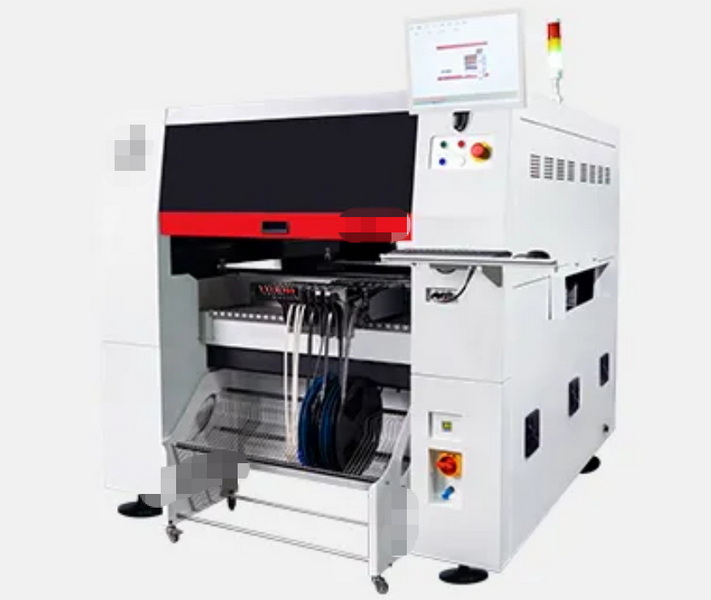
Calibration is the process of verifying and adjusting the measuring and positioning systems of an SMT Pick and Place Machine to ensure accurate, consistent operation. Each subsystem—from the vision camera and placement head to the X-Y axes and feeders—requires precise alignment and synchronization.
Over time, even minimal deviations of a few micrometers can lead to serious production issues. Calibration corrects these deviations so that the machine operates within its defined precision range. The goal is to maintain component placement accuracy at or below the tolerance specified by the machine manufacturer.
Key elements involved in the calibration process include:
- Vision alignment systems: Used to identify fiducial marks and correctly locate PCBs on the worktable.
- Nozzles and pickup heads: Ensure components are lifted, rotated, and placed with precise positioning.
- Feeder systems: Deliver components to pickup points with exact consistency.
- Camera focus and lighting adjustments: Optimize recognition of component shapes and polarities.
- X-Y-Z axis adjustment: Guarantee exact travel distances and placement level control.
A fully calibrated SMT Pick and Place Machine ensures that every single component—from resistors to complex ICs—is positioned perfectly, supporting both solder joint integrity and product functionality.
SMT assembly is all about precision. When machines lose accuracy due to misalignment or optical drift, even small errors can cause significant quality defects. Regular calibration ensures the machine maintains its original accuracy parameters, preventing component misplacement and open or short circuits during soldering.
For high-density boards, such as smartphones or communication modules, accuracy within ±0.025 mm is often required. Without periodic calibration, meeting that standard is nearly impossible.
A machine that frequently produces misplacements or rejects requires operator intervention or unscheduled maintenance. Preventive calibration enables early detection of abnormal mechanical or vision-related drift, avoiding unplanned downtime. When calibration becomes part of routine maintenance, it keeps your SMT Pick and Place Machines running at stable performance levels, improving throughput and reducing operational interruptions.
Misplaced components or defective boards caused by calibration errors can drastically increase rework time and scrap rates. Every inaccurate pick or placement wastes not only the component itself but also valuable production capacity. Regular calibration ensures proper pickup pressure, vision accuracy, and nozzle centering—reducing rework frequency and improving yield consistency.
Consistent calibration lightens mechanical stress on critical components such as linear guides, servo motors, and cameras. When these systems are continuously tuned to optimal performance, the overall machine endures less wear and tear. Proper calibration and cleaning can extend equipment lifespan by several years, delaying the need for replacement or major overhaul.
Manufacturers in sectors like automotive, medical, and aerospace are required to maintain precise documentation of their production parameters. Calibration logs serve as verifiable data for audits and certifications, proving that your SMT Pick and Place Machines are operating within controlled conditions. This traceability strengthens your company's credibility with clients and regulatory bodies.
Calibration is not a one-time task but an ongoing process that depends on several operational variables:
- Production volume: Heavy production loads accelerate mechanical wear, requiring more frequent calibration.
- Component size: Smaller components, such as 0201 or 01005 packages, demand higher precision levels.
- Operating environment: Temperature fluctuations, vibration, or dust can influence machine accuracy.
- Machine model and age: Older models may drift faster than new-generation advanced systems.
- Manufacturer recommendation: Always follow the calibration frequency outlined in your OEM maintenance guide.
As a general rule, high-volume manufacturers should conduct a comprehensive calibration every three months, while lower-volume facilities may schedule a semiannual calibration. Additionally, basic verification checks should be performed daily or weekly to detect early deviations.
Performing accurate calibration requires a structured approach. Whether done manually by an in-house technician or by professional service engineers, the process generally follows these stages:
Before calibration begins, operators should visually check the overall condition of the machine. Look for dust buildup, loose parts, or worn cables. Clean optical sensors and lenses thoroughly to ensure stable recognition.
Measure the mechanical play of the linear motion units, ball screws, and axis motors. If the reading exceeds tolerance, correct the mechanical alignment before continuing. Proper lubrication of the motion modules also helps maintain linear accuracy.
Calibrate feeders by teaching the software exact pickup positions and verifying consistent feeding. Each nozzle should be aligned based on its center coordinates to guarantee that placement heads pick and release components accurately.
Adjust camera focus, lighting conditions, and image processing parameters. The vision algorithm must clearly distinguish between genuine components and background reflections. Re-teach fiducial marks to synchronize board alignment.
Verify placement repeatability by performing an accuracy test on reference pads. Any deviation exceeding manufacturer limits should be compensated through system software adjustment. Z-axis calibration ensures correct placement pressure and component height.
Run a placement simulation using a calibration PCB. Measure actual versus theoretical placement positions and verify uniformity across multiple test points.
Save calibration logs, measurement results, and technician signatures in your quality management system. This documentation proves compliance and helps analyze performance trends over time.
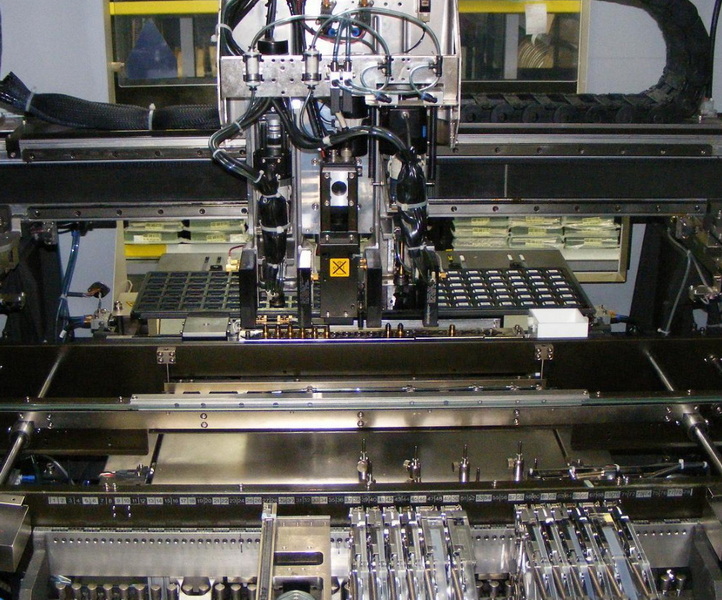
For many manufacturers, outsourcing calibration to experts delivers faster and more reliable results. Companies like Highlywin provide comprehensive SMT line support, including:
- SMT/AI equipment sales and integration
- Precision calibration of SMT Pick and Place Machines
- Training and technical consultation for operators
- Supply of certified spare parts and accessories
- Process optimization for higher production yields
Professional engineers utilize advanced optical measurement devices and software-guided calibration systems to restore factory-level performance. Partnering with an SMT solution provider ensures consistent accuracy across multiple production sites while minimizing machine downtime.
Despite following a schedule, some manufacturers face recurring calibration difficulties. Understanding the root causes helps in addressing them effectively:
- Problem: Sudden reduction in pickup accuracy.
Solution: Check nozzle vacuum pressure and clean nozzles to remove dust or flux contamination.
- Problem: Inconsistent feeder positioning.
Solution: Inspect feeder rails for wear and recalibrate pitch sensors.
- Problem: Deviations in XY placement coordinate.
Solution: Perform a camera-to-table coordinate alignment and verify fiducial recognition settings.
- Problem: Camera misreads component orientation.
Solution: Clean lenses, recalibrate lighting, and update vision algorithms.
Regular calibration combined with preventive maintenance reduces the likelihood of these issues, ensuring long-term reliability.
Modern SMT Pick and Place Machines feature integrated calibration systems supported by software intelligence and sensors. These technologies help achieve better repeatability in less time.
Examples include:
- Automatic vision teaching programs for fiducial alignment.
- Laser displacement sensors for Z-axis height calibration.
- Machine learning-based image analysis for component recognition optimization.
- Real-time temperature compensation systems to maintain dimensional stability.
Such innovations significantly reduce manual errors and make calibration quicker, safer, and easier.
To maintain calibration integrity between scheduled checks, follow these best practices:
1. Keep the environment stable: Maintain constant temperature (23 ± 2 °C) and humidity (40–60%).
2. Clean regularly: Contaminants such as solder paste or flux can distort camera accuracy.
3. Use high-quality spare parts: Always choose genuine machine parts for consistent performance.
4. Train operators frequently: Well-trained staff identify early alignment drifts before they cause scrap.
5. Log and trend data: Continuous data analysis reveals when a machine is drifting toward misalignment.
Implementing these practices will extend the calibration consistency period and ensure smooth SMT operation.
A global electronics assembler struggled with high defect rates despite using modern SMT Pick and Place Machines. After partnering with Highlywin for a quarterly calibration and optimization program, the factory recorded measurable improvement within two months:
- Reduction in component misplacement: 18%
- Decrease in machine stoppages: 22%
- Improvement in yield per batch: 12%
- Lower rework costs and material waste: 15%
The investment in service and calibration proved to deliver long-term operational savings and enhanced production output, reinforcing the value of preventive maintenance over reactive repair.
While calibration incurs short-term costs, the long-term benefits outweigh them significantly. Studies show that manufacturers maintaining strict calibration schedules experience lower defect rates, less downtime, and more predictable production output.
Consider that each percentage point of yield loss translates to thousands of dollars monthly. Regular calibration stabilizes yield, preserves reputation, and increases customer trust through consistently high-quality products.
In addition, proper calibration supports sustainability goals by reducing electronic waste—a growing environmental concern in modern electronics manufacturing.
Regular calibration is an indispensable aspect of maintaining the reliability and precision of SMT Pick and Place Machines. By ensuring each subsystem—vision, feeder, nozzle, and axis—is operating perfectly, calibration directly contributes to higher yield, reduced downtime, and extended machine life.
For manufacturers aiming to compete globally, calibration is not optional; it is fundamental to process stability and product excellence. Partnering with experienced SMT solution providers like Highlywin ensures your entire production ecosystem—machines, parts, and processes—remains in optimal condition.
Through continuous calibration, you not only safeguard product quality but also achieve measurable business advantages in efficiency, cost control, and long-term sustainability.
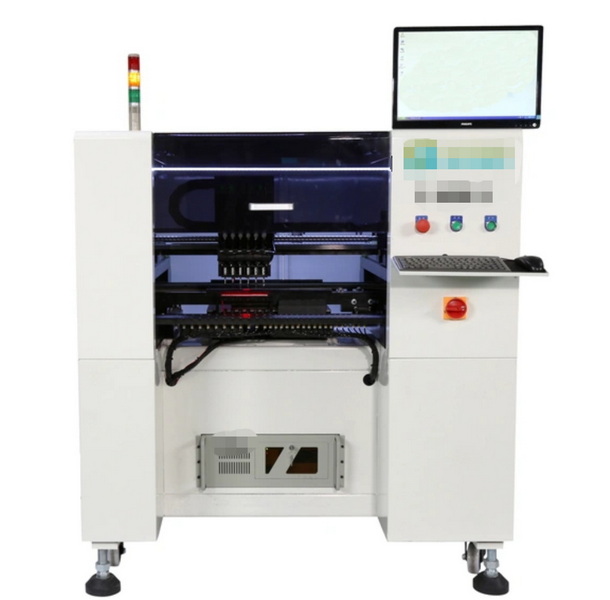
Skipping calibration allows mechanical and optical drift to accumulate, resulting in misaligned components, unreliable solder joints, and increased rework costs.
A comprehensive calibration should be done every three to six months, depending on usage. Basic verification checks should occur daily or weekly.
Operators can manage daily checks and cleaning, but precise calibration should be done by skilled technicians using certified tools and software.
Full calibration services cover vision systems, nozzles, feeders, mechanical alignments, and performance verification. Service reports are also documented for traceability.
Calibration keeps placement accuracy consistent, reducing false rejects, unplanned downtime, and overall cycle time while maintaining high yield rates.


