Your Trusted Partner from Prototyping to Mass Production, Email Us:info@highlymachine.com
Please Choose Your Language


Views: 222 Author: Ann Publish Time: 2025-12-20 Origin: Site


Content Menu
● Key Innovations in SMT Feeders
>> High-Speed and Intelligent Tape Feeders
>> Modular and Flexible SMT Feeders
● Emerging Trends Shaping SMT Feeders
>> Miniaturization and Micro-Component Handling
>> Sustainability in SMT Feeders
>> IoT and Cloud-Connected SMT Feeders
● Integration with Advanced SMT Ecosystems
● Challenges and Solutions for SMT Feeders
● FAQ
>> 1. What are the primary types of SMT Feeders available today?
>> 2. How does AI enhance the performance of SMT Feeders?
>> 3. What miniaturization trends are affecting SMT Feeders?
>> 4. How do sustainable practices apply to SMT Feeders?
>> 5. What role does IoT play in modern SMT Feeders?
SMT Feeders serve as the critical backbone of Surface Mount Technology (SMT) production lines, delivering components with precision and speed to meet the relentless demands of modern electronics manufacturing. As global markets push for smaller devices, higher throughput, and smarter automation, innovations in SMT Feeders are accelerating to keep pace. Highlywin, a premier provider of SMT/AI/peripheral equipment, comprehensive service support, and spare parts sales, offers one-stop SMT solutions tailored for clients worldwide.

The journey of SMT Feeders began with rudimentary mechanical systems in the early days of PCB assembly, where simple vibratory bowls and basic tape dispensers handled coarse component feeding. Over decades, these evolved into electromechanical marvels capable of managing thousands of components per hour with minimal error rates. Today's SMT Feeders incorporate servo motors, precise indexing mechanisms, and error-proofing sensors, marking a significant leap from their origins.
This evolution mirrors the broader SMT industry's shift toward high-mix, high-volume production. Early SMT Feeders struggled with changeovers, often requiring hours of manual reconfiguration, but modular advancements now enable swaps in under a minute. Highlywin's range of SMT Feeders exemplifies this progress, ensuring compatibility across diverse pick-and-place machines from leading brands. The integration of feedback loops in modern SMT Feeders allows real-time adjustments, preventing jams and maintaining 99.9% uptime even in demanding 24/7 operations.
Furthermore, the rise of flexible manufacturing has propelled SMT Feeders toward universal adaptability. No longer confined to single tape widths, contemporary SMT Feeders support pitches from 4mm to 88mm, accommodating everything from tiny resistors to bulky connectors. This versatility is crucial as electronics penetrate sectors like automotive, telecommunications, and medical devices, where SMT Feeders must handle varied form factors without compromising speed.
Artificial Intelligence is transforming SMT Feeders into proactive systems that anticipate issues before they arise. AI algorithms analyze vast datasets from vision cameras and encoders within SMT Feeders, predicting feeder malfunctions with accuracy rates exceeding 95%. This predictive capability in smart SMT Feeders minimizes unplanned downtime, a common pain point in traditional setups.
Highlywin's AI-enhanced SMT Feeders feature machine learning models that optimize peel strength and feed timing based on component type and ambient conditions. For instance, in humid environments, AI adjusts vacuum levels in SMT Feeders to prevent static-induced misfeeds. These innovations extend to self-diagnostic routines, where SMT Feeders flag wear on peel pins or tape guides, scheduling maintenance proactively.
Beyond prediction, AI enables adaptive learning in SMT Feeders, allowing them to refine performance over time. In high-volume runs, SMT Feeders using neural networks dynamically tweak acceleration curves, boosting placement speeds by up to 25%. This positions AI-driven SMT Feeders as cornerstones of Industry 4.0, where data-driven decisions replace manual interventions.
Tape feeders represent the workhorse of SMT Feeders, and recent innovations have pushed their limits to new heights. Intelligent tape SMT Feeders now achieve component delivery rates surpassing 100,000 chips per hour, thanks to linear motors and frictionless drives. These high-speed SMT Feeders incorporate RFID tags on reels for automatic recipe loading, slashing setup times dramatically.
Precision engineering in modern SMT Feeders ensures flawless handling of ultra-fine pitches down to 0.3mm, essential for 5G antennas and advanced wearables. Anti-jam mechanisms, such as laser-monitored tape paths in SMT Feeders, detect anomalies instantly and execute micro-corrections. Highlywin specializes in these robust SMT Feeders, designed for endurance in continuous operations spanning multiple shifts.
Moreover, hybrid tape SMT Feeders blend traditional reel feeding with intelligent splicing, extending run lengths without interruption. This trend reduces material waste and enhances efficiency, making SMT Feeders indispensable for just-in-time manufacturing paradigms.
Modularity is redefining SMT Feeders by enabling scalable, plug-and-play architectures. Modular SMT Feeders allow operators to stack cassettes vertically or horizontally, maximizing feeder bank density in space-constrained factories. Hot-swappable modules in these SMT Feeders facilitate changeovers in seconds, ideal for high-mix environments producing custom boards.
Highlywin's flexible SMT Feeders support multi-vendor ecosystems, interfacing seamlessly with Fuji, Yamaha, Panasonic, and Siemens machines. This interoperability future-proofs investments in SMT Feeders, as manufacturers upgrade without overhauling entire lines. Innovations like quick-release levers and auto-calibrating drives further streamline workflows.
Tray and stick feeders are also evolving within modular frameworks, with convertible SMT Feeders that switch modes via software commands. This adaptability caters to odd-form components, such as large capacitors or LEDs, broadening the scope of SMT Feeders beyond standard passives.
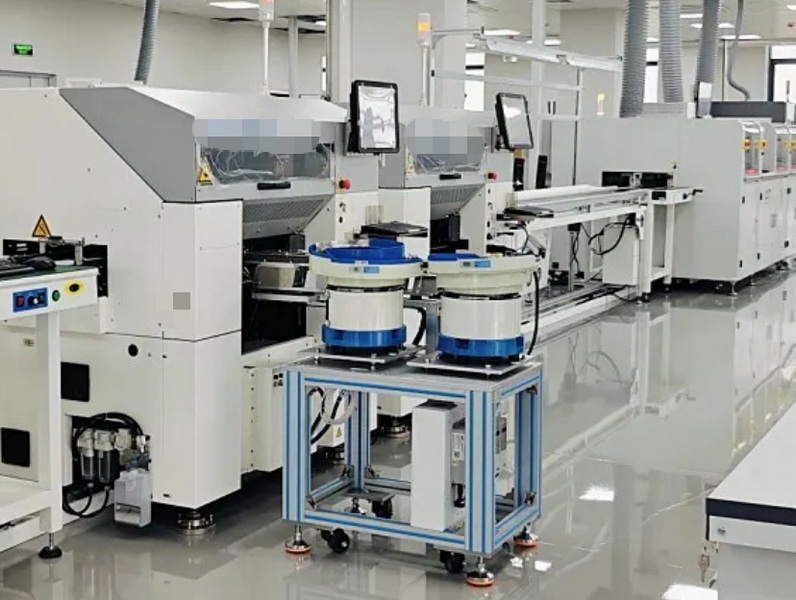
Miniaturization drives relentless innovation in SMT Feeders, as components dwindle to 0201, 01005, and even smaller sizes. Micro-SMT Feeders employ specialized nozzles with adaptive vacuum profiles, ensuring secure pick-up without damage. Dual-lane configurations in these SMT Feeders double throughput for heterogeneous tiny parts.
Trends forecast that by 2027, over 80% of SMT Feeders will incorporate 3D vision for micro-component alignment, compensating for tolerances under 10 microns. Highlywin's micro-SMT Feeders feature ESD-shielded paths and low-static tapes, safeguarding sensitive semiconductors. This precision supports the explosion in IoT sensors and flexible circuits.
Advanced simulation software now designs SMT Feeders for sub-micron accuracy, virtualizing feeder behavior before physical prototyping. Such foresight accelerates development cycles for next-gen SMT Feeders.
Sustainability is no longer optional for SMT Feeders; it's a mandate amid global regulations. Eco-conscious SMT Feeders use regenerative energy systems, recapturing motor braking power to cut consumption by 40%. Recyclable polymers in feeder housings and biodegradable splice tapes reduce environmental footprints.
Highlywin champions green SMT Feeders compliant with RoHS, REACH, and WEEE standards, appealing to eco-focused clients in Europe and North America. Predictive analytics in sustainable SMT Feeders extend component life through optimized usage, minimizing e-waste. Lifecycle assessments show these SMT Feeders lowering total cost of ownership by 20-30%.
Renewable-powered manufacturing of SMT Feeders is emerging, with solar-integrated facilities producing low-carbon units. This holistic approach positions sustainability as a competitive edge for SMT Feeders.
IoT connectivity elevates SMT Feeders from isolated machines to networked intelligences. Cloud-connected SMT Feeders stream telemetry data to central dashboards, enabling remote diagnostics and firmware updates. Integration with MES and ERP systems automates replenishment, linking SMT Feeders to AGVs for reel delivery.
Highlywin's IoT SMT Feeders provide OEE analytics, vibration monitoring, and anomaly alerts via mobile apps. Digital twins simulate SMT Feeder performance, optimizing layouts virtually. By 2030, networked SMT Feeders will dominate, fostering collaborative ecosystems across global factories.
Edge computing in SMT Feeders processes data locally for ultra-low latency, crucial in high-speed lines. This trend unlocks fleet-wide optimizations, where one SMT Feeders' learnings benefit others instantaneously.
SMT Feeders thrive in symbiotic relationships with printers, placers, and ovens, unified by protocols like EtherCAT and Profinet. Intelligent buffering in SMT Feeders synchronizes with upstream processes, preventing starvation or overflow. Cobot-assisted loading enhances SMT Feeders, allowing humans to focus on exceptions.
Highlywin's ecosystem-compatible SMT Feeders support full-line digitalization, from stencil alignment to AOI feedback loops. High-density interconnect (HDI) boards demand ultra-precise SMT Feeders with dual-head capabilities, doubling output for EV power modules.
Future integrations will see SMT Feeders with embedded 5G modules for wireless orchestration, revolutionizing flexible factories.
Despite advances, SMT Feeders face hurdles like static discharge and tape inconsistencies. Ionizer-equipped SMT Feeders neutralize charges dynamically, while multi-vendor tape compatibility broadens sourcing options. Operator training via AR simulations ensures proficiency with complex SMT Feeders.
Supply chain disruptions prompt diversified inventories for SMT Feeders, with Highlywin offering global stockpiles. Firmware-agnostic designs allow over-the-air upgrades, keeping SMT Feeders future-ready.
Case studies reveal smart SMT Feeders yielding ROI in under a year through 15-25% productivity gains.
The trajectory of SMT Feeders heralds an era of unparalleled efficiency, intelligence, and adaptability, fueled by AI, IoT, and sustainable designs. Highlywin leads this charge, delivering state-of-the-art SMT Feeders alongside expert services and spares for seamless global operations. Embracing these innovations equips manufacturers to conquer miniaturization, speed, and connectivity challenges—partner with Highlywin to elevate your SMT production today.
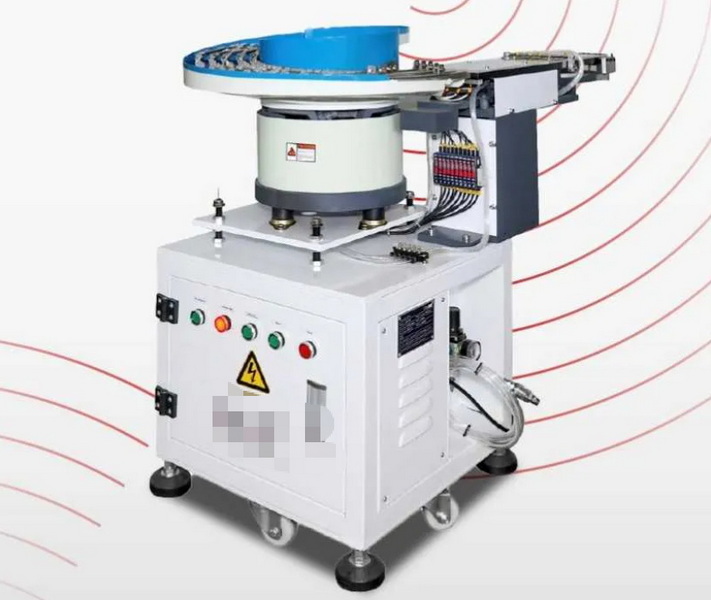
SMT Feeders primarily include tape, tray, stick, and bulk varieties. Tape SMT Feeders excel in high-speed SMD handling, tray SMT Feeders manage larger ICs, and stick SMT Feeders suit odd-forms.
AI in SMT Feeders provides predictive maintenance, anomaly detection, and dynamic optimization, improving yields by 20-30% and reducing downtime significantly.
SMT Feeders are adapting to 01005 and smaller components via precision nozzles and vision systems, supporting dense boards for 5G and wearables.
Sustainable SMT Feeders incorporate energy recovery, recyclable materials, and low-waste designs, ensuring compliance and cost savings over their lifecycle.
IoT-enabled SMT Feeders offer real-time monitoring, automated replenishment, and digital twins, integrating into smart factories for optimal efficiency.


