Your Trusted Partner from Prototyping to Mass Production, Email Us:info@highlymachine.com
Please Choose Your Language


Views: 222 Author: Ann Publish Time: 2025-12-10 Origin: Site


Content Menu
● Understanding SMT Feeders in Depth
● The Realities of Manual Loading in SMT Assembly
● Key Advantages of SMT Feeders Over Manual Methods
● Disadvantages and Limitations of Manual Loading
● Exploring Types of SMT Feeders
● Real-World Case Studies and Implementation
● Cost Analysis, ROI, and Future Trends
● FAQ
>> 1. What are SMT feeders and how do they work?
>> 2. When should you choose SMT feeders over manual loading?
>> 3. What types of SMT feeders does Highlywin provide?
>> 4. How do SMT feeders calculate ROI for assembly lines?
>> 5. Can SMT feeders handle high-mix production?
Highlywin, a leading provider of SMT/AI/peripheral equipment and comprehensive SMT services including spare parts sales, delivers one-stop SMT solutions to global clients worldwide. In the fast-paced world of electronics manufacturing, choosing between SMT feeders and manual loading can significantly impact your assembly line's productivity, cost efficiency, and overall performance. This comprehensive guide delves deep into the advantages, disadvantages, types, and real-world applications of SMT feeders compared to traditional manual loading methods, helping you make an informed decision for your SMT production needs.

SMT feeders are critical components in surface mount technology (SMT) assembly lines, designed to automatically dispense electronic components such as resistors, capacitors, and integrated circuits to pick-and-place machines with precision and speed. These SMT feeders come in various configurations, including tape feeders, tray feeders, tube feeders, and stick feeders, each optimized for specific component types and production requirements. For instance, tape SMT feeders handle reel-mounted components in widths from 8mm to 72mm, ensuring smooth unwinding and precise indexing to prevent jams or misfeeds.
What sets modern SMT feeders apart is their ability to integrate seamlessly with high-speed SMT machines, supporting feeder pitches as fine as 0.3mm for ultra-small 01005 components. Highlywin's automatic SMT feeders, for example, feature robust motors and sensors that maintain consistent feed rates, even under continuous operation for 24/7 production shifts. Electric SMT feeders offer superior control through servo motors, allowing for programmable speeds and error detection, while pneumatic SMT feeders excel in high-volume scenarios where rapid cycling is essential. The reliability of SMT feeders minimizes downtime, with advanced models incorporating smart diagnostics to alert operators of potential issues before they halt production.
In practice, SMT feeders transform the component supply process from a bottleneck into a streamlined operation. They eliminate the need for constant human intervention, enabling pick-and-place machines to achieve placement rates exceeding 100,000 components per hour. Manufacturers adopting SMT feeders often see throughput increases of up to 67%, as these systems ensure a steady flow of parts without the variability introduced by manual handling. Highlywin emphasizes compatibility, offering SMT feeders that work with major brands like Yamaha, Fuji, and Panasonic, making upgrades straightforward for existing lines.
Manual loading, while straightforward and cost-effective for initial setups, involves operators physically managing component reels, threading tapes into machines, and monitoring feed progress throughout the assembly process. This method is prevalent in low-volume prototyping, custom runs, or repair stations where batch sizes are under 100 boards and flexibility is paramount. Technicians must align tapes meticulously, adjust tension manually, and replace empty reels, tasks that demand constant attention and skill.
Despite its simplicity, manual loading imposes severe limitations on scalability. A single operator can typically process only 50-100 components per hour, constrained by physical handling speeds and the need to switch between tasks. Error rates climb to 1-2% due to factors like misalignment, improper tension, or operator fatigue, leading to rework that erodes profitability. In high-mix production environments—where product changeovers occur frequently—manual reconfiguration can take 15-30 minutes per switch, disrupting workflow and reducing overall equipment effectiveness (OEE).
Safety concerns further complicate manual loading, as workers interact directly with moving parts, reels, and adhesives, increasing risks of cuts, strains, or exposure to static discharge. Labor costs accumulate rapidly; for a line running 112 hours weekly, staffing multiple technicians becomes prohibitively expensive compared to automated alternatives. Moreover, as component sizes shrink and densities rise on modern PCBs, manual precision falters, making it unsuitable for fine-pitch or high-reliability applications like automotive or medical electronics.
SMT feeders deliver unparalleled advantages in speed, accuracy, and reliability, fundamentally elevating assembly line performance. By automating component presentation, SMT feeders enable continuous operation without breaks, achieving line efficiencies of 52-67%—a marked improvement over manual processes that hover around 46-54%. Precision placement reduces defects to under 0.1%, as sensors verify component presence and orientation before pickup, virtually eliminating feed errors.
Cost savings materialize through multiple channels: reduced labor requirements (up to 40% headcount cuts), minimized scrap from misfeeds, and lower downtime. Highlywin's durable SMT feeders boast MTBF (mean time between failures) exceeding 10,000 hours, with quick-swap designs that slash changeover times. In versatile production, SMT feeders support rapid recipe changes via touchscreen interfaces, adapting to new jobs in seconds rather than minutes.
Scalability is another hallmark; SMT feeders handle everything from low-mix high-volume to high-mix low-volume scenarios, integrating with intelligent software for predictive maintenance. Safety improves dramatically, as human contact with hazardous areas drops, complying with industry standards like IPC and ISO. For global manufacturers, Highlywin's SMT feeders offer competitive pricing and global support, ensuring long-term ROI through enhanced yield rates of 95-98%.
The drawbacks of manual loading extend beyond speed and accuracy, impacting the entire production ecosystem. High variability leads to inconsistent quality, with defect rates compounding in downstream processes like reflow soldering. Fatigue sets in after just a few hours, causing lapses in attention that result in jams, part damage, or machine stoppages—each incident costing 5-10 minutes in recovery time.
Economic inefficiencies are stark: labor accounts for 60-70% of operational costs in manual setups, versus 20-30% in automated lines with SMT feeders. Training new operators takes weeks, and skilled labor shortages exacerbate delays. In regulated industries, manual methods struggle with traceability, as there's no automated logging of feed events for audits.
Environmentally, manual loading generates more waste from mishandled components and tapes, while SMT feeders optimize material use through precise dispensing. Ultimately, as market demands shift toward faster turnaround and smaller batches, manual loading becomes a liability rather than an asset.
Dominating the market, tape SMT feeders manage 80% of components via embossed or paper tapes. Electric variants provide peel-and-place accuracy, while intelligent SMT feeders auto-adjust for tape thickness variations. Highlywin's models support 01005 to QFN packages, with anti-jam features.
Ideal for larger ICs and odd-form parts, tray SMT feeders use JEDEC matrices, stacking up to 58 trays per unit. Dual-pallet designs double capacity, perfect for BGA and connectors. These SMT feeders save rack space in compact lines.
Tube SMT feeders excel for axial/radial leads like LEDs, vibrating components forward sequentially. Stick SMT feeders handle bulk irregular parts via vibratory bowls. Both integrate easily, expanding SMT feeder versatility.
High-temperature SMT feeders withstand reflow environments, while multi-lane designs boost throughput. Highlywin offers custom SMT feeders for unique applications.
A mid-sized electronics firm integrated Highlywin SMT feeders, slashing changeover times by 109 seconds per event—saving 130 minutes monthly per line. Yields rose to 98%, with labor down 40%.
Another case saw a factory upgrade to electric SMT feeders, achieving 4.6 million components per operator annually versus manual's 1 million. Predictive maintenance via SMT feeder software prevented 90% of failures.
Implementation starts with assessing line specs: match feeder width/pitch to components, calibrate tension, and train via simulations. Highlywin provides on-site support for seamless rollout.
Initial SMT feeder costs range $500-$5,000 per unit, recouped in 6-12 months through savings. TCO drops 30-50% long-term. Future AI-driven SMT feeders will predict jams via machine learning, integrating with AGVs for lights-out factories. Highlywin stays ahead with innovative, affordable SMT feeders.
For most assembly lines, SMT feeders unequivocally outperform manual loading, offering unmatched speed, precision, cost efficiency, and scalability. Highlywin's comprehensive SMT solutions, featuring top-tier SMT feeders and expert support, position global clients for sustained success in competitive markets. Embrace automation with Highlywin to future-proof your production.
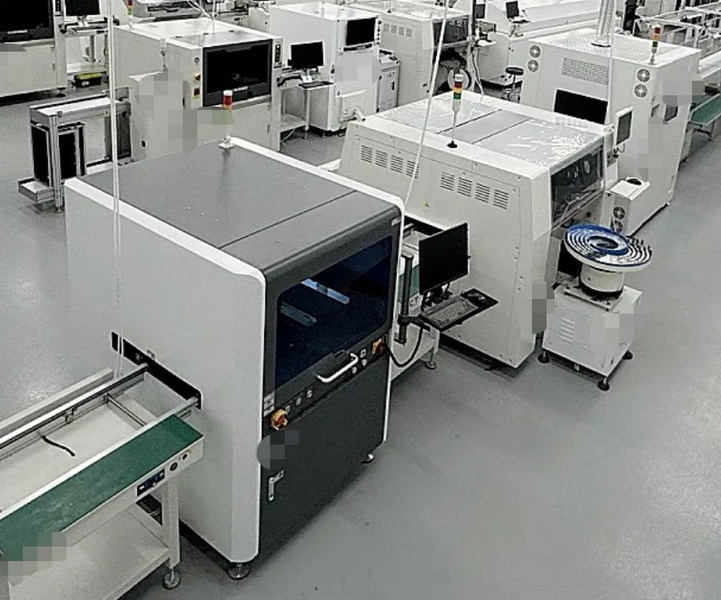
SMT feeders automate component delivery in PCB assembly lines, using mechanisms like motors and sensors to index parts precisely from tapes, trays, or tubes to pick-and-place heads. Highlywin's SMT feeders ensure reliable, high-speed operation for diverse components.
Opt for SMT feeders in medium-to-high volume production (>100 boards) for 67% efficiency gains, error reduction, and labor savings; manual suits only prototypes or ultra-low volumes.
Highlywin offers automatic tape, tray, tube, and electric SMT feeders compatible with major SMT machines, at competitive prices with global service.
SMT feeders deliver ROI via 40% labor cuts, <1% downtime, 95%+ yields, and quick setups—often payback in under a year.
Yes, intelligent SMT feeders enable seconds-long changeovers, supporting diverse components and recipes for flexible manufacturing.


