Your Trusted Partner from Prototyping to Mass Production, Email Us:info@highlymachine.com
Please Choose Your Language


Views: 222 Author: Ann Publish Time: 2026-01-13 Origin: Site


Content Menu
● The Strategic Importance of SMT Accessories Optimization
● Mapping Equipment Types to Critical SMT Accessories
● Classifying SMT Accessories by Criticality
● Standardizing SMT Accessories Across Brands
● Data-Driven Inventory Management for SMT Accessories
● Preventive Maintenance Integration with SMT Accessories
● Building Equipment-Specific Emergency SMT Accessories Kits
● Smart Storage Solutions for SMT Accessories
● Optimizing SMT Accessories for Screen Printers
● Pick-and-Place Mounter SMT Accessories Optimization
● Reflow Oven SMT Accessories Best Practices
● Inspection Equipment SMT Accessories Optimization
● Global Sourcing and One-Stop SMT Accessories Supply
● Training and Continuous Improvement for SMT Accessories
● FAQ
>> 1. How many SMT Accessories should be kept in stock for critical equipment?
>> 2. How can I standardize SMT Accessories across different machine brands?
>> 3. What role does data analytics play in SMT Accessories optimization?
>> 4. How often should SMT Accessories be reviewed or upgraded?
>> 5. What is the best way to manage SMT Accessories for new product introduction (NPI)?
Optimizing SMT spare parts and SMT Accessories across various equipment types requires a strategic approach that integrates equipment-specific needs, data-driven inventory management, and proactive maintenance practices. Companies like Highlywin, which provide one-stop SMT solutions including equipment sales, full-service support, and SMT Accessories sales to global customers, emphasize the importance of tailored spare parts optimization to minimize downtime and maximize production efficiency.
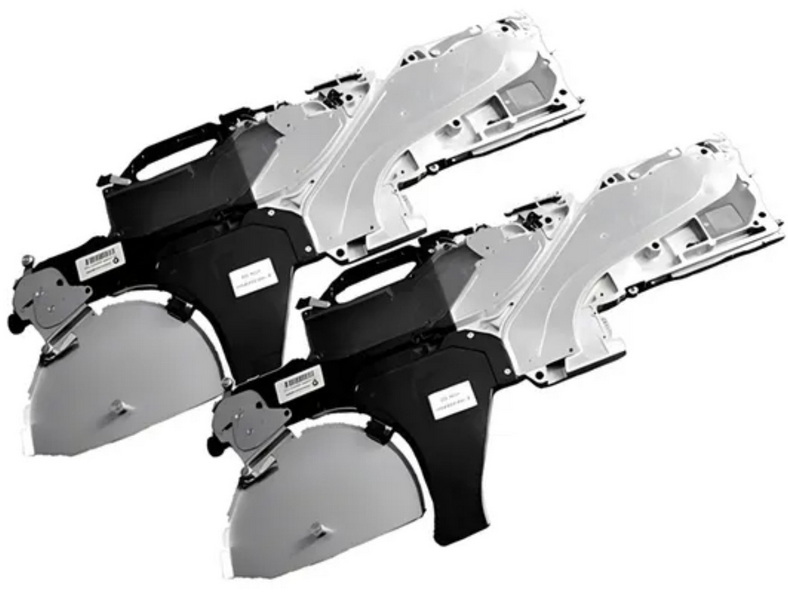
In high-volume SMT manufacturing, unplanned downtime from faulty SMT Accessories can cost thousands per hour, making spare parts strategy a direct lever for profitability and customer satisfaction. Effective optimization of SMT Accessories ensures that printers, pick-and-place machines, reflow ovens, and inspection systems operate at peak performance across diverse production lines.
A comprehensive SMT Accessories strategy begins with assessing the unique failure modes and wear patterns of each equipment category. For instance, mechanical wear dominates in feeders and conveyors, while thermal degradation affects reflow components, and optical drift impacts AOI systems. By categorizing SMT Accessories based on these patterns, manufacturers can prioritize stocking high-impact items that prevent line stoppages.
Moreover, in mixed-brand environments common in global EMS operations, standardizing compatible SMT Accessories reduces procurement complexity and vendor dependency. This approach not only cuts costs but also accelerates changeovers and maintenance, supporting just-in-time production models. Highlywin's expertise in sourcing universal SMT Accessories for brands like Yamaha, Fuji, Panasonic, and ASM exemplifies how one-stop suppliers streamline this process for international clients.
Understanding the ecosystem of SMT equipment is foundational to spare parts optimization. Each machine type—from solder paste printers to automated optical inspection (AOI) units—demands specific SMT Accessories optimized for its operational stresses.
Screen printers rely heavily on SMT Accessories like squeegee blades, which endure constant abrasion, and cleaning systems that maintain stencil integrity. Pick-and-place mounters, the heart of SMT lines, consume nozzles, feeder banks, and vacuum generators at high rates due to relentless component handling. Reflow ovens require robust thermal SMT Accessories such as heater modules and conveyor chains to withstand elevated temperatures and mechanical loads. Inspection tools like SPI, AOI, and AXI prioritize precision optics and lighting modules as key SMT Accessories to ensure defect detection accuracy.
Conveyors, loaders, and buffers, often overlooked, use belt drives, rollers, and sensors as essential SMT Accessories to facilitate seamless board transfer. Grouping these SMT Accessories by function—mechanical, pneumatic, electronic, and optical—enables cross-equipment standardization, where possible, further enhancing inventory efficiency.
Classification is the cornerstone of an optimized SMT Accessories inventory. Implement an ABC analysis tailored to SMT environments: Class A includes line-stopping SMT Accessories like primary mounter nozzles and reflow heaters; Class B covers quality-affecting items such as printer squeegees and AOI lenses; Class C encompasses low-risk consumables like filters and wipes.
For each equipment type, quantify criticality using metrics like mean time between failures (MTBF), mean time to repair (MTTR), and cost of downtime. High-speed chip mounters might classify 20 specific nozzles and feeder tapes as Class A SMT Accessories, while reflow systems prioritize five heater elements and thermocouple sets. This classification drives stocking decisions: maintain 2-3x safety stock for Class A SMT Accessories, reorder points for Class B, and vendor-managed inventory for Class C.
Regular audits refine these classes as production mixes evolve, incorporating failure data from MES systems to dynamically adjust SMT Accessories priorities. Such data-driven classification prevents overstocking of obsolete SMT Accessories while ensuring availability of mission-critical ones.
Multi-vendor SMT lines are the norm, with each brand offering proprietary SMT Accessories that complicate logistics. Optimization involves adopting universal or compatible SMT Accessories wherever feasible, such as standardized feeder pitches (8mm, 12mm, 44mm), interchangeable nozzle series, and cross-brand cleaning kits.
For pick-and-place machines, universal nozzle adapters allow a core set of SMT Accessories to service Fuji, Yamaha, and Juki heads, reducing the need for brand-specific spares. Feeder standardization, including smart splicing tapes as SMT Accessories, minimizes reel-change interruptions. Printers benefit from metal squeegees compatible with multiple stencil frames, while reflow ovens can use modular heater cartridges fitting various tunnel designs.
Partnering with a reliable one-stop provider like Highlywin ensures access to qualified aftermarket SMT Accessories that meet OEM specs without premium pricing. This standardization not only consolidates SKUs but also simplifies technician training, as fewer SMT Accessories types mean faster proficiency across equipment.
Modern SMT Accessories optimization leverages real-time data from IoT sensors, ERP integrations, and production logs. Track consumption patterns: nozzles might last 50,000 cycles on a high-speed mounter but degrade faster with odd-form components, informing precise reorder points.
Implement min-max inventory rules per equipment type, with automated alerts for low-stock SMT Accessories. For global operations, cloud-based platforms synchronize SMT Accessories levels across sites, preventing regional shortages. Predictive analytics, using historical MTBF data, forecasts failures—e.g., projecting conveyor belt wear after 10,000 hours—triggering preemptive SMT Accessories orders.
Economic order quantity (EOQ) models balance holding costs against ordering frequency for bulkier SMT Accessories like feeder units, while kanban systems excel for high-turnover items like nozzles and filters. This approach typically reduces inventory carrying costs by 20-30% without risking stockouts.
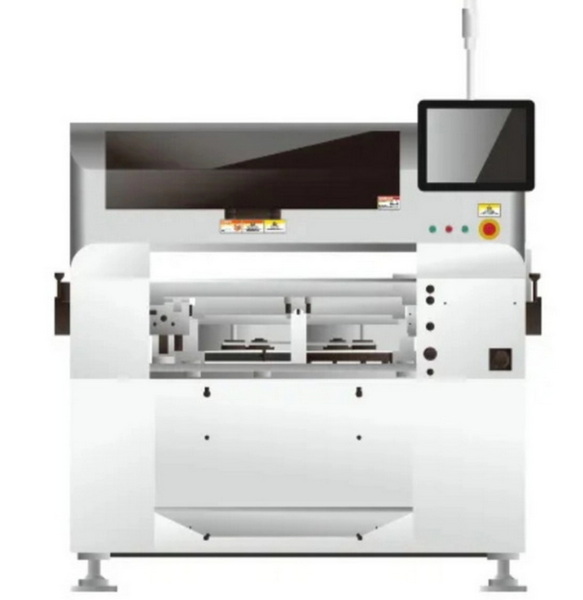
Preventive maintenance (PM) transforms reactive spare parts usage into proactive optimization. Develop equipment-specific PM schedules that bundle SMT Accessories replacements: weekly checks for printer squeegees, monthly nozzle inspections on mounters, and quarterly reflow thermocouple calibrations.
Create pre-packed SMT Accessories kits for each PM cycle—e.g., a mounter kit with 10 nozzles, two feeder banks, belts, and filters—ensuring technicians complete tasks swiftly. Digital checklists linked to MES flag overdue PMs, correlating them to SMT Accessories consumption for continuous refinement.
This integration extends SMT Accessories lifespan: proper cleaning protocols for optical modules in AOI systems can double their effective life, while lubricated conveyor rollers reduce premature wear. Ultimately, PM-optimized SMT Accessories boost overall equipment effectiveness (OEE) by 10-15%.
Downtime demands rapid response, so assemble emergency kits tailored to each equipment type. A pick-and-place kit prioritizes top nozzles (01005 to QFN), vacuum filters, and feeder backups; reflow kits stock heaters, fans, and chain links; printer kits include squeegees and scrapers.
Label kits with QR codes linking to installation videos and torque specs, ensuring even cross-trained staff can deploy them effectively. Stock one kit per line, refreshed post-use, covering 80% of common failures. For high-mix lines, modular kits allow customization based on current products.
These kits, stocked with vetted SMT Accessories, restore operations in under 30 minutes, safeguarding delivery schedules.
Advanced storage elevates SMT Accessories management. RFID-tagged cabinets track nozzle check-ins/outs, linking usage to operators and machines for accountability. Automated dispensers for small SMT Accessories like filters prevent hoarding and ensure FIFO rotation.
Integrated with ERP, these systems generate reorder POs when Class A SMT Accessories dip below thresholds, supporting vendor-managed inventory (VMI) models. For multi-site operations, centralized dashboards provide visibility into global SMT Accessories flows, optimizing bulk buys.
Printer optimization focuses on paste deposition consistency. Stock multiple squeegee durometers (60-80 Shore A) as SMT Accessories for varied paste viscosities, rotating them per shift to equalize wear. Cleaning rolls and under-stencil wipes, key SMT Accessories, require high-volume stocking to match print rates.
Sephen alignment pins and pressure sensors complete the printer SMT Accessories set, with PM replacing them quarterly. Data from SPI feedback loops refines these cycles, minimizing solder defects.
Mounters demand the broadest SMT Accessories palette. Optimize nozzle libraries by component size/matrix, stocking 50-100 units across types. Feeder maintenance—banks, tape guides, covers—is critical, with splicing SMT Accessories enabling continuous runs.
Cameras, lasers, and pneumatic valves round out high-wear SMT Accessories; vision system tweaks post-replacement maintain accuracy. High-speed lines benefit from dedicated carts organizing SMT Accessories by head type.
Reflow stability hinges on thermal uniformity. Heater rods and modules, thermocouples, and exhaust fans are primary SMT Accessories, inspected bi-monthly. Conveyor chains and mesh belts endure heavy loads, warranting spares sized to tunnel lengths.
Profiling kits with thermocouples and data loggers validate post-maintenance profiles. Cleanliness-focused SMT Accessories like filters prevent particle-induced defects.
AOI/SPI/AXI excel with pristine optics. Stock spare cameras, telecentric lenses, and LED modules as SMT Accessories, calibrated annually. Motion stages and PCB fixtures ensure precise imaging.
Reference boards validate setups, minimizing false calls from degraded SMT Accessories.
Global EMS rely on partners like Highlywin for unified SMT Accessories across regions. Consolidated catalogs simplify procurement, with express shipping for urgent needs. Quality assurance on all SMT Accessories matches OEM standards, supporting diverse equipment fleets.
SOPs, e-learning modules, and hands-on drills build technician proficiency with SMT Accessories. Kaizen events analyze root causes, iterating on kits and stock levels. Annual audits benchmark against industry OEE leaders.
Optimizing SMT spare parts and SMT Accessories for diverse equipment types demands holistic integration of classification, standardization, data analytics, PM kits, and smart logistics. This strategy slashes downtime, elevates OEE, and empowers scalable production. Providers like Highlywin deliver these one-stop SMT solutions, equipping global customers for sustained excellence.
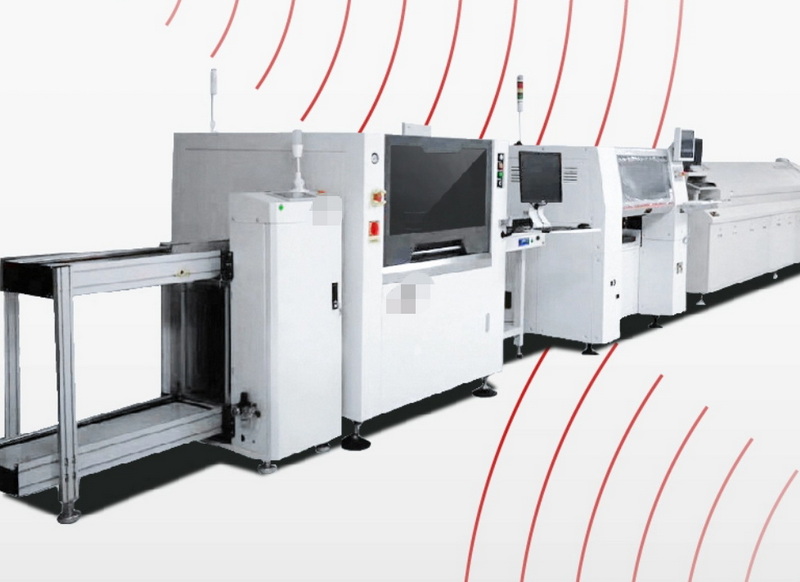
For critical gear like mounters and reflows, stock 2-3 full sets of Class A SMT Accessories plus lead-time buffers. 24/7 ops often double this for resilience.
Identify universals like feeder pitches and nozzles with adapters; leverage one-stop suppliers for compatible SMT Accessories kits.
Analytics from MES pinpoint high-failure SMT Accessories, automating stock adjustments for optimal levels.
Annually or post major changes; evaluate new SMT Accessories for life/cost gains.
Pre-build validated SMT Accessories kits per NPI, locking into BOMs for ramp-up.


