Your Trusted Partner from Prototyping to Mass Production, Email Us:info@highlymachine.com
Please Choose Your Language


Views: 222 Author: Ann Publish Time: 2025-12-17 Origin: Site


Content Menu
● Understanding SMT Pick And Place Machines
● Component Types and Challenges in SMT Pick And Place Machines
● Nozzle and Head Selection in SMT Pick And Place Machines
● Vision System Calibration for SMT Pick And Place Machines
● Programming and Path Optimization in SMT Pick And Place Machines
● Handling Small Components (01005-0201) in SMT Pick And Place Machines
● Optimizing for Mid-Sized SMDs (0805, SOICs) in SMT Pick And Place Machines
● Large and Odd-Form Components in SMT Pick And Place Machines
● Software and Integration Tips for SMT Pick And Place Machines
● Speed vs. Accuracy Balance in SMT Pick And Place Machines
● Troubleshooting Common Issues in SMT Pick And Place Machines
● Advanced Optimization Techniques for SMT Pick And Place Machines
● FAQ
>> 1. What nozzles work best for small components in SMT Pick And Place Machines?
>> 2. How often should SMT Pick And Place Machines be calibrated?
>> 3. Can SMT Pick And Place Machines handle BGAs effectively?
>> 4. What causes feeder jams in SMT Pick And Place Machines?
>> 5. How to maximize CPH on SMT Pick And Place Machines?
Optimizing SMT Pick And Place Machines ensures high efficiency in electronics manufacturing. Highlywin provides comprehensive SMT solutions, including machines, services, and spare parts for global clients. Proper tuning of SMT Pick And Place Machines boosts throughput across component types.

SMT Pick And Place Machines automate component placement on PCBs, forming the core of surface mount technology lines. These machines handle diverse components like resistors, capacitors, ICs, and BGAs by picking from feeders and placing with precision. Key features include vision systems, multiple nozzles, and feeder setups tailored for speed and accuracy in SMT Pick And Place Machines.
Modern SMT Pick And Place Machines achieve up to 200,000 components per hour (CPH) while maintaining ±0.01mm accuracy. They integrate with conveyors, supporting high-mix or high-volume production. For different component types, optimization focuses on feeder calibration, nozzle selection, and software programming in SMT Pick And Place Machines.
SMT Pick And Place Machines vary from high-speed chip shooters designed primarily for tiny passives to flexible modular placers that excel in handling complex assemblies with fine-pitch ICs and large BGAs. Understanding the machine's architecture—whether turret-based, cartesian, or hybrid—is crucial for optimization. Turret machines rotate multiple nozzles for rapid placement, ideal for uniform small parts, while cartesian systems offer superior flexibility for varied component sizes in SMT Pick And Place Machines.
SMT Pick And Place Machines encounter varied components: small passives (0402, 0201, even 01005), mid-sized MLCCs and SOICs, large QFPs, and odd-form parts like connectors and LEDs. Small components demand high precision to avoid tombstoning or bridging; large ones require stable vacuum pickup and torque control. BGAs and CSPs need bottom-view vision for ball alignment and coplanarity checks in SMT Pick And Place Machines.
High-speed chip shooters excel for passives, while flexible heads suit mixed assemblies. Challenges include feeder jams for delicate parts, rotation errors for polarized capacitors, and warpage issues with large boards. Environmental factors like humidity and dust exacerbate these, making proactive optimization essential for SMT Pick And Place Machines. For instance, static electricity can cause 01005 chips to stick or fly off, while oversized components risk head crashes if paths aren't simulated.
Nozzles are critical for SMT Pick And Place Machines; mismatch leads to 20% pickup failures. Use 0.4mm nozzles for 0402 chips, 1.2mm for 0805, and soft-touch for BGAs to prevent ball crushing. Multi-nozzle turrets enable parallel picking, cutting cycle time by up to 40%.
For rotary heads in SMT Pick And Place Machines, balance load to minimize turret rotation delays. Parallel heads optimize paths via software algorithms that calculate shortest routes. Change nozzles weekly to prevent wear, and store them in anti-static cases. Quick-change systems on modern SMT Pick And Place Machines allow tool-free swaps in seconds.
Nozzle condition directly impacts placement yield; inspect for cracks or residue daily. Hybrid nozzles with mechanical centering excel for ultra-small parts where vacuum alone fails.
Vision systems in SMT Pick And Place Machines verify pickup, fiducials, and placement. Top-down cameras detect offsets for small parts; bottom-view for BGAs ensures solder ball integrity. Calibrate daily using fiducial marks to achieve sub-10µm accuracy, compensating for board warpage.
Enable auto-correction features for warped PCBs in SMT Pick And Place Machines. High-res cameras handle shiny or transparent components via polarized lighting. Software updates improve AI-driven recognition, reducing false rejects by 25%. Coaxial lighting enhances edge detection for fine-pitch QFNs.
Regular lens cleaning and gain adjustments maintain peak performance in SMT Pick And Place Machines. For high-volume runs, enable batch fiducial learning to speed initial alignment.
Programming SMT Pick And Place Machines uses BOM, centroid data, and CAD files. Optimize sequences to minimize X/Y travel and rotations—tools like genetic algorithms reduce head moves by 25%. Prioritize passives first, then ICs, for high-mix runs.
Simulate paths to avoid collisions in SMT Pick And Place Machines. Integrate with MES for real-time adjustments based on upstream printer data. Offline programming stations allow preparation without halting production.
Steps for optimization:
- Import BOM, centroid, and panel data.
- Assign feeders logically by component grouping.
- Run simulation; tweak paths for minimal travel.
- Validate with test board on SMT Pick And Place Machines.
- Export optimized program.
Advanced SMT Pick And Place Machines support push-pull picking, where one head grabs while another places, doubling effective CPH.
Ultra-small parts challenge SMT Pick And Place Machines due to vacuum loss and misalignment. Use hybrid nozzles with centering pins and slow pickup speeds to 50% for stability. Environment control (45-55% humidity) prevents static buildup.
Vision height sensing compensates for tape variations in SMT Pick And Place Machines. Enable gentle place force to avoid tombstoning. Feeder acceleration ramps prevent part bouncing.
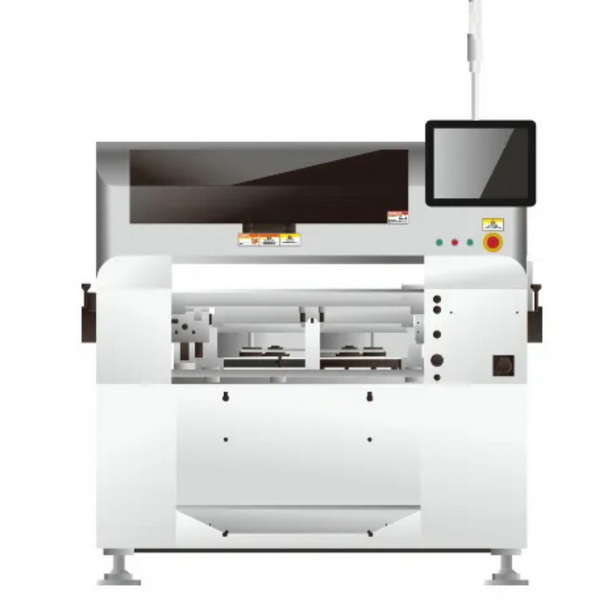
Standard nozzles suffice for these in SMT Pick And Place Machines. Match feeder speed to head CPH and batch similar polarities to cut rotations by 30%. Parallel placement boosts throughput significantly.
Focus on Z-axis fine-tuning for consistent height. Group by pitch to streamline vision processing.
QFPs, connectors, and BGAs need torque control to avoid lead damage. Use vision for lead coplanarity and post-placement X-ray verification. Tray feeders with indexing optimize access for trays up to 100 parts.
For LEDs, align optics during pickup to ensure color consistency. Custom grippers for non-SMD parts like batteries enhance SMT Pick And Place Machines versatility. Low-force modes prevent cracking on ceramics.
Advanced software in SMT Pick And Place Machines supports offline programming and auto-BOM import from ERP. AI path optimization cuts setup time by 40%. Link with screen printers and reflow ovens for line balancing.
Highlywin offers integration services for seamless SMT lines, including API connectivity.
Chip shooters prioritize speed (100k+ CPH) for passives; modular machines balance for mix (50k CPH with fine-pitch). Tune acceleration curves per component group—ramp up for passives, gentle for BGAs.
Validate via gauge R&R studies. Dynamic speed adjustment based on vision feedback optimizes real-time performance in SMT Pick And Place Machines.
Jams: Check feeder tension and splice quality. Misses: Inspect nozzle wear or vacuum leaks. Offsets: Recalibrate fiducials. Component flips: Adjust rotation speed. Log analysis and error codes speed resolutions.
For persistent issues, run diagnostic cycles and consult machine-specific manuals.
Linear motors boost precision and speed in premium SMT Pick And Place Machines. Machine learning predicts feeder depletions and auto-reorders parts. Clustering algorithms group components by travel distance.
Implement OEE tracking (Overall Equipment Effectiveness) targeting 85%+ uptime. Highlywin's support includes remote diagnostics for faster resolutions.
Optimizing SMT Pick And Place Machines for diverse components—from tiny 01005 passives to complex BGAs—drives efficiency, slashes defects, and scales production for competitive electronics manufacturing. By mastering feeder setups, nozzle choices, vision calibration, programming paths, and rigorous maintenance, operators unlock peak performance from their SMT Pick And Place Machines. Highlywin's one-stop solutions, encompassing top-tier equipment, expert services, and readily available spares, empower global clients to achieve superior throughput and reliability. Implement these strategies systematically, monitor KPIs like CPH and yield, and leverage ongoing training to sustain gains in your SMT operations.
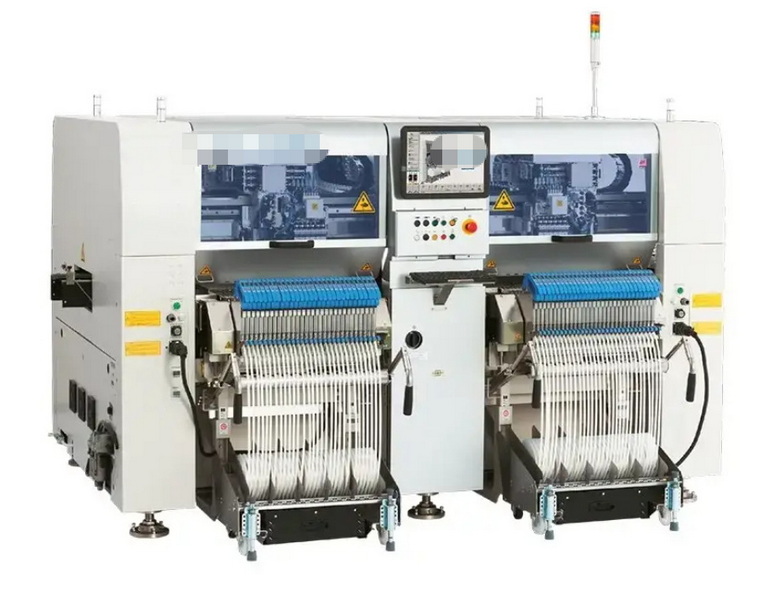
Fine nozzles (0.4-0.7mm) with centering ensure stable pickup for 01005-0402 parts. Calibrate vacuum levels and use hybrid designs for vacuum-challenged tiny chips.
Daily for vision systems and fiducials, weekly for feeders, and monthly for full mechanical recalibration to maintain sub-10µm accuracy.
Yes, with bottom-view cameras for ball alignment, low-force placement, and coplanarity checks to prevent voids.
Dust accumulation, improper splicing, tape misalignment, or incorrect pitch settings; regular cleaning and verification resolve most cases.
Optimize feeder assignments, enable parallel heads, batch similar components, and use AI-driven path planning for 20-40% gains.


