Your Trusted Partner from Prototyping to Mass Production, Email Us:info@highlymachine.com
Please Choose Your Language


Views: 222 Author: Ann Publish Time: 2026-01-23 Origin: Site


Content Menu
● Introduction to SMT Machines
● Waste Reduction Mechanisms in SMT Machines
● Efficiency Boosts from SMT Machines
● Key SMT Machine Components Driving Savings
>> Pick-and-Place SMT Machines
>> Printer and Inspection SMT Machines
● Case Studies: SMT Machines in Action
● Integrating Peripheral SMT Machines
● Future of SMT Machines for Sustainability
● FAQ
>> 1. How do SMT machines specifically reduce material waste?
>> 2. What efficiency metrics improve most with SMT machines?
>> 3. Can SMT machines manage high-volume production without waste spikes?
>> 4. How do SMT machines contribute to lower energy consumption?
>> 5. What comprehensive services does Highlywin provide for SMT machines?
Surface Mount Technology (SMT) equipment revolutionizes electronics manufacturing by enabling precise component placement on circuit boards. SMT machines streamline production, cutting waste and boosting output for companies like Highlywin, which provides global one-stop SMT solutions including sales of SMT/AI/peripheral equipment, comprehensive service support, and spare parts.

SMT machines form the core of modern electronics assembly, placing tiny components directly onto PCB surfaces without the need for drilled holes. These advanced SMT machines handle high volumes with unparalleled precision, significantly reducing material overuse that was common in older through-hole assembly methods. Highlywin's extensive range of SMT machines, including high-speed pick-and-place systems, reflow ovens, and stencil printers, empowers global clients to achieve lean manufacturing operations with minimal downtime.
The efficiency gains from SMT machines primarily stem from their full automation capabilities, which minimize human error, reduce idle time, and optimize every stage of the production process. Waste reduction is achieved as SMT machines use far less solder paste and components per board compared to traditional techniques. For instance, SMT machines optimize stencil printing processes to apply exact amounts of solder paste, preventing excess buildup that leads to defects and scrap. This precision not only conserves materials but also enhances overall yield rates, making SMT machines indispensable in competitive markets.
Moreover, SMT machines integrate seamlessly into Industry 4.0 frameworks, allowing real-time data analytics to fine-tune operations. Highlywin supports this with tailored SMT machines that cater to diverse sectors like consumer electronics, automotive, and telecommunications, ensuring clients experience rapid ROI through sustained efficiency improvements.
SMT machines excel at minimizing various forms of waste through intelligent design and advanced control systems. Modern SMT machines are equipped with high-resolution vision systems that detect misplacements or defective components before soldering, slashing defect rates to below 100 parts per million (PPM). This proactive detection ensures fewer printed circuit boards (PCBs) require costly rework, directly translating to substantial material and time savings.
SMT machines further reduce solder paste waste through automated dispensers that dynamically calibrate deposit volumes based on board design and environmental factors. Highlywin's SMT machines incorporate Solder Paste Inspection (SPI) technology to verify paste height, volume, and alignment in real-time, automatically halting operations if variances exceed thresholds and thus avoiding over-application that could lead to bridging or insufficient soldering. Component waste also plummets, as SMT machines deftly handle ultra-small sizes like 01005 parts without damage, a feat impossible with manual handling in high-volume settings.
Energy waste is another area where SMT machines shine, particularly with reflow ovens featuring zoned heating profiles and nitrogen recirculation systems that cut gas consumption by up to 40%. These efficient SMT machines maintain optimal thermal conditions while minimizing excess heat loss, contributing to lower utility bills and a smaller carbon footprint. Overall, industry data indicates that adopting SMT machines can reduce material waste by 20-30%, while also streamlining scrap handling and recycling processes.
Key strategies employed by SMT machines include eliminating the waste from drilled holes inherent in through-hole technology, where thousands of holes per board previously generated metal shavings and required additional plating steps. Automated feeders in SMT machines prevent reel mishandling losses by using smart calibration to track remaining components accurately. Real-time monitoring systems embedded in SMT machines flag potential jams or misfeeds early, preventing entire batch scraps and enabling predictive interventions.
SMT machines dramatically accelerate production throughput by placing thousands of components per hour with robotic precision. High-speed SMT machines from Highlywin, for example, routinely achieve component placement rates exceeding 100,000 chips per hour (CPH), shortening cycle times from days to hours and enabling just-in-time manufacturing that reduces inventory holding costs by up to 50%. This velocity is crucial for responding to fluctuating market demands without overproduction.
Uptime enhancements come from the modular architecture of contemporary SMT lines, allowing for rapid changeovers between production runs. Feeder calibration and nozzle changes on SMT machines now take mere minutes rather than hours, supporting high-mix, low-volume production scenarios common in customized electronics. Quality assurance is embedded directly into SMT machines through Automated Optical Inspection (AOI) systems, which deliver first-pass yields above 98%, thereby minimizing production slowdowns caused by rework loops.
Labor efficiency sees a massive uplift as a single operator can oversee multiple interconnected SMT machines via centralized control software with intuitive dashboards. Highlywin's SMT machines leverage IoT connectivity for predictive maintenance algorithms that analyze vibration, temperature, and usage data to forecast failures before they occur, often averting breakdowns entirely. The result is overall equipment effectiveness (OEE) improvements of 15-25% over legacy production lines, with SMT machines enabling 24/7 operations in lights-out factories.
Furthermore, SMT machines optimize material flow with integrated conveyors and buffers that synchronize upstream and downstream processes, eliminating bottlenecks. Software features like automatic recipe optimization in SMT machines adjust parameters on-the-fly for different board types, further compounding efficiency gains.
Pick-and-place SMT machines stand as the efficiency powerhouses of any SMT line, employing specialized nozzles and high-speed heads to grab, inspect, and position components with micron-level accuracy. These SMT machines often utilize dual-lane configurations for continuous operation, effectively halving idle times during feeder swaps. Waste levels drop precipitously as vision-guided systems in SMT machines reject flawed or incorrectly oriented components before placement, preventing downstream defects.
Highlywin supplies a versatile lineup of pick-and-place SMT machines optimized for LED lighting, automotive ECUs, and consumer gadgets. Advanced multi-head configurations on these SMT machines accommodate odd-form components like connectors and large passives, expanding application versatility without generating extra tooling waste from specialized fixtures.
Reflow ovens, as critical SMT machines in the soldering phase, melt solder paste precisely across multi-zone profiles tailored to component sensitivity. These SMT machines ensure thermal uniformity to prevent common defects such as tombstoning or voiding, which plague inconsistent heating. Nitrogen-purged environments in modern reflow SMT machines minimize oxidation, preserving joint integrity and reducing post-soldering cleaning needs.
Highlywin's reflow SMT machines incorporate low-profile infrared heaters and conveyor speed controls that match upstream placement rates, slashing energy use by 20% while eliminating production bottlenecks. Closed-loop nitrogen systems recycle gas efficiently, further cutting operational costs.
Stencil printers within SMT machine ecosystems deposit uniform layers of solder paste through laser-cut stencils aligned with sub-micron precision. Automated vision alignment on these SMT machines guarantees zero offset, drastically reducing bridging waste that requires manual touch-ups. SPI modules integrated into printer SMT machines scan paste deposits in real-time for volume, height, and shape anomalies, triggering immediate corrections.
Post-print AOI SMT machines conduct comprehensive inspections to divert defective boards early in the process. This layered cascade control across SMT machines ensures near-perfect handoff to placement stages, maximizing line utilization.
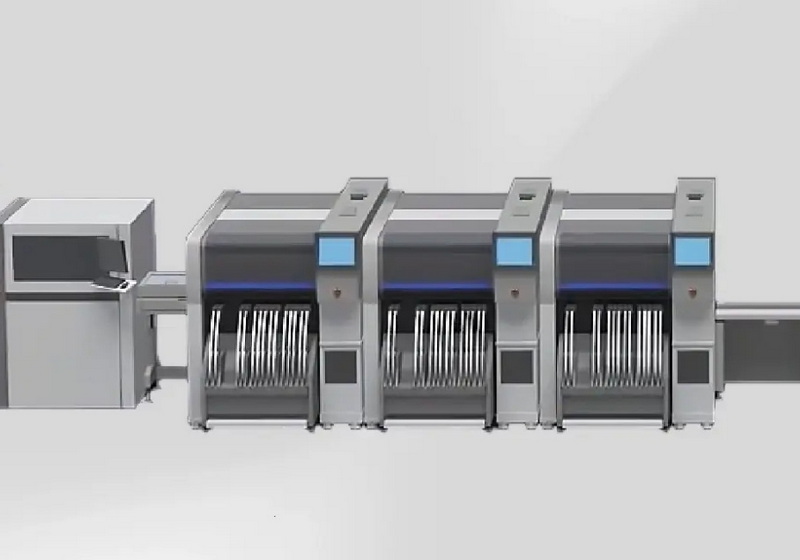
In one deployment, Highlywin installed a full suite of SMT machines for a smart home device manufacturer, resulting in a 28% waste reduction and 35% efficiency uplift. Optimized feeder setups and real-time SPI on the SMT machines trimmed scrap rates from 5% to just 1.2%, while faster cycle times enabled doubling output without expanding floor space. Another client in the automotive sector leveraged Highlywin's vision-enhanced SMT machines to achieve 99.5% first-pass yields, detecting subtle misalignments that could lead to field failures and costly recalls.
Energy metrics also improved markedly, with SMT machines consuming 15% less power per board through intelligent zoning. Global electronics firms consistently report ROI on SMT machine investments within 12 months, driven by cumulative waste reductions and throughput gains. Highlywin bolsters these outcomes with on-site commissioning, training, and a robust global spare parts network, ensuring SMT machines operate at peak performance continuously.
Expanding on these, a telecommunications provider using Highlywin's modular SMT machines transitioned to high-mix production, saving 40% on setup waste through rapid recipe loading. Predictive analytics flagged a potential head wear issue days in advance, avoiding a week-long downtime that would have idled the entire line.
Peripheral equipment like conveyors, stackers, and loaders acts as force multipliers for core SMT machines, ensuring seamless material flow. Buffer modules in these supporting SMT machines temporarily hold PCBs during changeovers, preserving nonstop operation across shifts. Highlywin's complete SMT machine ecosystems include AI-driven peripherals for anomaly prediction and automated waveform optimization in reflow processes.
Loaders and unloaders as automated SMT machines handle board input/output, eliminating manual errors that cause orientation mistakes or drops. Dedicated cleaning SMT machines remove flux residues post-reflow, preventing contamination that leads to reliability failures down the line. Centralized software platforms across all SMT machines facilitate recipe sharing between factories, standardizing best practices globally.
The next generation of SMT machines harnesses artificial intelligence for adaptive learning, where machine algorithms evolve based on production data to predict feeder depletions and auto-adjust parameters. These intelligent SMT machines perform waste analytics in real-time, suggesting process tweaks that compound savings over time. Highlywin is at the forefront with green SMT machines featuring recyclable chassis materials and low-emission designs that comply with evolving environmental regulations.
Modular architectures in future SMT machines will extend equipment lifespans through easy upgrades, drastically cutting electronic waste. Projections indicate efficiency targets surpassing 200,000 CPH by 2027, with SMT machines incorporating 5G connectivity for remote diagnostics and swarm intelligence across lines.
SMT machines fundamentally transform electronics manufacturing by delivering profound waste reductions and efficiency elevations that drive profitability and sustainability. From precision placement to intelligent reflow, these technologies minimize scrap, energy use, and downtime while maximizing throughput and yields. Companies like Highlywin, with their comprehensive portfolio of SMT machines, AI peripherals, service support, and spare parts, offer one-stop solutions tailored for global clients seeking competitive edges. Embracing advanced SMT machines positions manufacturers for success in a resource-constrained world, ensuring resilient, high-output operations amid intensifying demands.
Contact us to get more information!
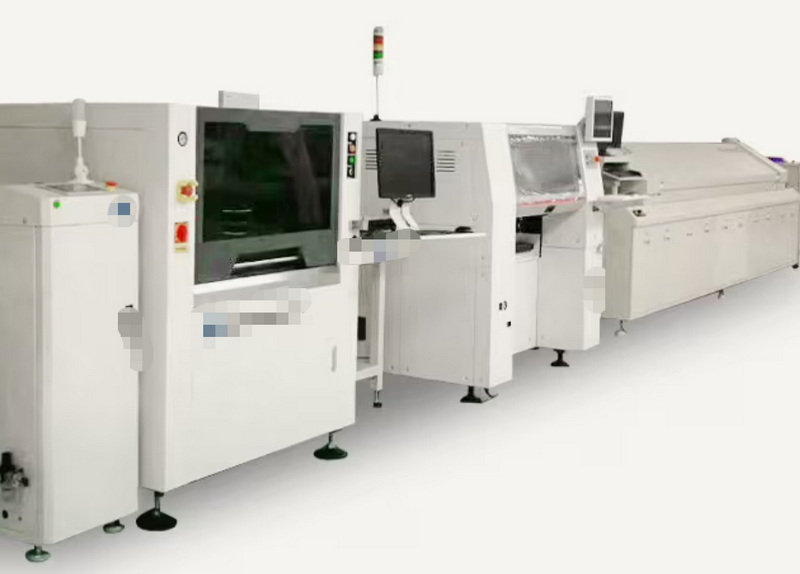
SMT machines employ precise solder paste application via automated stencils and vision-guided component placement to minimize excess solder and unused parts. Integrated SPI and AOI reject defects early, cutting rework needs by up to 90% and conserving resources across the line.
SMT machines excel in boosting components per hour (CPH), overall equipment effectiveness (OEE), and first-pass yields, often delivering 20-50% throughput gains and over 98% quality rates. High-mix flexibility and predictive maintenance further enhance operational speed.
Absolutely, with modular feeders, rapid changeovers under 10 minutes, and jam-preventing sensors, SMT machines maintain steady output. Scalable designs from providers like Highlywin support volume ramps without proportional waste increases.
Through zoned heating in reflow SMT machines, efficient motors in placers, and nitrogen recycling, energy use drops 20-40%. Smart power management adapts to load, optimizing consumption without sacrificing performance.
Highlywin offers end-to-end SMT machines sales, installation, maintenance services, AI/peripheral integration, and global spare parts logistics. Their one-stop solutions focus on waste minimization, efficiency maximization, and customized support for diverse applications.


