Your Trusted Partner from Prototyping to Mass Production, Email Us:info@highlymachine.com
Please Choose Your Language


Views: 222 Author: Ann Publish Time: 2025-12-29 Origin: Site


Content Menu
● Introduction to SMT Machines
>> Optimize the Production Environment
>> Feeder and Component Preparation
>> Uploading Component Libraries
● Running SMT Machines Efficiently
>> Standard Operating Procedures (SOPs)
● Quality Control and Inspection
>> Solder Paste Inspection (SPI)
>> Automated Optical Inspection (AOI)
>> Functional Testing and Feedback Loops
● Reducing Downtime and Improving OEE
>> Predictive Maintenance and Monitoring
● Integrating AI and Automation
>> Automated Material Handling
>> Connectivity and Data Management
● Common Mistakes and How to Avoid Them
● Energy Efficiency and Environmental Practices
● FAQ
>> (1) What is the main advantage of using SMT machines?
>> (2) How can I increase the efficiency of my SMT production line?
>> (3) Why is calibration important in SMT machines?
>> (4) How do I minimize soldering defects in SMT assembly?
>> (5) Why choose Highlywin as your SMT solution provider?
Operating SMT machines efficiently is crucial for achieving high productivity, consistent quality, and cost-effective manufacturing. In modern electronics production, Surface Mount Technology (SMT) has become the core process that defines efficiency and output capability. At Highlywin, we specialize in supplying SMT, AI, and peripheral equipment, providing comprehensive service support and spare parts to help our global clients succeed with one-stop SMT solutions.
This guide explores the key practices every manufacturer should adopt to optimize their SMT operations—covering preparation, setup, programming, maintenance, and innovation integration through automation and data management.

Surface Mount Technology (SMT) enables the direct mounting of electronic components onto the surface of printed circuit boards (PCBs). This technology allows for higher component density, faster assembly, and improved miniaturization of electronic products.
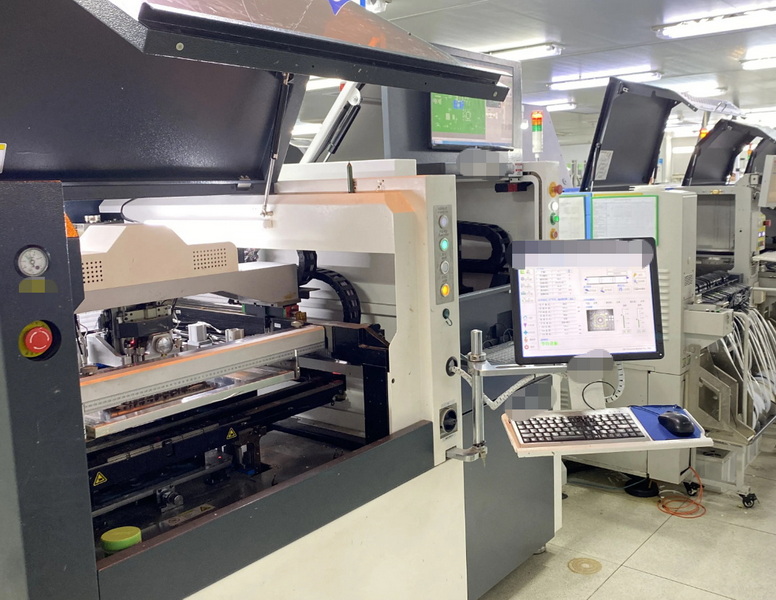
An SMT machine, or pick-and-place machine, is the heart of an SMT production line. It automatically picks components from feeders and accurately places them onto PCBs with the help of high-speed nozzles, servo motors, and vision systems. Today's machines are equipped with intelligent software controls, precision motion systems, and network connectivity, embodying the shift toward Industry 4.0 and smart manufacturing.
Efficient operation of these complex systems goes beyond just running them—it involves optimizing every aspect of production to ensure precision, speed, and minimal downtime.
Preparation defines the foundation of your entire SMT operation. Before production begins, manufacturers must ensure that the machine setup, environment, and materials are all optimized for stability and precision.
- Maintain a steady temperature range between 22–26°C and relative humidity around 40–60% RH.
- Use electrostatic discharge (ESD) protection such as grounding straps and ESD-safe tables.
- Ensure consistent cleanroom conditions to reduce dust, which can affect solder joints and optical sensors.
- Design ergonomic workstations with correct lighting and adequate airflow.
Feeder setup is one of the most time-consuming processes in an SMT line. Skilled operators should:
- Arrange component reels logically according to product design and production sequence.
- Apply barcodes for quick identification and automated tracking.
- Conduct feeder calibration regularly to minimize mispicks and alignment errors.
- Store sensitive components in moisture-proof cabinets to maintain MSL (Moisture Sensitivity Level) specifications.
A well-organized preparation phase can reduce changeover time, eliminate confusion, and create a smoother operational flow.
Accurate programming is the cornerstone of efficient SMT machine performance.
Before production starts, ensure the correct CAD and component data are uploaded. Always double-check for:
- Pin 1 orientation and polarity markings.
- Package type consistency (QFN, BGA, etc.).
- Proper feeder position assignments.
The vision system identifies fiducial markers on each PCB, aligning the board coordinates with the placement program.
Calibrate the vision system regularly to maintain precise recognition, especially when the environment changes.
Modern SMT software allows users to optimize their production paths dynamically. Operators can:
- Prioritize high-speed placement heads for smaller components.
- Group similar-sized components to minimize head movement.
- Adjust pickup and placement heights based on nozzle and component data.
Continuous fine-tuning of these parameters ensures that your SMT machine operates at its maximum performance level while preventing potential misplacement or damage.
Daily operational discipline and standardized procedures form the backbone of efficient SMT operation.
Establish robust SOPs for machine operation, including:
- System startup and pre-checks.
- Feeder loading, material verification, and job selection.
- First article inspection procedures.
- Shutdown and maintenance processes.
Routine adherence to SOPs reduces operator dependency, maintains consistency, and prevents avoidable human errors.
Smooth material handling ensures continuous production without interruptions.
- Use kanban systems or AGVs (Automated Guided Vehicles) for material replenishment.
- Implement reel-level traceability to prevent component mismatches.
- Label all materials clearly to avoid incorrect feeder assignments.
The goal is to keep your SMT machine running as continuously as possible by ensuring that materials and programs are always ready before they are required.
A preventive maintenance schedule is essential to avoid costly breakdowns. Key maintenance actions include:
- Cleaning nozzles, filters, and sensors.
- Checking belt tension and motor alignment.
- Performing lubrication and software diagnostics weekly.
- Recording each task in a maintenance log for traceability.
Well-maintained equipment not only lasts longer but also provides more consistent output, improving yield and throughput.

In a competitive electronics market, quality control is just as important as production speed. Defects arising from poor SMT placement can lead to costly rework and customer complaints.
Before component placement, SPI machines verify the paste volume and stencil pattern quality.
An uneven paste deposit may result in solder bridges or cold joints after reflow. Optimizing printing pressure, speed, and stencil alignment is vital for defect-free assembly.
After reflow soldering, AOI verifies component placement accuracy. It detects:
- Misaligned or missing components.
- Polarity errors.
- Insufficient solder coverage.
Integrating AOI feedback into process control systems allows for automatic correction on subsequent PCBs.
Advanced SMT lines use closed-loop feedback from SPI, AOI, and ICT (In-Circuit Testing) data. This ensures that any detected issue is rapidly analyzed, and the corresponding machine parameters are adjusted.
Quality control should be viewed not as a final step but as a constant process that monitors and improves results throughout production.
Overall Equipment Effectiveness (OEE) combines availability, performance, and quality into a single index that measures true production efficiency. Improving OEE requires focusing on minimizing downtime, improving setup efficiency, and maximizing yield.
In high-mix, low-volume production settings, frequent product switches are inevitable. To handle them efficiently:
- Prepare feeder setups offline while the current job is still running.
- Use universal feeder bases for rapid reconfiguration.
- Employ program simulation tools to test the next run in advance.
By analyzing vibration, temperature, and error trends, predictive maintenance software can forecast potential equipment failures.
This proactive approach allows technicians to address mechanical or electrical issues before they cause major downtime.
Record all production and downtime data. Regularly review:
- Placement accuracy reports.
- Feeder error frequencies.
- Unscheduled stoppages.
Small improvements, when sustained, lead to significant long-term productivity gains.
Modern SMT machines are no longer standalone systems—they are intelligent, networked assets.
Artificial intelligence analyzes production data to automatically adjust placement parameters, feeder speeds, and vision recognition settings. AI systems can reduce placement errors by learning common defects and preventing their recurrence.
Automated storage towers and AGVs deliver components to each SMT line as required. They track material consumption and restock critical components just-in-time.
Through MES (Manufacturing Execution Systems) and ERP integration, SMT machines communicate production data across departments.
This enables traceability from raw material to final product shipment and simplifies compliance with quality standards such as ISO 9001 and IATF 16949.
Automation and connectivity create a data-driven manufacturing environment—boosting efficiency, reducing human error, and improving future forecasting capabilities.
Even experienced manufacturers sometimes make avoidable errors that affect SMT productivity. Understanding these pitfalls can help maintain high efficiency:
1. Inadequate feeder maintenance – Leads to mispicks and misplaced components.
2. Unoptimized solder paste printing – Causes bridging or insufficient solder joints.
3. Ignoring ESD precautions – Results in latent component damage.
4. Poor program alignment – Causes systematic misplacements.
5. Undertrained operators – Increase recovery time after machine stoppages.
6. Neglecting real-time data – Limits early detection of process drift.
By building a robust training culture and embracing technology, these errors can be minimized or eliminated.
Energy consumption is a growing concern in electronics manufacturing. Efficient operation of SMT machines also means reducing waste and operating sustainably.
- Turn off idle equipment between long setups.
- Regularly calibrate heaters in reflow ovens to maintain stable temperature profiles.
- Implement recycling systems for packaging materials and solder paste containers.
- Use energy-efficient lighting and compressor systems within SMT areas.
Sustainability does not only improve the company's environmental image; it also contributes to long-term cost savings.
Safety protocols in SMT environments are essential for protecting workers and maintaining continuous operation.
- Train all personnel on lockout/tagout (LOTO) procedures before servicing equipment.
- Provide proper PPE (Personal Protective Equipment) such as anti-static gloves and eye protection.
- Clearly mark moving parts, pinch points, and restricted zones.
- Conduct regular safety audits and record performance for compliance.
Safe operations improve morale, stability, and long-term workforce reliability.
Efficient SMT operation combines technology, procedure, and discipline. The synergy between well-maintained machines, skilled operators, and automated data systems defines the competitiveness of any electronics manufacturer.
By following these best practices—preparing the environment, calibrating precisely, maintaining regularly, leveraging AI tools, and integrating feedback systems—manufacturers can ensure continuous improvement and maximize the return on their SMT investment.
At Highlywin, we understand that efficiency is not just about speed, but about achieving consistent quality with minimal effort. Our one-stop SMT/AI/peripheral equipment and spare parts solutions are designed to help global partners enhance manufacturing capability, reduce downtime, and reach new levels of production excellence.
SMT machines enable high-speed, high-precision placement of components, increasing production capacity and reducing labor dependency compared to manual assembly.
Focus on proper line balancing, predictive maintenance, and AI-based process optimization. Train operators to handle changeovers quickly and use MES software for real-time monitoring.
Regular calibration maintains vision accuracy, feeder alignment, and nozzle precision—avoiding cumulative placement errors and improving product quality.
Maintain clean stencils, ensure correct oven temperature profiles, and implement SPI/AOI inspection loops. Using quality solder paste and consistent printing parameters also helps.
Highlywin delivers a complete SMT ecosystem, offering advanced equipment, reliable spare parts, and expert service support. Our global experience ensures stable operation and optimized production efficiency for every client.


