Your Trusted Partner from Prototyping to Mass Production, Email Us:info@highlymachine.com
Please Choose Your Language


Views: 222 Author: Ann Publish Time: 2026-01-29 Origin: Site


Content Menu
● AI and Machine Learning Integration
● Miniaturization and High-Precision Placement
● Automation and Smart Factory Ecosystems
● Sustainability in SMT Machines
● Customization and Modular SMT Designs
● High-Speed Throughput Innovations
● Digital Twins and Simulation for SMT Machines
● Robotics and Cobot Synergy with SMT Machines
● Edge Computing in SMT Operations
● Advanced Inspection Technologies in SMT Machines
● Multi-Functional and Hybrid SMT Platforms
● 5G and IoT Connectivity for SMT Machines
>> 1. What role does AI play in modern SMT machines?
>> 2. How do high-speed SMT machines improve productivity?
>> 3. Why is sustainability important for SMT machines buyers?
>> 4. What are the advantages of modular SMT machines?
>> 5. How does Highlywin support SMT machines users?
SMT machines continue to evolve rapidly, driving unprecedented efficiency in electronics manufacturing. Highlywin, a leading provider of SMT machines, AI integration, peripherals, and full-service support, delivers one-stop SMT solutions to global customers.

Modern SMT machines now incorporate advanced AI for predictive maintenance and real-time optimization. These intelligent SMT machines analyze data from placement heads, vision systems, and feeders to predict potential failures before they occur, reducing downtime by up to 30% in high-volume production lines. AI-driven quality control in SMT machines employs machine learning algorithms to detect defects such as component misalignments, soldering bridges, or insufficient paste volume instantly during the assembly process.
For instance, leading SMT machines like Panasonic's NPM-G series feature AI-powered vision systems that achieve sub-micron placement accuracy, making them ideal for handling miniaturized components in demanding applications. This capability in SMT machines not only ensures higher precision but also adapts to varying production conditions by learning from each run. Manufacturers adopting these AI-enhanced SMT machines consistently report improved yields, lower scrap rates, and significant cost savings over traditional setups. The integration of machine learning extends to feeder optimization, where SMT machines automatically adjust pick-up parameters for different component types, minimizing misses and improving overall line efficiency.
As AI matures in SMT machines, self-optimizing algorithms enable continuous improvement without human intervention. Highlywin's portfolio includes AI-ready SMT machines that seamlessly integrate with existing lines, providing plug-and-play intelligence for manufacturers seeking to upgrade without full replacements.
The relentless push toward smaller, more powerful electronics demands SMT machines capable of handling ultra-fine components like 01005 sizes and even smaller emerging formats. High-precision SMT machines now deliver placement speeds exceeding 100,000 components per hour (cph) while maintaining ±10 µm accuracy, essential for fine-pitch BGAs, QFNs, and advanced SiP packages. Vision-guided systems in these SMT machines utilize dual-camera setups with advanced lighting for flawless alignment, even on reflective or transparent substrates.
This level of precision in SMT machines supports cutting-edge applications such as chiplets, heterogeneous integration, and fan-out wafer-level packaging, which are becoming standard in 5G, automotive, and medical devices. Modular placement heads in next-generation SMT machines allow for rapid switches between large and small component reels, enhancing flexibility for high-mix production environments. Highlywin's precision SMT machines excel in these ultra-fine pitch applications, serving sectors from consumer electronics to electric vehicles where component density directly impacts performance.
Beyond basic placement, advanced SMT machines incorporate force feedback sensors to detect and correct anomalies during component seating, ensuring reliable solder joints without damage to delicate parts. This evolution in SMT machines enables manufacturers to tackle the challenges of 3D packaging and embedded components, pushing the boundaries of what's possible in compact device design.
Full automation in SMT machines eliminates manual interventions, integrating seamlessly with AGVs, robotic arms, and conveyor systems for end-to-end material handling. Smart factories powered by automated SMT machines leverage machine-to-machine (M2M) communication protocols like OPC UA for real-time line balancing and dynamic scheduling. Industry 4.0 connectivity links SMT machines to cloud platforms, harnessing big data analytics to optimize throughput, predict maintenance needs, and even forecast demand fluctuations.
Collaborative robots, or cobots, now routinely assist SMT machines with tasks like board flipping, tray loading, and preliminary inspections, creating hybrid human-machine workflows. Highlywin offers turnkey automated SMT machines solutions, complete with intelligent buffers, unloaders, and stackers, enabling true lights-out manufacturing operations. These systems reduce labor dependency while minimizing errors, achieving overall equipment effectiveness (OEE) ratings above 90% in optimized setups.
Moreover, edge orchestration in modern SMT machines coordinates multiple production lines across facilities, responding to order changes in seconds. This level of automation transforms SMT machines from standalone equipment into integral components of intelligent manufacturing ecosystems.
Eco-friendly SMT machines prioritize energy efficiency through low-power servo drives, regenerative braking systems, and LED lighting throughout the production line. Lead-free soldering processes drive innovations in reflow ovens integrated with sustainable SMT machines, featuring multi-zone nitrogen atmospheres that reduce oxidation without excessive gas consumption. Recyclable materials, modular designs for easy upgrades, and built-in waste reduction features are now standard in green SMT machines.
For example, advanced reflow profiles in these SMT machines enable nitrogen-free operations that cut energy usage by 20% while maintaining superior joint quality and minimizing dross generation. Highlywin's sustainable SMT machines fully comply with RoHS, REACH, and other global environmental standards, helping clients achieve green certifications effortlessly. Waterless cleaning modules and solvent recapture systems further enhance the environmental profile of these forward-thinking SMT machines, lowering operational costs alongside ecological impact.
Sustainability extends to lifecycle management, where SMT machines support remote firmware updates and parts recycling programs. Manufacturers choosing these eco-optimized SMT machines not only meet regulatory demands but also gain competitive advantages through reduced total cost of ownership (TCO) and enhanced brand reputation.
Modular SMT machines revolutionize production by allowing users to scale capacity through simple head swaps, feeder additions, or nozzle changes without extensive downtime. This architecture suits high-mix, low-volume scenarios prevalent in prototyping, R&D, and custom electronics manufacturing. Plug-and-play modules in customizable SMT machines facilitate changeovers in under 10 minutes, with automatic calibration ensuring consistent performance across configurations.
Highlywin specializes in tailoring modular SMT machines for diverse applications, from IoT sensors to EV power modules, with software-configurable recipes accessible via intuitive touchscreen GUIs. These versatile SMT machines empower small and medium enterprises to compete effectively by adapting quickly to market shifts and customer specifications. Vision systems in modular SMT machines automatically recognize new feeder types, streamlining setup for operators.
The rise of software-defined SMT machines allows functionality upgrades through licenses rather than hardware purchases, extending equipment life significantly. This customization trend makes SMT machines accessible to a broader range of manufacturers, democratizing advanced production capabilities.
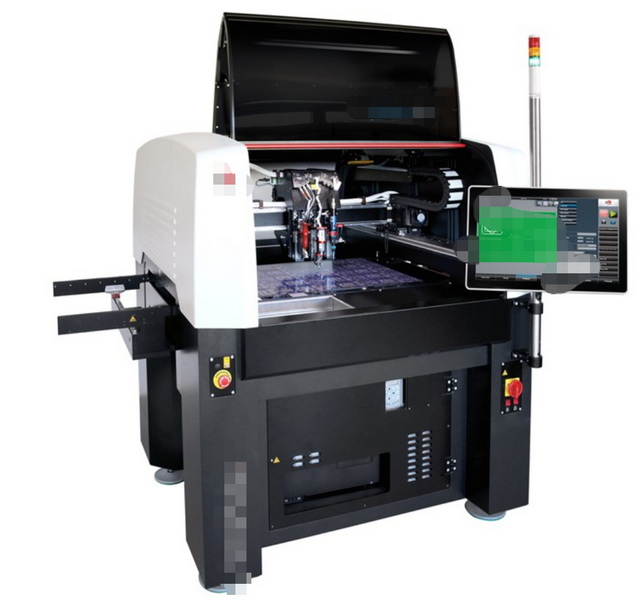
Ultra-high-speed SMT machines achieve modular speeds of 200,000 cph through innovations like jet printing for solder paste deposition and split-vision systems for parallel processing. Closed-loop feedback mechanisms in these SMT machines ensure first-pass yields exceeding 99%, with real-time adjustments for feeder jitter or thermal expansion. Dual-lane conveyor designs double output without increasing factory footprints, ideal for space-limited facilities.
Intelligent feeders in high-speed SMT machines auto-adjust for tape widths from 8mm to 88mm, handling everything from passives to large ICs seamlessly. Highlywin's high-speed SMT machines integrate solder paste inspection (SPI) and automated optical inspection (AOI) inline, intercepting defects before reflow to maximize quality. Tower storage systems keep production running 24/7 by automatically swapping full/empty trays, eliminating starvation events.
Advanced motion control algorithms in these SMT machines optimize head trajectories for minimum travel time, achieving theoretical speeds in practical environments. This focus on throughput positions high-speed SMT machines as essential for mass production of smartphones, wearables, and computing hardware.
Digital twin technology creates virtual replicas of entire SMT machine lines, allowing parameter optimization like conveyor speeds and thermal profiles before physical deployment. Operators use VR/AR interfaces on advanced SMT machines for immersive remote diagnostics and training, visualizing issues through 3D overlays that slash troubleshooting time by hours. Highlywin employs digital twins across its SMT machines portfolio to pre-validate customer layouts, forecasting bottlenecks and suggesting optimizations for day-one peak performance.
Simulation software integrated with SMT machines models material flow, component availability, and even operator movements, achieving virtual OEE predictions accurate to within 5%. Cloud-based twins enable global teams to collaborate on line designs, accelerating time-to-market for new products.
Cobots enhance core SMT machines by managing kitting, inbound inspection, and outbound packing, freeing human workers for value-added tasks. AI-coordinated robotic swarms optimize workflows around primary SMT machines, dynamically reallocating resources based on real-time bottlenecks. Flying probe testers paired with robotic arms extend capabilities to odd-form components that exceed standard pick-and-place limits in SMT machines.
Highlywin's robotic-enhanced SMT machines embrace Industry 5.0 principles, combining human creativity with machine precision through safe collaborative zones equipped with sensors. These systems handle heavy components up to 200g, supporting power electronics and fuel cell production.
Edge AI processes data directly on SMT machines, eliminating cloud latency for split-second decisions during placement and inspection. Over-the-air (OTA) updates maintain firmware currency across fleets of SMT machines without production interruptions. Blockchain integration provides tamper-proof traceability for compliance-heavy sectors like aerospace and medical devices.
Highlywin embeds rugged edge computing modules in its SMT machines, perfect for harsh automotive assembly environments with zero-trust security protocols safeguarding intellectual property.
3D AOI and inline X-ray systems embedded within SMT machines detect voids, bridges, and head-in-pillow defects with multispectral imaging for superior contrast. AI classifiers learn from historical false calls, achieving self-improvement that reduces operator interventions by 80%. Highlywin bundles these inspection modules standard with its SMT machines, offering full-line traceability linking defects to specific feeders or paste lots.
Hybrid SMT machines consolidate printing, placement, and odd-form assembly into single chassis, shrinking footprints by 40% while boosting versatility. Software-defined architectures enable feature unlocks via licenses, future-proofing investments in SMT machines.
5G networks enable wireless control of distributed SMT machines with sub-millisecond latency, while IoT sensors monitor vibrations, temperatures, and humidity for proactive anomaly detection. Highlywin's IoT-ready SMT machines integrate with enterprise MES systems via open APIs.
The latest trends in SMT equipment technology center on intelligent, high-speed, sustainable SMT machines fueled by AI, automation, and connectivity. Highlywin leads with comprehensive SMT machines, service support, and spares for global one-stop solutions. As miniaturization advances and smart factories evolve, advanced SMT machines deliver the efficiency, sustainability, and adaptability needed for competitive electronics manufacturing.
Contact us to get more information!
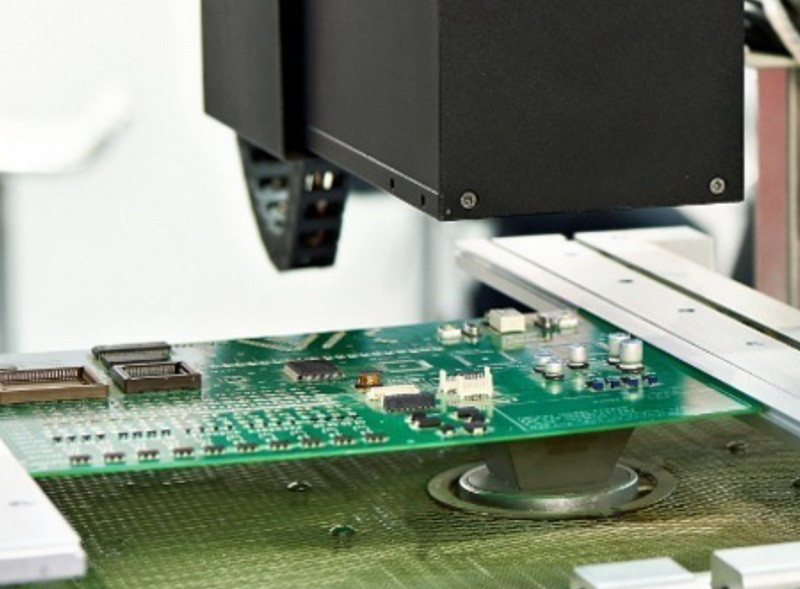
AI in SMT machines drives predictive maintenance, instant defect detection, and autonomous process optimization, dramatically boosting uptime and yield rates. Intelligent algorithms process real-time data from vision and sensors for proactive adjustments across the production line.
High-speed SMT machines achieve 100k+ cph with pinpoint precision via dual lanes, smart feeders, and inline inspection, minimizing changeovers and defects for uninterrupted throughput in volume production.
Sustainable SMT machines reduce energy consumption and ensure RoHS compliance through efficient components and waste minimization, delivering lower TCO and regulatory adherence for green manufacturing.
Modular SMT machines provide scalability, rapid changeovers, and customization flexibility, enabling adaptation to high-mix demands without complete line replacements.
Highlywin offers SMT machines sales, AI/peripherals integration, comprehensive service support, spare parts, installation, training, and global logistics for seamless one-stop solutions.


