Your Trusted Partner from Prototyping to Mass Production, Email Us:info@highlymachine.com
Please Choose Your Language


Views: 222 Author: Ann Publish Time: 2025-12-30 Origin: Site


Content Menu
● Understanding SMT Feeders in Modern Manufacturing
● Material Pick-Up Success Rate: The Foundation of Reliability
● Placement Speed and Throughput: Driving Production Velocity
● Production Cycle Time: Precision in Every Step
● Changeover Efficiency: Flexibility for High-Mix Production
● Maintenance Cost and Downtime: Long-Term Economics
● Abnormality Rate: Minimizing Disruptions
● First Pass Yield (FPY): Quality from the Source
● Machine Utilization and OEE: Holistic Line Health
● Defect Density and Precision: Accuracy Matters
● Advanced Metrics: Peel Force, Vibration, and More
● Cost of Ownership (TCO): Beyond the Purchase Price
● FAQ
>> 1. What is the ideal pick-up success rate for an SMT feeder?
>> 2. How does changeover efficiency affect SMT feeder performance?
>> 3. Why monitor OEE for SMT feeders?
>> 4. What causes high abnormality rates in SMT feeders?
>> 5. How can Highlywin improve my SMT feeder metrics?
SMT feeders are pivotal in surface mount technology (SMT) assembly lines, ensuring precise and reliable component delivery to pick-and-place machines. Evaluating SMT feeder performance through key metrics helps manufacturers optimize production efficiency, minimize downtime, and achieve higher yields. Highlywin, as a premier provider of SMT/AI/peripheral equipment and comprehensive SMT services including spare parts, delivers one-stop SMT solutions tailored for global customers relying on robust SMT feeder performance.

SMT feeders supply electronic components from tape reels, trays, or sticks to the placement head in high-speed PCB assembly processes. The performance of an SMT feeder directly influences the entire SMT line's throughput, quality, and cost-effectiveness. In high-volume electronics manufacturing, where SMT feeders handle thousands of components per hour, even minor inefficiencies in SMT feeder operation can lead to significant production losses.
Key challenges in SMT feeder evaluation include handling various component sizes—from tiny 0201 chips to larger QFNs—and maintaining consistency across diverse tape widths like 8mm to 72mm. Highlywin's SMT feeders incorporate advanced features such as servo-driven indexing and intelligent error detection to address these demands. Regular assessment of SMT feeder metrics ensures alignment with Industry 4.0 standards, enabling predictive maintenance and seamless integration with smart factory systems.
Manufacturers must consider both mechanical and software aspects when evaluating SMT feeder performance. Mechanical reliability focuses on durable components like peel arms and feed cams, while software metrics track real-time data logging for proactive adjustments. By prioritizing these SMT feeder evaluation criteria, companies can reduce scrap rates and enhance overall equipment effectiveness (OEE).
The material pick-up success rate stands as the cornerstone metric for any SMT feeder, measuring the percentage of successful component extractions from feeder pockets by the nozzle. Industry benchmarks set this SMT feeder metric above 99.5%, as even a 0.1% drop can cascade into hundreds of defects per shift. Factors such as inconsistent cover tape peeling, pocket deformation, or vacuum misalignment commonly undermine SMT feeder pick-up performance.
To optimize this SMT feeder metric, operators calibrate peel force to 5-15 Newtons and verify tape tension uniformity. Vision-assisted SMT feeders enhance pick-up rates by pre-inspecting components, rejecting anomalies before placement attempts. In practice, logging SMT feeder pick-up failures via machine interfaces reveals patterns, such as slot-specific issues in multi-lane SMT feeder banks.
Advanced diagnostic tools for SMT feeders simulate pick cycles offline, allowing fine-tuning without halting production. Highlywin supports this with calibration kits and training, ensuring SMT feeder pick-up success remains consistently high. Monitoring trends over time—weekly averages versus peak loads—provides actionable insights for SMT feeder maintenance schedules.
Placement speed quantifies how rapidly an SMT feeder advances components to match the pick-and-place machine's takt time, typically targeting 8,000-15,000 components per hour (CPH) for tape-based SMT feeders. Throughput, a broader SMT feeder metric, accounts for reel capacity, splicing frequency, and downtime, aiming for sustained output without interruptions.
Vibrations, stepper motor backlash, or improper reel braking degrade SMT feeder throughput, often capping effective speeds below 80% of rated capacity. Electric SMT feeders outperform pneumatic models here, delivering precise servo control for smoother acceleration and deceleration. Calculate SMT feeder throughput efficiency as (Actual CPH / Nominal CPH) × 100, factoring in uptime.
For high-mix environments, SMT feeder versatility in handling odd-form components boosts overall line throughput. Highlywin's modular SMT feeders allow quick format changes, minimizing idle time. Real-world data shows optimized SMT feeders increasing line speeds by 20-30%, directly translating to higher daily PCB outputs.
Production cycle time encompasses the complete SMT feeder sequence: indexing, peeling, presenting, and resetting for the next component, ideally under 0.08 seconds for ultra-high-speed lines. Extended SMT feeder cycle times from mechanical drag or sensor delays bottleneck downstream processes, inflating total lead times.
Minimizing SMT feeder cycle variability requires low-friction guides and high-response pneumatics or servos. High-resolution encoders track SMT feeder positioning accuracy to ±0.02mm, ensuring repeatability. Analyze cycle histograms from SMT feeder controllers to identify outliers, such as end-of-reel slowdowns.
In volume production, shaving milliseconds off SMT feeder cycles compounds into substantial gains—thousands more placements per hour. Highlywin's next-gen SMT feeders integrate adaptive algorithms that dynamically adjust cycle parameters based on component type, enhancing fluidity across runs.
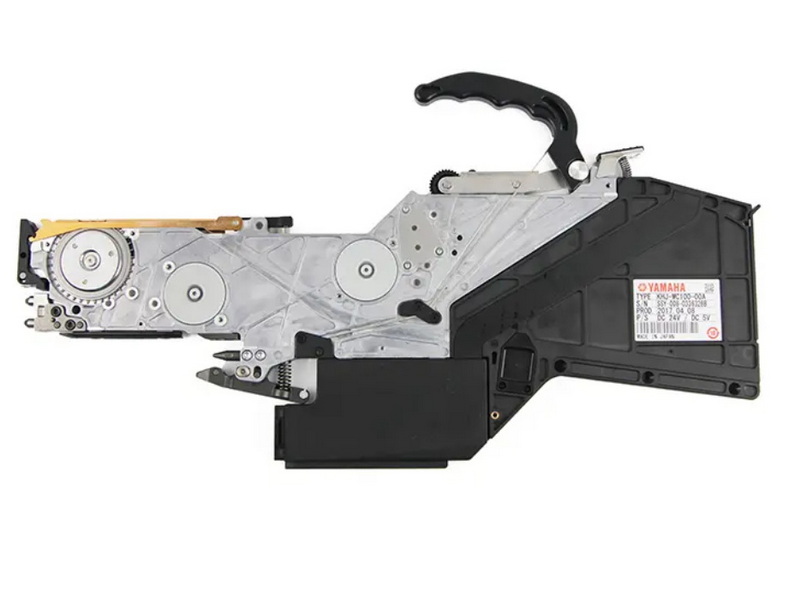
Changeover efficiency measures the time required to reconfigure an SMT feeder for new reels or tape widths, with elite performers achieving under 3 minutes for standard swaps. This SMT feeder metric is crucial in just-in-time manufacturing, where frequent recipe changes demand agile SMT feeder handling.
Quick-release mechanisms, auto-calibrating height sensors, and RFID identification streamline SMT feeder changeovers. Poorly designed SMT feeders, with manual adjustments and no setup verification, can exceed 10 minutes, eroding OEE. Efficiency formula: (Ideal changeover time / Actual time) × 100, targeting over 95%.
Splicing techniques further refine this metric, allowing continuous SMT feeder operation during reel exhaustion. Highlywin supplies splice tapes and tools optimized for their SMT feeders, plus setup wizards that automate parameter loading. Mastering changeover efficiency unlocks lights-out production capabilities.
Maintenance cost for SMT feeders aggregates parts replacement, labor, and opportunity losses, ideally kept below 3-5% of annual equipment value. Downtime tracking—mean time to repair (MTTR) and mean time between failures (MTBF)—reveals SMT feeder reliability, with top units boasting MTBF over 10,000 hours.
Preventive protocols, like torque checks on SMT feeder gears and vacuum filter cleans, avert 70% of failures. Predictive maintenance via vibration sensors on SMT feeders flags wear early. Highlywin's spare parts ecosystem ensures 24/7 availability, slashing MTTR.
Cost-benefit analysis weighs upfront SMT feeder investment against lifecycle savings; durable models recoup premiums within 18 months through reduced downtime.
Abnormality rate captures SMT feeder faults like tape jams, empty pocket detections, or index skips, benchmarked under 0.1%. Peel force fluctuations or cover tape adhesion issues spike this metric, halting lines until cleared.
Onboard diagnostics in smart SMT feeders log error codes for rapid troubleshooting. Peel force testers maintain optimal 8-12N ranges. Highlywin's firmware updates refine abnormality detection algorithms.
FPY reflects boards passing AOI without rework attributable to SMT feeder errors, targeting >98%. Centered, undamaged components from reliable SMT feeders underpin high FPY.
Correlate FPY dips with specific SMT feeder lanes using traceability data.
Machine utilization tracks SMT feeder active percentage, aiming >88%. OEE = Availability × Performance × Quality provides a unified SMT feeder score, with 85%+ indicating excellence.
SMT feeder optimizations lift all OEE pillars.
Defect density (defects per million opportunities) stays low with SMT feeder pitch accuracy ±0.03mm. Repeatability tests validate consistency.
Peel force uniformity prevents damage; vibration <0.3g stabilizes SMT feeder motion. Angular error and feeder bank synchronization add depth.
Inline inspection feedback loops refine SMT feeder outputs.
TCO integrates acquisition, operation, and disposal costs; high-performing SMT feeders lower it via longevity and efficiency.
Mastering these key metrics—from pick-up success and throughput to OEE and TCO—transforms SMT feeder performance into a competitive edge. Highlywin empowers global manufacturers with superior SMT feeders, expert services, and spares for unparalleled one-stop SMT solutions. Continuous monitoring and optimization ensure sustained excellence in PCB assembly.
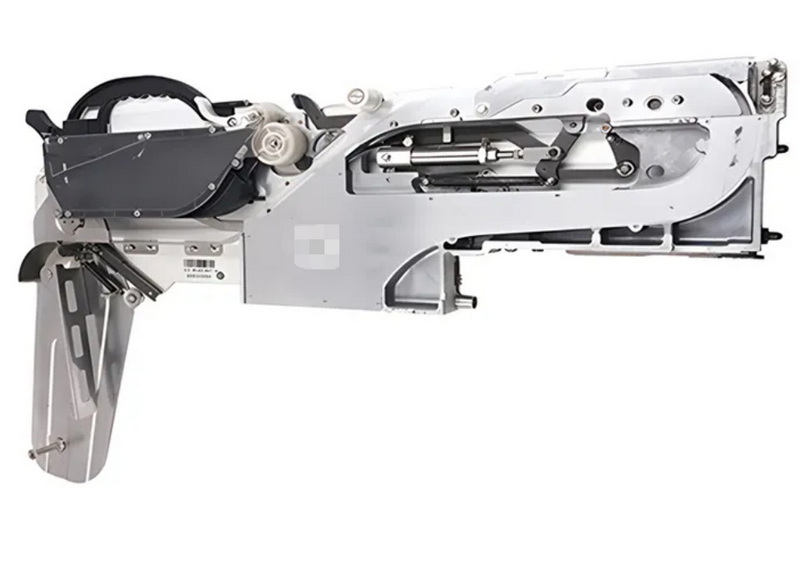
The ideal pick-up success rate for an SMT feeder exceeds 99.5%, minimizing production halts and ensuring reliable component delivery.
Efficient changeovers under 5 minutes on SMT feeders support high-mix production, reducing downtime and boosting flexibility.
OEE combines availability, performance, and quality to holistically assess SMT feeder contributions to line efficiency, targeting >80%.
Tape jams, stepping errors, and peel inconsistencies cause high abnormality rates in SMT feeders; regular maintenance keeps them below 0.2%.
Highlywin provides compatible SMT feeders, calibration services, and spares, optimizing metrics like throughput and FPY for one-stop SMT solutions.


