Your Trusted Partner from Prototyping to Mass Production, Email Us:info@highlymachine.com
Please Choose Your Language


Views: 222 Author: Ann Publish Time: 2026-01-25 Origin: Site


Content Menu
● Introduction to SMT Machines
● Types of SMT Machines and Their Base Prices
● Factors Influencing SMT Machine Costs
● Initial Purchase Costs for SMT Machines
● Installation and Setup Expenses for SMT Machines
● Ongoing Operational Costs of SMT Machines
● Labor and Training Costs Associated with SMT Machines
● Maintenance and Spare Parts for SMT Machines
● Hidden Costs in SMT Machines Ownership
● Cost-Saving Strategies for SMT Machines Buyers
● ROI Calculation for SMT Machines Investments
● Highlywin's Value in SMT Machines Solutions
● FAQ
>> 1. What is the average cost of entry-level SMT machines?
>> 2. How do I reduce long-term costs for SMT machines?
>> 3. Are refurbished SMT machines a good option?
>> 4. What factors most affect SMT machines pricing?
>> 5. Does Highlywin provide installation for SMT machines?
SMT machines form the backbone of modern electronics manufacturing, enabling efficient surface-mount technology assembly for everything from smartphones to automotive electronics. Highlywin, a leading provider of SMT machines, AI equipment, peripherals, and comprehensive SMT services, delivers one-stop solutions to global clients seeking reliable production lines. This article dives deep into the costs associated with SMT machines, helping buyers understand pricing structures, hidden expenses, and strategies for maximizing return on investment.

SMT machines have transformed electronics assembly by allowing components to be mounted directly onto the surface of printed circuit boards (PCBs), eliminating the need for holes and enabling denser, more compact designs. These versatile SMT machines handle a wide range of tasks, from precise component placement to soldering and inspection, supporting high-volume production in industries like consumer electronics, telecommunications, and medical devices. Highlywin specializes in curating top-tier SMT machines that integrate seamlessly with AI-driven quality control and peripheral systems, ensuring clients achieve optimal throughput and reliability.
The global demand for advanced SMT machines surges as devices become smaller, smarter, and more interconnected. Core SMT machines in a typical production line include high-speed pick-and-place machines, solder paste printers, reflow ovens, automated optical inspection (AOI) units, and conveyor systems. Each type of SMT machine contributes uniquely to the assembly process, but their collective cost can vary dramatically based on specifications and scale. Understanding these costs upfront prevents budget overruns and positions businesses for scalable growth. Highlywin's expertise in SMT machines allows for customized solutions that balance performance with affordability, serving manufacturers worldwide from its base in China.
Investing in quality SMT machines not only boosts production efficiency but also minimizes long-term operational headaches. For instance, robust SMT machines reduce defect rates, lower rework costs, and extend equipment lifespan, delivering superior value over cheaper alternatives that fail prematurely.
SMT machines come in diverse configurations tailored to specific production needs, with prices reflecting their speed, precision, and capacity. Pick-and-place SMT machines often represent the largest investment, accounting for 60-70% of a full SMT line's budget due to their critical role in component positioning. Entry-level pick-and-place SMT machines start around $100,000, suitable for low-to-medium volume runs, while high-end flexible SMT machines capable of 100,000+ components per hour can exceed $700,000 or more.
Solder paste printers, essential for applying adhesive paste before placement in SMT machines workflows, range from $26,000 for semi-automated models to $80,000 for fully vision-aligned systems that ensure micron-level accuracy. Reflow ovens, which melt solder paste to form permanent bonds in SMT machines processes, cost between $20,000 for basic conveyor-fed units and $150,000 for multi-zone nitrogen-purged models that prevent oxidation. Inspection SMT machines, such as AOI and SPI (solder paste inspection) systems, fall in the $30,000 to $120,000 bracket, incorporating AI algorithms for real-time defect detection.
Loaders, unloaders, and conveyor systems for linking SMT machines in a line are more affordable at $10,000 to $50,000, but their seamless integration is vital for uninterrupted flow. High-end SMT machines from established brands like Yamaha, Fuji, or Panasonic carry premiums for proven reliability, whereas cost-effective SMT machines from emerging Asian manufacturers match performance at 40-60% lower prices. Highlywin sources and supplies these SMT machines, offering brands that meet international standards without the markup.
Modular SMT machines allow users to start small and expand, such as adding multi-head feeders to existing pick-and-place SMT machines for handling larger components like QFNs or BGAs. This scalability makes SMT machines accessible for startups prototyping IoT devices or scaling to mass production of 5G modules.
Several key variables dictate the final price tag of SMT machines, making informed comparisons essential. Placement speed is a primary driver—SMT machines rated at 50,000 chips per hour (CPH) cost significantly less than those hitting 150,000 CPH, with the latter justifying premiums through doubled output. Feeder capacity and component versatility add 20-30% to costs; SMT machines supporting tiny 01005 resistors alongside large connectors require advanced nozzles and vision systems.
Brand reputation and manufacturing origin play huge roles: Japanese or European SMT machines command 2-3 times the price of Chinese equivalents due to perceived durability, yet modern SMT machines from suppliers like Highlywin deliver equivalent uptime at reduced costs. Automation levels elevate pricing—fully autonomous SMT machines with robotic loading and AI self-calibration add $50,000-$200,000 but slash labor needs by half.
Build quality affects longevity; heavy-duty frames and servo motors in premium SMT machines withstand 24/7 operation, reducing replacement frequency. Software sophistication, including offline programming for SMT machines, contributes 5-10% extra, enabling quick changeovers between jobs. Facility requirements, such as three-phase power or cleanroom compatibility for sensitive SMT machines, can tack on $10,000-$100,000 in modifications.
Customization for niche applications—like high-temperature SMT machines for power electronics or vacuum-compatible models for LED assembly—further inflates budgets by 10-20%. Buyers must weigh these factors against production goals; Highlywin consultants help optimize SMT machines selections to avoid over-specification.
Beyond sticker prices, acquiring SMT machines involves ancillary fees that can add 10-20%. A starter SMT line (printer, single-head placer, oven) totals around $500,000, while enterprise-grade setups with dual-gantry SMT machines surpass $2 million. Shipping SMT machines internationally incurs $20,000-$50,000, plus duties varying by region—often 5-15% for electronics equipment.
Customization, such as software localization or special feeders for odd-form components in SMT machines, adds $20,000-$50,000. Bulk orders of multiple SMT machines unlock 10-25% discounts, especially through partners like Highlywin who streamline procurement. Financing options, including leases at 20-40% lower upfront costs, make SMT machines viable for cash-strapped firms.
Trade-in programs for legacy SMT machines recover 20-40% of new purchase value, with Highlywin facilitating buybacks and upgrades to keep production current.
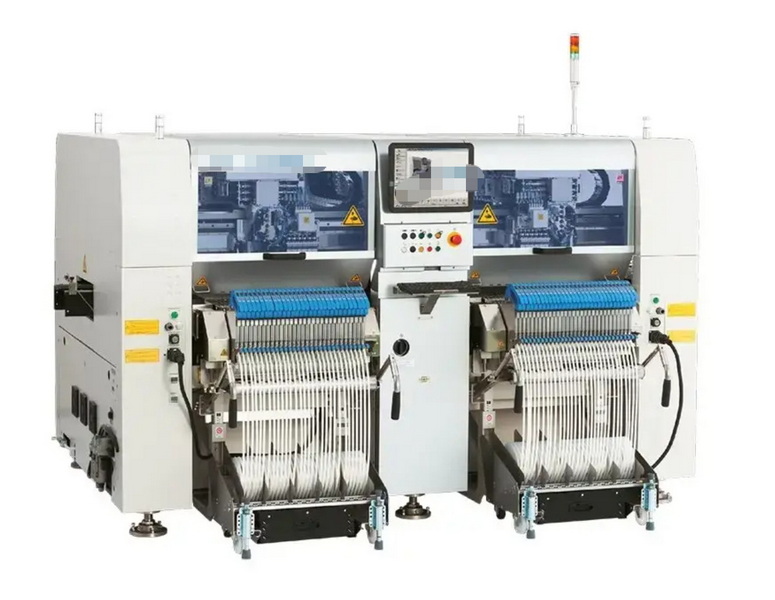
Setting up SMT machines demands professional expertise to avoid costly errors. Full-line installation takes 1-2 weeks, costing $20,000-$50,000 including technician travel and alignment calibration. Highlywin dispatches teams for on-site SMT machines deployment, minimizing downtime to hours rather than days.
Electrical infrastructure upgrades for power-hungry SMT machines run $10,000-$30,000, while pneumatic and exhaust systems add another $5,000-$15,000. Operator training—2-3 days of hands-on sessions with simulators and live SMT machines—costs $5,000-$15,000 for teams of 5-10, covering programming, troubleshooting, and safety protocols.
Poor installation leads to misalignment in SMT machines, causing 10-20% yield losses initially; Highlywin's protocols ensure first-run success rates above 98%.
Daily SMT machines operation accrues expenses in energy, consumables, and upkeep. Reflow SMT machines guzzle electricity at $2,000-$10,000 annually, while pick-and-place units add compressed air costs. Solder paste and stencils for high-volume SMT machines total $1,000-$5,000 monthly.
Preventive maintenance—quarterly checks on belts, nozzles, and vision cameras—runs $3,000-$8,000 per SMT machine yearly, averting 80% of breakdowns. Software licenses for optimization modules renew at $2,000-$10,000. Highlywin's service plans bundle these into fixed fees with remote monitoring for predictive alerts.
Skilled personnel unlock SMT machines' full potential. Initial certification programs cost $10,000 for groups, with annual refreshers at half that. Labor for tending SMT machines ranges $20-50/hour regionally, but advanced models cut staffing by 50% via auto-correction features.
Highlywin includes complimentary training with SMT machines purchases, extending to remote sessions for distributed teams.
Proactive spares stocking is crucial for SMT machines uptime. Nozzles wear every 3-6 months at $500-$2,000 per set; feeders last 1-2 years at $1,000-$5,000. Belts and cameras need quarterly swaps.
AI-driven diagnostics in modern SMT machines forecast failures, slashing downtime 70% and saving $50,000+ yearly. Highlywin maintains global inventories for next-day delivery.
Downtime from SMT machines faults costs $1,000-$5,000 hourly; insurance adds 1-2% of value annually. Under-specced SMT machines necessitate premature upgrades, while poor ventilation accelerates wear. Scalable, modular SMT machines from Highlywin mitigate these risks.
Start with mid-tier SMT machines and modular expansions to save 30%. Lease for low entry; source locally via Highlywin for logistics cuts. Refurbished SMT machines offer 50-70% savings with warranties. Energy-efficient models snag rebates.
SMT machines recoup in 12-24 months at 80% utilization—a $500,000 line yields $1.5M yearly at scale. Factor 5-7 year depreciation.
Highlywin packages complete SMT machines lines under $500,000 with spares, training, and upgrades, cutting TCO 40% for global users.
Mastering SMT machines costs—from acquisition to operation—enables savvy investments yielding superior electronics manufacturing. Highlywin's one-stop SMT machines solutions, backed by expert support, empower clients worldwide to thrive competitively.
Contact us to get more information!
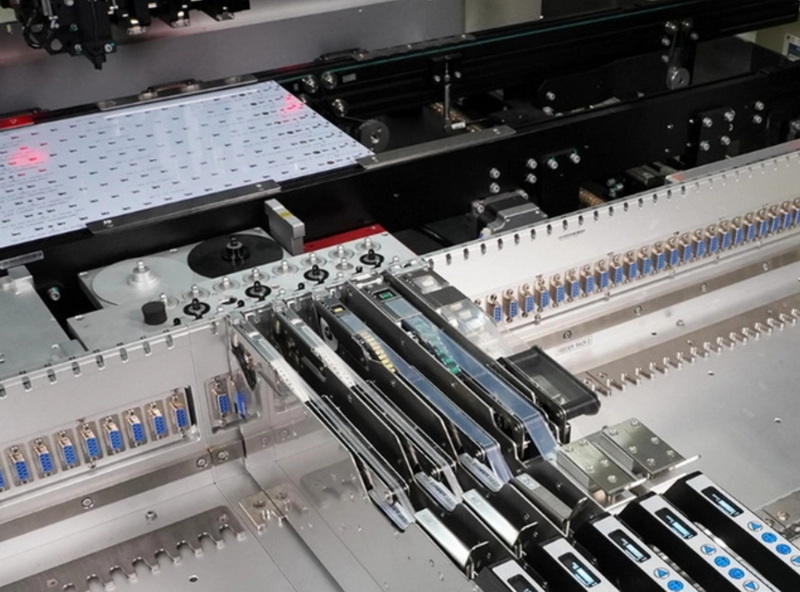
Entry-level SMT machines lines begin at $500,000, with pick-and-place units from $100,000-$200,000. Highlywin provides competitive, reliable options.
Focus on maintenance, modular designs, and Highlywin partnerships for spares and minimal downtime.
Yes, they save 50-70% with full warranties, perfect for market entry.
Speed, feeders, automation, and brand; balance with production needs.
Yes, full global installation and training for seamless rollout.


