Your Trusted Partner from Prototyping to Mass Production, Email Us:info@highlymachine.com
Please Choose Your Language


Views: 222 Author: Ann Publish Time: 2026-01-03 Origin: Site


Content Menu
● Core Functions of SMT Feeders
>> Bulk and Vibratory SMT Feeders
● Key Mechanical Components of SMT Feeders
● Electronic and Control Components in SMT Feeders
● Maintenance and Troubleshooting for SMT Feeders
● Selecting the Right SMT Feeder
● Advancements in SMT Feeder Technology
● FAQ
>> 2. What types of SMT Feeders exist?
>> 3. How do you maintain SMT Feeders?
>> 4. Why choose electric SMT Feeders?
>> 5. Can Highlywin supply custom SMT Feeders?
SMT Feeders are indispensable in surface mount technology (SMT) assembly lines, precisely delivering electronic components to pick-and-place machines for efficient PCB production. Highlywin, a premier provider of SMT/AI/peripheral equipment, full-service support, and spare parts sales, offers global customers one-stop SMT solutions featuring reliable SMT Feeders. This guide delves into the essential components of SMT Feeders, empowering manufacturers to enhance performance and reduce downtime.

SMT Feeders serve as the critical interface between component storage and placement heads in automated electronics manufacturing. These devices systematically advance components from reels, trays, tubes, or bulk containers to exact pick positions, ensuring high-speed, error-free operations. In high-volume production environments, SMT Feeders handle everything from tiny 01005 resistors to large QFN packages, maintaining micron-level accuracy across thousands of cycles.
The evolution of SMT Feeders has paralleled SMT technology advancements, transitioning from basic mechanical designs to intelligent, electronically controlled systems. Modern SMT Feeders integrate with Industry 4.0 protocols, providing real-time data on feed status, component count, and error detection. Highlywin supplies a comprehensive range of SMT Feeders compatible with leading brands like Yamaha, Fuji, Panasonic, and Samsung, complete with calibration tools and spare components for seamless integration.
Without robust SMT Feeders, production lines suffer from frequent stops, misplacements, and quality issues. Highlywin's expertise ensures customers select the optimal SMT Feeders for their specific throughput requirements, minimizing changeover times and maximizing uptime. Understanding SMT Feeders' inner workings allows operators to perform proactive maintenance, extending equipment life and boosting ROI.
At their core, SMT Feeders execute three primary functions: component storage and presentation, precise indexing, and reliable release to the vacuum nozzle. Storage mechanisms accommodate various media types, while indexing motors advance materials in programmed increments, typically 2mm to 32mm pitches. Release systems employ peelers for tape cover tapes or vacuum assists for trays, exposing parts without damage.
SMT Feeders synchronize with host machine controllers via protocols like SIPLACE or SMEMA, receiving commands for feed timing and position verification. Intelligent SMT Feeders feature self-diagnostic capabilities, automatically adjusting for tape thickness variations or reel tension changes. This adaptability proves vital in high-mix production where SMT Feeders switch between chip, resistor, capacitor, and connector feeding multiple times per shift.
Error prevention defines superior SMT Feeders: sensors detect missing components, tape jams, or peel failures, triggering immediate halts to protect downstream processes. Highlywin's premium SMT Feeders incorporate dual-sensor arrays for redundancy, achieving pick success rates exceeding 99.99%. These functions collectively enable SMT lines to achieve components-per-hour (CPH) ratings over 100,000, driving competitive manufacturing efficiencies.
Tape and reel SMT Feeders represent the most prevalent type, processing embossed carrier tapes from 8mm to 72mm widths wound on reels up to 700mm diameter. Electric or pneumatic motors drive sprockets that engage tape pockets, advancing components sequentially. Cover tape peel mechanisms—pivoting arms with controlled angles—separate adhesive films without disturbing parts, directing waste to take-up spools.
High-precision SMT Feeders support variable pitch recognition, automatically calibrating for 2mm, 4mm, or custom spacings common in fine-pitch QFPs and MLCCs. Highlywin stocks mechanical, electric, and smart tape SMT Feeders for legacy and next-gen machines, with quick-swap cassettes reducing setup times to under 60 seconds. These SMT Feeders excel in volume production of consumer electronics, automotive modules, and telecommunications boards.
Advanced features in tape SMT Feeders include bidirectional feeding for error recovery and laser height measurement for nozzle optimization. Maintenance focuses on sprocket wear and peel arm pivots, with Highlywin providing OEM-grade replacements to sustain peak performance.
Tray SMT Feeders accommodate JEDEC-standard matrix trays for larger, sensitive components like BGAs, CSPs, and SiPs. Stackable designs hold 5-20 trays per unit, with XY positioning tables indexing to specific matrix pockets via servo motors. Vacuum or mechanical retention secures trays during high-acceleration moves, preventing part shifts.
Single-tray SMT Feeders occupy multiple machine slots but offer simplicity for prototyping, while multi-tray units enable continuous feeding during changeovers. Highlywin's tray SMT Feeders support group pick modes, allowing multiple components per nozzle cycle to accelerate IC placement. These SMT Feeders prove essential for server, medical, and aerospace assemblies demanding zero-defect quality.
Tray handling in SMT Feeders incorporates anti-static materials and ESD shielding, critical for high-reliability applications. Calibration routines verify XY accuracy to ±0.05mm, ensuring first-pass yields remain optimal.
Tube SMT Feeders, also called stick feeders, process components packaged in antistatic plastic tubes or waffle trays. Gravity-fed or vibratory advancement pushes parts forward, with escapements releasing one at a time to the pick point. Adjustable lane widths (2-16mm) accommodate SOPs, TOs, PLCCs, and radial-leaded diodes.
Vibratory SMT Feeders employ piezoelectric bowls to orient cylindrical or odd-form parts without pin bending. Highlywin offers universal tube SMT Feeders with modular inserts for rapid reconfiguration, ideal for low-volume, high-variety runs. These cost-effective SMT Feeders integrate easily into existing lines, supporting legacy tube-packed inventories.
Precision escapement mechanisms in tube SMT Feeders prevent double-feeding, with optical sensors confirming presence. They shine in connector assembly and power semiconductor production.
Bulk SMT Feeders manage loose components from hoppers, bins, or magazines, using centrifugal or linear vibration to align and dispense parts. Bowl-style SMT Feeders feature custom track tooling for specific geometries, achieving orientations like upright capacitors or flat-sided transistors.
These SMT Feeders reduce packaging costs by 50-70% for non-reelable parts, integrating with intelligent vision systems for final verification. Highlywin supplies radial, centrifugal, and linear bulk SMT Feeders, optimized for automotive and white goods manufacturing. Capacity ranges from 1,000 to 50,000 components per load, minimizing replenishment frequency.
Anti-jam cleats and speed controls ensure steady flow, with throughput up to 20,000 CPH for simple parts.
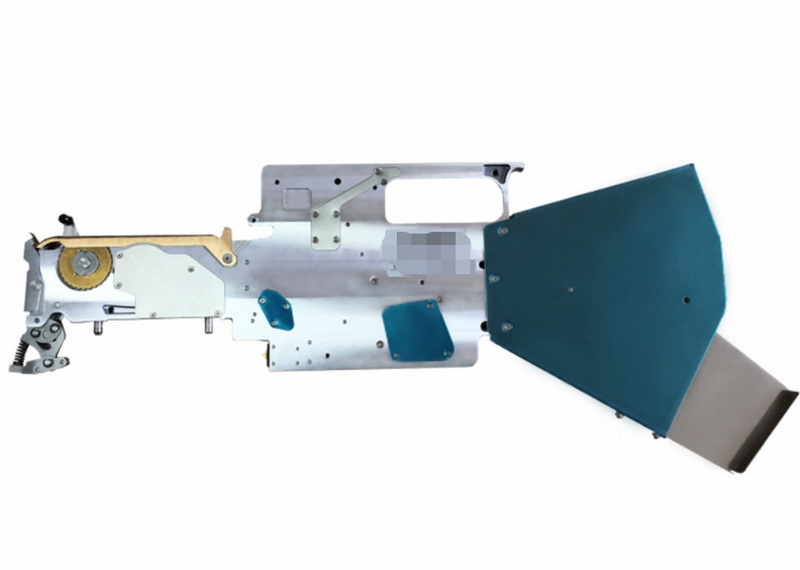
Mechanical excellence underpins all SMT Feeders. The base frame, typically aluminum or steel, mounts to feeder carts with anti-vibration dampers. Guide rails and tape paths maintain alignment, while tension arms regulate reel unwind torque.
Sprocket wheels—precision-ground with 1.5mm pitch teeth—engage carrier tapes reliably over millions of cycles. Peel arms, with 20-45° angles, separate cover tapes via air cylinders or servos, feeding to peel verification sensors. Baffles and stoppers control tape slack, preventing bird-nesting jams.
Take-up mechanisms wind waste tapes onto spools, with clutch systems maintaining constant tension. Gears, belts, and cams convert rotary motion to linear feeds, hardened for wear resistance. Locking clamps and quick-release levers facilitate cassette swaps in under 10 seconds.
In tray SMT Feeders, ball screws drive XY tables, while grippers secure trays. Tube SMT Feeders feature escapement levers and leaf springs for part release. Bulk vibratory units include hoppers with 45° funnels and orientation tracks.
Electronics elevate SMT Feeders from mechanical feeders to smart devices. Stepper or servo motors provide closed-loop positioning, with encoders tracking 0.01mm resolutions. Photoelectric, laser, and ultrasonic sensors detect tape end, component presence, and peel completion.
Control PCBs process signals via microcontrollers, interfacing with machine PLCs over RS485, EtherCAT, or Profibus. Intelligent SMT Feeders include barcode readers for auto-ID and RFID tags for inventory tracking. Error LEDs, buzzers, and digital displays aid troubleshooting.
Firmware algorithms compensate for wear, predicting maintenance needs. Highlywin retrofits legacy SMT Feeders with smart modules, adding IoT connectivity for remote monitoring.
Proactive maintenance sustains SMT Feeder reliability: daily visual inspections, weekly compressed air cleaning of guides and sensors, and monthly lubrication of gears and cams. Pitch calibration using test tapes verifies accuracy every 500 hours.
Common faults—tape jams from dust buildup, sprocket skips from wear, or sensor blindness from contamination—resolve via standardized procedures. Highlywin's service kits include spare peel arms, motors, and sensors, with global technicians available 24/7.
Advanced diagnostics via USB ports download error logs, pinpointing issues like motor stalls or encoder drift. Training programs from Highlywin teach root-cause analysis, reducing MTTR to under 15 minutes.
Selection criteria for SMT Feeders encompass component type, pitch range, machine model, and production volume. Tape SMT Feeders suit 80% of SMDs; trays for ICs over 10x10mm; tubes for leaded parts. Electric models offer speed advantages (up to 2x CPH) over pneumatics, though at higher cost.
Compatibility charts from Highlywin match feeders to host brands, factoring slot pitch and power requirements. ROI calculations weigh initial cost against downtime savings—premium SMT Feeders pay back in 6-12 months via 20% throughput gains.
SMT Feeders populate carts with 20-64 slots, arranged by placement frequency for line balancing. Cart trolleys enable off-line kitting, cutting changeover times by 70%. Software optimizes feeder staggering, preventing simultaneous stockouts.
Highlywin engineers complete feeder banks with labeling, lighting, and ESD protection, ensuring ergonomic setups.
Emerging SMT Feeders incorporate AI for predictive jamming, machine vision for auto-calibration, and wireless charging for sensors. Hybrid feeders merge tape/tray functions in single slots, supporting flexible manufacturing. Cobot-compatible designs enable manual intervention without line stops.
Highlywin imports these innovations, future-proofing customer investments.
The essential components of SMT Feeders—from mechanical precision to electronic intelligence—drive unparalleled efficiency in SMT assembly. Highlywin stands ready with superior SMT Feeders, expert services, and spares to deliver your one-stop SMT solutions worldwide. Embrace quality SMT Feeders for sustained production excellence.
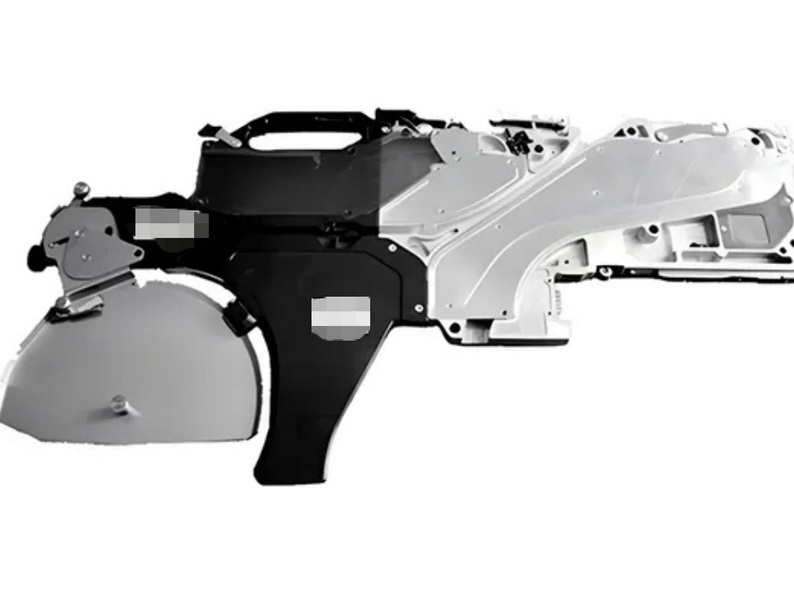
SMT Feeders are automated devices that supply electronic components to pick-and-place machines from various packaging, ensuring precise, high-speed delivery for PCB assembly. Highlywin provides versatile SMT Feeders for global needs.
SMT Feeders include tape/reel, tray, tube/stick, and bulk/vibratory types, each tailored to specific components and production scenarios. Highlywin stocks all variants.
Maintain SMT Feeders through regular cleaning, lubrication, calibration, and sensor checks to prevent jams and errors. Highlywin offers kits and training.
Electric SMT Feeders deliver higher precision, speed, and reliability than pneumatic ones, ideal for demanding high-volume lines. Highlywin's models maximize uptime.
Yes, Highlywin customizes SMT Feeders for unique machines and parts, with rapid global delivery and support.


