Your Trusted Partner from Prototyping to Mass Production, Email Us:info@highlymachine.com
Please Choose Your Language


Views: 222 Author: Ann Publish Time: 2025-12-17 Origin: Site


Content Menu
● Understanding SMT Pick And Place Machines
>> Key Components of SMT Pick And Place Machines
● Building a Structured SMT Training Program
>> Stage 1: Theory and Process Understanding
>> Stage 2: Familiarization with SMT Pick and Place Machines
>> Stage 3: Practical Operation
>> Stage 4: Maintenance and Diagnostics
>> Stage 5: Safety, ESD, and Work Discipline
● Safety and ESD Control Training
● Practical Operation and Programming
● Maintenance, Calibration, and Troubleshooting
>> Daily Tasks
>> Weekly Tasks
>> Troubleshooting Common Issues
● Mastering Software and Data Analysis
● Supervisor and Quality Control Development
● Continuous Learning and Skill Development
>> Effective Continuous Learning Strategies
● Addressing Common SMT Training Challenges
● Building a Training-Oriented Company Culture
>> Methods to Foster Learning Culture
● Benefits of Proper SMT Pick and Place Training
● FAQ
>> 1. What is the primary function of an SMT Pick and Place Machine?
>> 2. What qualifications should an SMT operator have?
>> 3. How often should maintenance be performed on SMT Pick and Place Machines?
>> 4. What is the most effective way to reduce training time for new operators?
>> 5. How can Highlywin assist in SMT training and machine operation?
Training your production team on the proper use of SMT Pick and Place Machines is one of the most important aspects of maintaining efficiency, productivity, and quality in modern electronics manufacturing. In the world of surface mount technology (SMT), where accuracy and speed directly influence profit margins, skilled operators make the difference between continuous growth and costly downtime.
Highlywin, a global supplier of SMT/AI/peripheral equipment, spare parts, and one-stop SMT line solutions, has years of experience helping manufacturers build competent, efficient, and safety-conscious production teams. This comprehensive guide explains how to design and execute an effective training program for SMT Pick and Place Machines, from introduction and safety to programming, maintenance, and long-term improvement.

Before any training begins, every team member must understand what an SMT Pick and Place Machine is and how it fits into the wider PCB assembly process.
An SMT Pick and Place Machine is an automated system that positions electronic components on printed circuit boards with micrometer-level precision. Guided by software and vision systems, these machines play the central role in transforming a bare PCB into a functional electronic assembly.
- Feeder Units: Supply electronic components to the pick heads during production.
- Nozzle Heads: Pick up components using vacuum suction and accurately place them on the PCB.
- Vision Systems: Cameras and optical sensors detect part orientation, alignment, and board coordinates.
- Conveyor Systems: Transport PCBs into, through, and out of the machine in continuous flow.
- Control Software: Manages placement programs, calibration, and diagnostics at every stage.
Understanding these core elements helps every operator see how each component interacts and affects final placement accuracy.
A structured training system transforms technicians into efficient machine operators and process owners. Training should balance theoretical principles with repetitive hands-on experience.
Start with SMT basics: solder paste printing, pick-and-place operations, reflow soldering, and inspection flows. Trainees should learn SMT terminology, the sequence of steps, and how each affects product quality.
Introduce specific equipment models—Yamaha, JUKI, Panasonic, Hanwha, or ASM—and demonstrate their unique software frameworks and calibration systems.
Encourage new operators to interact with the human-machine interface (HMI) to familiarize themselves with settings, menus, and alarm messages.
Hands-on training allows operators to apply what they've learned. They practice changing feeders, aligning nozzles, running trial placements, and verifying results under supervision.
Develop practical expertise in routine cleaning, calibration, and error troubleshooting. Preventive maintenance should be part of daily operations rather than an afterthought.
Teach the importance of safety procedures and electrostatic discharge (ESD) protection. ESD damage in SMT assembly may not always be visible immediately but can cause long-term reliability issues.
This structured design creates a learning roadmap that combines knowledge, practice, and continuous improvement.
Safety culture starts at the training room. Emphasize that precision machines and fragile components require care and discipline.
- Always wear ESD wrist straps, grounding shoes, and conductive clothing.
- Confirm lockout procedures before performing maintenance or nozzle changes.
- Keep covers closed during machine operation to avoid part loss or injury.
- Never bypass the machine's interlock systems.
- Maintain humidity levels between 40–60% RH to reduce static build-up.
- Use grounded mats and ionizers near workstations.
- Test wrist straps and grounding paths daily.
Proper safety and ESD discipline reduce unseen quality defects and maintain a stable SMT environment.
Hands-on experience is where an operator's true skill develops. SMT Pick and Place Machines combine mechanical precision with digital programming logic, so training should build confidence in both.
- Feeder Setup: Learn correct component loading orientation and slot mapping.
- Program Creation: Import CAD data, define fiducial marks, and assign part numbers.
- Trial Runs and Optimization: Adjust feeder positions to minimize head travel distance.
- Component Recognition: Use vision teaching to calibrate new part types.
- Error Identification: Detect feeder errors, nozzle pickup failures, or misalignment warnings instantly.
Small mistakes during programming—wrong rotation, feeder mismatch, or incomplete data—can lead to costly scrap. Repetition and guided observation ensure quality consistency from every new operator.
A skilled operator must understand machine mechanics beyond pressing “Start.” Regular maintenance guarantees better placement accuracy, machine longevity, and lower lost production hours.
- Clean nozzles using anti-static swabs and isopropyl alcohol.
- Inspect and clean feeders to prevent jams.
- Check vacuum pressure and sensor functionality.
- Verify image calibration through fiducial alignment checks.
- Lubricate motion rails and gantry systems.
- Inspect belts, O-rings, and drive screws for wear.
- Backup placement programs and parameter data to secure storage.
- Pickup errors: Caused by dirty nozzles, damaged feeders, or miscalibrated sensors.
- Misalignment: Often due to wrong fiducial settings or warped PCB boards.
- Head collisions: May result from incorrect Z-height programming or component stack-up errors.
Effective maintenance translates directly into higher output rates and reduced downtime.

Modern SMT Pick and Place Machines integrate intelligent software for optimization, reporting, and communication with factory MES systems. Effective software training not only boosts productivity but also improves traceability.
- Importing and verifying CAD and Gerber files.
- Feeder optimization to minimize pick head travel distance.
- Using real-time vision adjustments for automatic calibration.
- Reading production logs, alarms, and statistical data.
- Connecting to MES/ERP for line monitoring and traceability.
Accurate programming and data translation ensure consistency between design files and production execution. Teach trainees to identify and correct data mismatches before operation begins.
Supervisors play a crucial role in maintaining quality output and motivating teams. Beyond basic machine operation, they must understand how to interpret process data, analyze yield losses, and coordinate cross-department communication.
- Reviewing placement accuracy using AOI (Automated Optical Inspection).
- Monitoring key KPIs: placement speed, rejection rate, feeder error ratio.
- Implementing SPC (Statistical Process Control) for trend analysis.
- Coaching operators on consistent methods for setup and changeover.
- Integration of real-time feedback loops between inspection and assembly.
A well-trained supervisory team ensures efficiency, high-quality production, and continuous process improvement.
Technology in SMT manufacturing evolves rapidly. Continuous learning keeps operators competent and adaptable.
Highlywin recommends combining internal and external learning initiatives.
- Quarterly skill-verification exams for all operators.
- Internal refresher courses on the newest SMT Pick and Place Machines.
- Online video tutorials demonstrating troubleshooting and fine-tuning.
- Participation in OEM-certified training programs.
- Cross-departmental workshops to strengthen teamwork and knowledge sharing.
Continuous improvement maintains not only skill quality but also job satisfaction and retention.
Even with well-designed systems, certain barriers often arise during training. Understanding them helps in creating effective solutions.
High turnover rates can delay production stability. Standardized in-house training manuals, videos, and digital certification systems accelerate new-hire onboarding.
Each new generation of SMT Pick and Place Machines introduces smarter algorithms, faster heads, and AI-driven vision systems. Partnering with vendors like Highlywin ensures your team receives up-to-date training with the latest technological models.
Without standard procedures, differences between operators can produce varied quality. Establish fixed feeder maps, reference templates, and setup checklists to maintain uniformity.
In international environments, multilingual documentation and user-friendly software reduce confusion during training and daily operations.
Training works best when it is embedded in company culture—not as an occasional event but as a routine standard. Encourage mentorship, curiosity, and shared responsibility.
- Recognize top-performing operators publicly.
- Provide small incentives for completing skill modules.
- Incorporate peer-to-peer coaching sessions.
- Display real-time performance dashboards to visualize progress.
- Encourage suggestion programs for continuous improvement.
A learning-driven production environment strengthens team morale and keeps SMT Pick and Place Machine operation efficient and consistent.
Investing in operator training delivers measurable operational and financial benefits.
1. Reduced Defects and Rework: Accurate placement reduces soldering errors and rework costs.
2. Increased Throughput: Skilled operators minimize downtime, feeder adjustment delays, and stoppages.
3. Higher Equipment Utilization: Preventive maintenance keeps machines running more hours per shift.
4. Improved Safety and Employee Confidence: Operators work with greater awareness and fewer incidents.
5. Long-Term Cost Savings: A well-trained workforce eliminates avoidable waste and improves profitability.
Training your team on SMT Pick and Place Machines is not a one-time investment—it's an ongoing process that defines your factory's competitiveness and reliability. Through structured instruction, practical experience, and continuous learning, your workforce will achieve consistent performance and high-quality output.
At Highlywin, we understand that technology is only as effective as the people operating it. That's why we offer complete SMT support—from equipment, software, and spare parts to custom training programs—helping clients around the world maximize the potential of their SMT production lines. By empowering your team, you empower your entire manufacturing system for sustainable growth and global success.
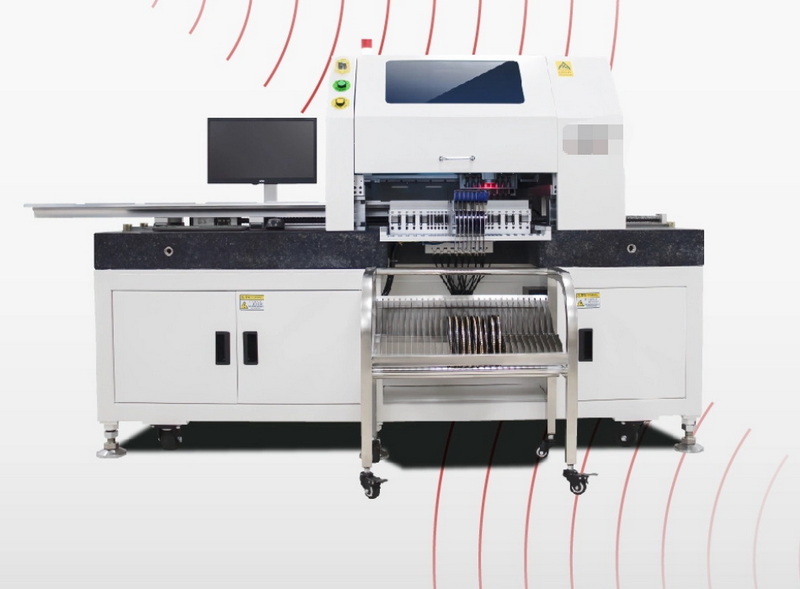
An SMT Pick and Place Machine automates the precise placement of surface-mounted components onto PCBs, ensuring speed, consistency, and accuracy in high-volume electronics manufacturing.
Basic technical knowledge, logical thinking, and attention to detail are essential. Formal education in electronics or mechanical engineering is a plus, but in-depth on-the-job training is more important.
Minor maintenance tasks like cleaning should occur daily, while comprehensive preventive maintenance, including calibration and component inspection, should be scheduled weekly or monthly.
Combine classroom instruction with guided hands-on sessions and digital learning resources such as simulation videos and interactive tutorials. Pair new trainees with experienced mentors.
Highlywin provides full training, technical support, and spare parts supply. Our one-stop SMT solutions help clients quickly build capable teams, optimize production, and achieve long-term efficiency.


