Your Trusted Partner from Prototyping to Mass Production, Email Us:info@highlymachine.com
Please Choose Your Language


Views: 222 Author: Ann Publish Time: 2025-12-20 Origin: Site


Content Menu
● Understanding SMT Feeders and Their Function
● Step 1: Explaining the Basics of SMT Feeder Systems
● Step 2: Teaching Proper Loading and Installation
● Step 3: Reinforcing ESD and Operational Safety
● Step 4: Demonstrating Feeder Calibration and Function Testing
● Step 5: Introducing Common SMT Feeder Problems and Troubleshooting
● Step 6: Emphasizing Preventive Maintenance
● Step 7: Encouraging Continuous Skill Development
● Step 8: Quality Checks and Operator Certification
● Advanced Topics: Smart Feeders and Industry 4.0 Integration
● Step 9: The Role of Leadership and Mentorship
● Step 10: Measuring Training Results for Production Impact
● Practical Tips for Long-Term Feeder Reliability
● FAQ
>> 1. What does an SMT Feeder do in an assembly line?
>> 2. How can I tell if my SMT Feeder needs maintenance?
>> 3. Are SMT Feeders compatible across brands?
>> 4. What are the most common training mistakes for feeder operation?
>> 5. Why is operator training as important as equipment quality?
In the world of electronics manufacturing, precision, consistency, and efficiency are everything. Among the many systems that ensure these standards, SMT Feeders play one of the most crucial roles. The accuracy of component feeding directly determines placement quality, production speed, and overall yield. Therefore, training your team on proper SMT Feeder operation is not just a procedural task—it's a foundational investment in quality assurance.
This guide explores the step-by-step methods for teaching your operators how to use, maintain, and optimize SMT Feeders effectively. Whether your line uses Panasonic, Yamaha, JUKI, Fuji, or other brands, the principles in this training strategy will help your team master every stage of the feeder process.

Before diving into the training process, it's important to understand what SMT Feeders do. In surface mount technology (SMT) production, the feeder ensures that each component is supplied to the pick-and-place machine at the precise time and position. Without properly adjusted feeders, even the most advanced placement machine will struggle with accuracy or downtime.
Key functions of an SMT Feeder include:
- Delivering components from tapes, tubes, or trays to the placement nozzle.
- Maintaining accurate pitch alignment for smooth pickup.
- Minimizing errors caused by component jams or misfeeds.
- Supporting high-speed automation by synchronizing with the placement system's cycle rate.
For most operators, understanding these mechanics forms the basis for effective handling and maintenance.
Training should always begin with theory. Operators must recognize how different SMT Feeders are designed and how their structures impact performance. Show examples of various feeder types—such as tape feeders, stick feeders, vibration feeders, and tray feeders—and explain their unique functions.
Key learning points include:
- The feeder track and guiding mechanism.
- Tape reel positioning and sprocket alignment.
- The feeder's pitch selector settings.
- Connections for air pressure or electrical communication.
When your team understands how feeders physically deliver parts, they can operate and troubleshoot more confidently on the production floor.
Loading component reels seems simple, but consistent accuracy requires meticulous attention. Misloading is one of the most common causes of line stoppages and part waste in SMT assembly.
Proper reel loading procedure:
1. Verify component orientation. Check the reel marking and ensure tape direction matches the machine's configuration.
2. Align sprocket holes precisely. Even minor misalignment can cause skips or double-feeds.
3. Set the correct tape tension. Too tight causes tearing; too loose creates feeding inconsistency.
4. Lock the feeder position. A feeder that isn't firmly locked can move during production, causing pick errors.
Hands-on repetition builds muscle memory. Encourage trainees to load several reels under supervision until the process becomes second nature.
Electrostatic discharge can silently damage sensitive integrated circuits before placement even occurs. Every SMT Feeder operation training must highlight ESD-safe habits.
Best practices in this session:
- Wear grounded wrist straps, heel straps, and ESD-safe clothing.
- Use static-dissipative work mats and maintain contact with grounded surfaces.
- Always handle SMT Feeders by their metallic or grounded parts.
- Avoid touching components or conductive leads directly.
Operators should also review safety protocols for lifting heavy feeder racks, removing jammed tapes, and working around high-speed machinery.
As SMT Feeders operate under tight tolerances, calibration ensures the machine picks every part at the correct coordinates. In this stage, train your staff to perform both manual and automatic calibrations.
Key calibration steps:
- Inspect feeder pickup position relative to machine vision alignment.
- Adjust pitch selector switches if component spacing shifts.
- Verify feeder advance timing, ensuring it matches the placement cycle.
- Use calibration jigs or software tools provided by the feeder manufacturer.
For high-end intelligent feeders equipped with barcodes or memory chips, introduce your staff to automated identification and feeder mapping procedures. This ensures the right feeder is recognized by the machine system during program setup.
No training is complete without troubleshooting knowledge. Operators must know what to do when something goes wrong and how to diagnose problems quickly.
Common problems and their likely causes:
1. Tape misfeeding or skipping: Check sprocket tooth wear, tape crack, or improper reel mount.
2. Feeder not advancing: Inspect the feeder motor, check drive belt tension, or ensure signal connection.
3. Component misalignment: Verify pickup point, nozzle calibration, and vacuum suction.
4. Irregular pitch or double-advancement: Adjust pitch lever and ensure feeder sensors are functioning.
5. Machine not recognizing feeder: Check I/O connector, sensor signal, and electrical continuity.
Encourage operators to document each incident and share their solutions during team meetings, building a culture of proactive troubleshooting.
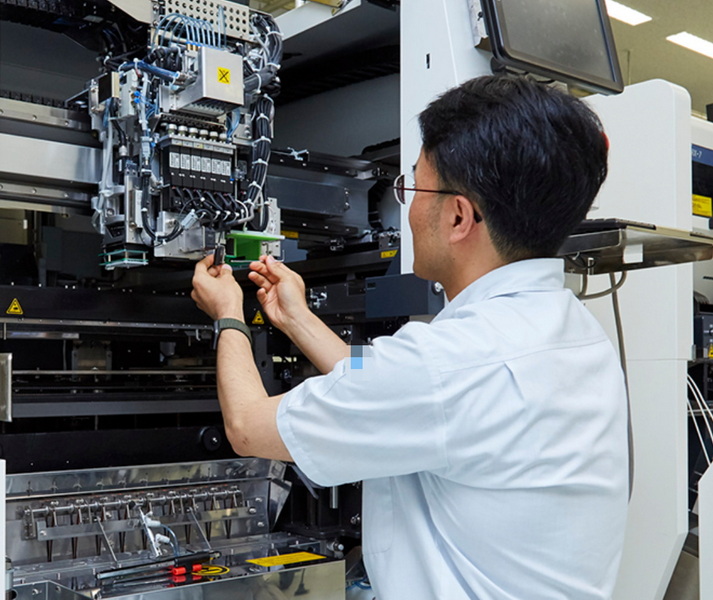
Preventive maintenance should be integral to daily operations. SMT Feeders, especially in high-volume production, endure constant motion and vibration. Poorly maintained feeders often cause recurring defects or downtime.
Preventive actions to train on:
- Daily: Wipe dust and debris off feeder body and track using lint-free cloths.
- Weekly: Inspect sprocket gears, rollers, and springs for wear, and lubricate where required.
- Monthly: Calibrate pickup points, check feeder sensors, and replace aged or faulty parts.
- Quarterly: Perform complete feeder disassembly and cleaning under technician supervision.
Encourage operators to sign maintenance logs. Logging not only promotes accountability but also helps track patterns of wear.
Training on SMT Feeders should never be treated as a one-time event. As your production evolves, new feeder models, machine firmware updates, and component types may require renewed understanding.
For continuous improvement, implement:
- Quarterly refresher workshops or certification renewals.
- Online e-learning videos explaining brand-specific feeder designs.
- Cross-training sessions so operators can handle multiple machine brands.
- Benchmark tests comparing setup efficiency between operators.
By building an environment of continuous learning, employees develop deeper responsibility and skill ownership, ensuring stable long-term productivity.
After completing feeder training, evaluating your operator's readiness is essential. Assess both theory and practice.
Evaluation methods include:
- A written test covering feeder structures and basic maintenance.
- A hands-on test requiring reel loading, calibration, and troubleshooting.
- Peer review from senior operators or engineers.
- Observation during live production runs to test real-time performance.
Certification helps standardize skills and promotes professional recognition within the company. Displaying “Certified SMT Feeder Operator” badges can build pride and accountability among staff.
As SMT production shifts toward automation and data-driven management, SMT Feeders have evolved into intelligent systems capable of communication, tracking, and error reporting.
Smart Feeder capabilities include:
- Embedded chips that store part number, lot, and calibration data.
- Barcode or RFID systems for automatic component verification.
- Real-time feeder performance monitoring through machine software.
- Integration with MES systems to trace feeder history and component usage.
Training should prepare operators to handle both manual and smart feeders. Teach them how to scan feeder IDs, retrieve setup information digitally, and manage feeder mapping databases. Automation cannot replace human understanding—skilled operators are still central to maintaining reliability.
Successful SMT Feeder training depends as much on leadership as on content. Designate lead operators who guide newcomers and create mentorship opportunities. A supportive environment encourages better engagement and confidence.
Effective leadership actions:
- Conduct daily briefings to discuss feeder conditions before production starts.
- Assign mentors to check feeder setups for new trainees.
- Keep visible dashboards showing feeder changeover times and accuracy rates.
- Recognize outstanding operators publicly to motivate others.
A high-performance SMT line thrives on teamwork—leadership ensures proper knowledge transfer and enhances communication between operators, maintenance staff, and engineers.
Training effectiveness should always be measurable. The success of your SMT Feeder training can be assessed using quantifiable metrics over time.
Track these indicators:
- Reduction in feeder-related line stoppages.
- Decrease in missing or misplaced components.
- Faster feeder changeover and setup times.
- Increased first-pass yield (FPY) and reduced rework rate.
These metrics not only highlight improvement but also justify future training investment. Use documented data in management reviews or ISO audits to demonstrate continuous improvement.
Even with thorough training, maintaining consistent performance requires good habits. Encourage your team to:
- Always check feeder ID before mounting to ensure correct part mapping.
- Avoid forcing jammed tapes—pause the machine first, then clear gently.
- Keep spare springs, sprockets, and feeder covers in an organized kit.
- Store idle SMT Feeders in dust-free cabinets or anti-static racks.
- Review feeder-related errors daily in morning meetings.
These small but consistent actions reinforce training results and minimize unplanned maintenance.
Proper SMT Feeder operation training is one of the most cost-effective investments an SMT manufacturer can make. Well-trained operators ensure smoother production flows, fewer mechanical failures, and higher product quality. Through structured instruction, hands-on exercises, and continuous evaluation, your team can master the art of precision component feeding.
At Highlywin, we specialize in providing not only high-quality SMT Feeders and peripheral equipment but also technical consultation and support for global clients. Our one-stop SMT solution seamlessly integrates equipment supply, maintenance training, and parts service—empowering your production line to perform with maximum efficiency, safety, and reliability. A well-trained team paired with reliable equipment is the formula for lasting success in the electronics manufacturing industry.
An SMT Feeder delivers components to the pick-and-place machine at precise intervals and coordinates. It ensures that parts are accurately positioned for pickup, maintaining consistent assembly quality and production speed.
Look for irregular advancement, noise, misfeeds, or damaged tape reels. Preventive maintenance should follow a defined schedule to inspect sprockets, rollers, and sensors before breakdown occurs.
Generally, they are not. Each SMT machine manufacturer designs feeders with unique mechanical and electronic interfaces. Cross-compatibility is limited; always confirm model alignment before use.
Skipping calibration steps, ignoring ESD rules, or failing to log maintenance are frequent mistakes. Proper supervision and certification testing can eliminate these issues.
Even the most advanced equipment performs poorly if handled incorrectly. Skilled operators understand feeder mechanics, respond to errors quickly, and maintain system reliability—saving both time and costs.


