Your Trusted Partner from Prototyping to Mass Production, Email Us:info@highlymachine.com
Please Choose Your Language


Views: 222 Author: Ann Publish Time: 2025-12-12 Origin: Site


Content Menu
>> Understanding the SMT Pick And Place Process
>> Preparing Your Production Environment
>>> ESD Protection
>> Positioning and Installing the Machine
>>> Mechanical Leveling and Alignment
>> Initial Power-Up and Software Setup
>> Feeder Configuration and Optimization
>>> Feeder Grouping
>>> Matching Nozzles to Components
>> Programming the SMT Pick And Place Machine
>>> Component Library Management
>>> Path and Sequence Optimization
>> Fiducials, Vision System, and Alignment
>>> PCB Fiducials
>> Integrating the Machine Into the SMT Line
>>> Upstream and Downstream Equipment
>>> Line Balancing
>> Process Verification and First Article Testing
>> Troubleshooting Common Setup Issues
>>> Common Symptoms and Causes
>> Preventive Maintenance for Long-Term Stability
>>> Daily Tasks
>>> Long-Term Care
>> Leveraging Highlywin's One-Stop SMT Service
>> Conclusion
>> FAQ
>> 1. How long does it take to set up an SMT Pick And Place Machine for a new product?
>> 2. How can I increase the real throughput of my SMT Pick And Place Machine?
>> 3. What is the recommended frequency for calibrating the vision and placement system?
>> 4. What type of training do operators need to run an SMT Pick And Place Machine effectively?
>> 5. How do I know when it is time to upgrade or add another SMT Pick And Place Machine?
Setting up an SMT Pick And Place Machine correctly is one of the most important steps in building a productive, stable, and profitable SMT line. A well-configured machine can dramatically reduce defects, improve yields, and increase throughput, while a poorly set up line will suffer from repeated stoppages, misplacements, and rework.
As a global provider of one-stop SMT solutions, Highlywin supports customers with SMT/AI/peripheral equipment, process consulting, and spare parts. This guide explains, in practical detail, how to set up your SMT Pick And Place Machine for maximum efficiency, from factory preparation to daily maintenance and troubleshooting.

An SMT Pick And Place Machine is the central robot of a modern SMT line. It automatically picks surface-mount devices (SMDs) from tape, tray, or tube feeders using vacuum nozzles, then precisely places them onto PCBs coated with solder paste.
The basic workflow is:
- PCB enters the machine via conveyor.
- PCB is clamped and aligned using fiducial marks.
- The SMT Pick And Place Machine reads job data and component coordinates.
- Nozzles pick parts from feeders or trays.
- The vision system inspects and aligns components.
- Components are placed onto the PCB pads at high speed and accuracy.
Every parameter in this chain—from feeder positioning to vision settings—can affect the overall performance of your SMT Pick And Place Machine. That is why setup must be systematic, not random.
Before powering up any SMT Pick And Place Machine, you must ensure that the surrounding environment is suitable for precise electronic assembly. Even top-tier equipment cannot compensate for a poor production environment.
- Temperature: Maintain a stable range around 23–25 °C. Large fluctuations may affect solder paste behavior and mechanical stability.
- Humidity: Keep relative humidity near 45–55% to balance ESD protection and solder paste performance.
- Cleanliness: Dust and airborne particles can block nozzles, contaminate optical systems, and settle on PCB surfaces. Use appropriate air filtration where necessary.
Electrostatic discharge (ESD) can damage sensitive ICs and components long before you see any visible defects. To protect boards and parts while using an SMT Pick And Place Machine:
- Install ESD-safe floors, mats, and workbenches.
- Ensure operators wear grounded wrist straps and ESD-safe clothing.
- Regularly test grounding points and ESD devices.
An SMT Pick And Place Machine relies on stable utilities:
- Use a reliable power source with surge protection and, ideally, voltage stabilization.
- Provide clean, dry compressed air at the specified pressure (commonly 0.5–0.6 MPa).
- Install filters and dryers to prevent oil or moisture from entering valves and pneumatic circuits.
By securing these basics, you create a strong foundation for efficient SMT production and protect your investment in your SMT Pick And Place Machine.
Correct physical installation is essential for repeatable, accurate production.
- Place the SMT Pick And Place Machine on a strong, vibration-free floor.
- Use precision leveling tools to make the machine frame horizontal in all directions.
- Align the infeed and outfeed conveyors with upstream and downstream equipment such as printers and reflow ovens.
A misaligned line increases jamming, PCB skew, and placement errors. Proper leveling ensures that PCBs move smoothly and that the gantry of the SMT Pick And Place Machine can operate at full speed without unnecessary vibration.
- Ensure emergency stop buttons are easily reachable.
- Leave enough space around the SMT Pick And Place Machine for maintenance and feeder changes.
- Follow local safety standards for guarding moving parts and high-voltage sections.
Once the SMT Pick And Place Machine is in place and connected, you can begin the software and control setup.
- Power on the main controller and observe the boot-up diagnostics.
- Home all motion axes (X, Y, Z, and rotation) according to the manufacturer's standard procedure.
- Verify that the conveyor, clamping system, and safety sensors are functioning.
In the control software of the SMT Pick And Place Machine, confirm:
- Correct machine type, head configuration, and number of nozzles.
- Feeder slot mapping and identification.
- Communication with external systems such as printers, ovens, MES, or barcode readers.
Highlywin supports multiple brands of SMT Pick And Place Machine, helping customers configure their lines to ensure compatibility and smooth data flow between devices.
Feeder layout dramatically influences the effective speed and stability of your SMT Pick And Place Machine. Logical feeder organization can be as important as raw CPH (components per hour) specifications.
- Place high-usage, small passive components (such as 0402 and 0603 resistors and capacitors) close to the center of the machine or multi-gantry heads.
- Group similar components together to reduce nozzle changes and travel distance.
- Allocate critical, fine-pitch ICs to stable, high-accuracy feeder positions to improve repeatability.
To maximize uptime of your SMT Pick And Place Machine:
- Check that tape tension is correct and cover tape peels smoothly.
- Ensure pick positions are properly calibrated so that the nozzle lands in the center of the component pocket.
- Use feeder maintenance schedules to keep springs, gears, and sensors in good condition.
An optimized feeder layout reduces head movement, shortens cycle time, and increases the real-world speed of your SMT Pick And Place Machine during continuous production.
Nozzles are the direct interface between your SMT Pick And Place Machine and components. Incorrect nozzles or poor care cause mispicks, dropped parts, and inaccurate placement.
- Choose nozzle size and type according to component body dimensions and weight.
- Use dedicated nozzles for very small components (01005, 0201) and special nozzles for odd-form parts when needed.
- Avoid using oversized nozzles that might touch neighboring parts or solder paste.
- Inspect nozzles for wear, clogging, or damage at regular intervals.
- Clean nozzle tips gently with recommended tools and solvents.
- Replace nozzles that show mechanical deformation or poor vacuum performance.
Keeping the nozzles of your SMT Pick And Place Machine in optimal condition ensures stable component pickup and accurate placement, especially for fine-pitch and ultra-small chips.
Programming is the brain of your SMT Pick And Place Machine. Good programming can convert the same hardware into a much more efficient and reliable production tool.
- Import placement data from CAD files or coordinate lists.
- Match the BOM (Bill of Materials) with feeder assignments and component libraries.
- Check rotation angles and package definitions carefully to avoid orientation errors.
Each component type in your SMT Pick And Place Machine needs an accurate library entry:
- Define package size, height, pick point, and placement offsets.
- Set proper pickup and placement speeds for fragile or heavy components.
- Configure vacuum thresholds and vision inspection parameters per package.
A well-maintained library shortens setup time for new products and reduces trial-and-error on the machine.
- Use built-in optimization tools to minimize unnecessary head movement.
- Arrange components so that the SMT Pick And Place Machine picks multiple parts in a single feeder area before traveling to the PCB.
- Balance the workload across heads (if multiple heads exist) to avoid bottlenecks.
Program optimization helps you unlock the full rated capacity of your SMT Pick And Place Machine, turning theoretical speed into real production performance.
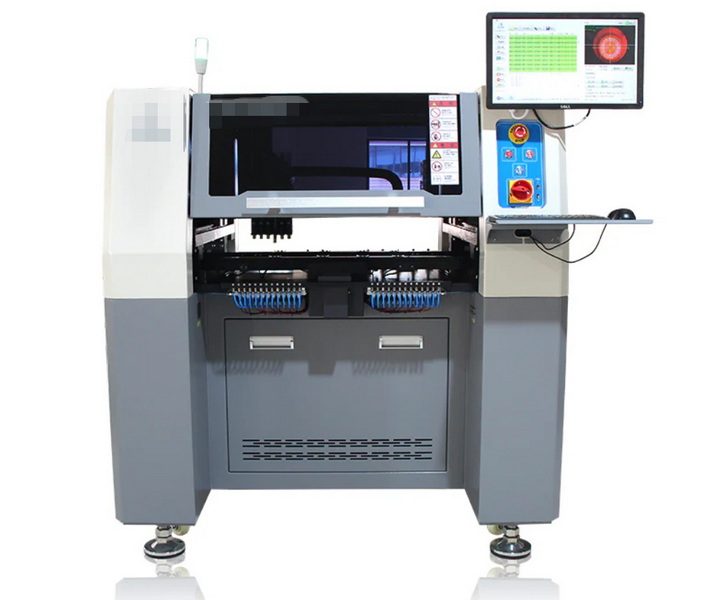
The vision system is the “eye” of your SMT Pick And Place Machine, responsible for reading fiducials and recognizing components.
- Use at least two global fiducials per PCB, preferably three for better accuracy on larger boards.
- Ensure fiducial pads are clean, well-defined, and free of solder paste.
- Define fiducial type, size, and polarity correctly in the machine software.
During production, the SMT Pick And Place Machine uses fiducials to compensate for slight PCB location and rotation variations, maintaining precise placement.
- Assign appropriate vision algorithms (such as shape recognition or lead detection) to each component.
- Adjust lighting parameters (brightness, angle, color) for high-contrast images.
- Test a sample board to confirm that the vision system recognizes each component type quickly and reliably.
Proper vision calibration allows the SMT Pick And Place Machine to handle a broad range of package types, from simple chip resistors to fine-pitch QFPs and BGAs, with high accuracy.
An SMT Pick And Place Machine does not operate in isolation; its performance depends on the entire SMT line.
- Screen Printer: Inconsistent solder paste printing leads to poor placement, tombstoning, and solder bridges. Ensure stable, repeatable printing before the PCB enters the SMT Pick And Place Machine.
- Conveyors and Buffers: Correct buffering prevents starvation (no boards arriving) and blockage (boards piling up).
- Reflow Oven: Reflow profiles must match the paste specification and component sensitivity.
- Evaluate the cycle time of each machine in the line.
- Adjust feeder layouts, program optimization, or even split production across two SMT Pick And Place Machine units if required.
- Use line management software or MES systems to track throughput, downtime, and yield.
Highlywin helps customers design and balance entire SMT lines, ensuring that each SMT Pick And Place Machine runs as part of an efficient, connected system.
Before moving to full-volume production, always verify that your setup is correct.
- Use the simulation mode of the SMT Pick And Place Machine to check for collisions, impossible moves, or feeder mis-assignments.
- Run a few boards at lower speed to observe every step: pickup, vision inspection, placement, and board transfer.
- Inspect the first article PCB using AOI (Automatic Optical Inspection) or manual microscopy.
- Pay special attention to fine-pitch ICs, rotated components, and polarity marks.
- Adjust component libraries, offsets, or rotation angles as needed.
A careful first article process prevents large batches of defective boards and ensures that your SMT Pick And Place Machine is truly ready for stable mass production.
Even experienced engineers can face problems during the initial setup of an SMT Pick And Place Machine. Knowing typical symptoms and solutions saves time.
- Frequent mispicks: Nozzle wear, wrong nozzle type, low vacuum, or poor feeder condition.
- Component shift or skew: Incorrect placement height, wrong package data, or unstable PCB clamping.
- Vision recognition failures: Dirty camera lens, inappropriate lighting settings, or poorly defined vision parameters.
- PCB not aligned correctly: Invalid fiducial definitions, dirty fiducial pads, or incorrect board size settings.
- Clean and recalibrate the nozzles and feeders of the SMT Pick And Place Machine.
- Review and correct component library values (size, pickup point, rotation).
- Fine-tune vision algorithms or switch to a more suitable recognition method.
- Re-teach fiducials and verify that the PCB is clamped squarely.
Highlywin's service team supports customers globally with remote and on-site assistance to quickly diagnose and correct setup and process issues on their SMT Pick And Place Machine.
A reliable SMT Pick And Place Machine is not only the result of good initial setup, but also of regular preventive maintenance.
- Check air pressure and vacuum levels.
- Remove dust and debris from feeders, nozzles, and working area.
- Inspect for abnormal noises or vibrations when the SMT Pick And Place Machine is running.
- Lubricate mechanical rails, ball screws, and bearings according to the maintenance manual.
- Inspect belts, cables, and hoses for wear or cracking.
- Perform vision and placement calibration routines.
- Keep a logbook of all maintenance activities and major parameter changes.
- Back up machine parameters, programs, and libraries regularly.
- Use original or high-quality spare parts to maintain the specifications of your SMT Pick And Place Machine.
A disciplined maintenance plan significantly extends the lifespan of your equipment and reduces unexpected downtime.
Beyond selling an SMT Pick And Place Machine, Highlywin offers comprehensive support across the entire SMT workflow:
- Equipment selection and SMT line layout design.
- Installation, setup, and on-site training for operators and engineers.
- Process optimization for different product types and volume levels.
- Fast spare parts supply and remote troubleshooting.
By partnering with Highlywin, manufacturers can focus on their products while relying on a trusted technical team to keep every SMT Pick And Place Machine and each SMT line running at peak efficiency.
An SMT Pick And Place Machine is a sophisticated piece of equipment that demands careful, methodical setup. From environmental control and mechanical installation to feeder arrangement, nozzle management, program optimization, and vision calibration, every step contributes to the final result: high speed, high accuracy, and high yield.
When your SMT Pick And Place Machine is properly integrated into a balanced SMT line and supported by regular preventive maintenance, you can achieve stable mass production, lower defect rates, and reduced manufacturing costs.
With its global experience and complete portfolio of SMT/AI/peripheral equipment and services, Highlywin helps customers set up and operate their SMT Pick And Place Machine systems to reach maximum efficiency and long-term reliability.
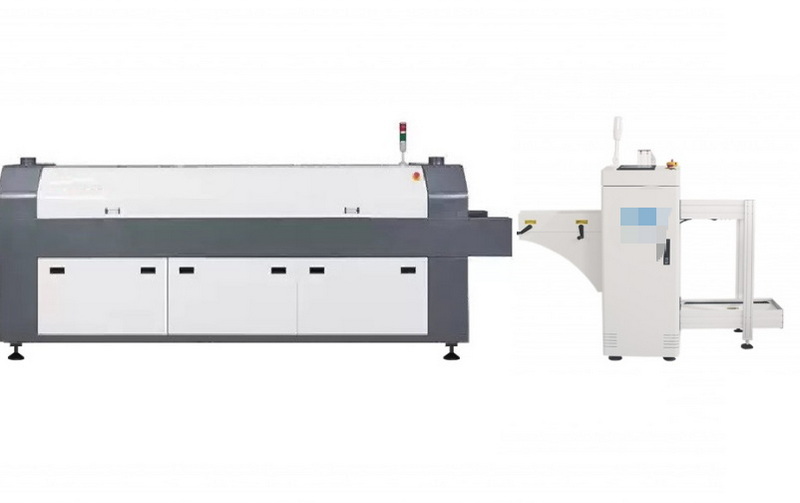
The time required to set up an SMT Pick And Place Machine for a new product depends on product complexity and data quality. For simple boards with good CAD/BOM data, setup may take only a few hours. More complex boards with many fine-pitch or special components may require one or two days to fully optimize libraries, feeders, and vision parameters.
To increase the real throughput of your SMT Pick And Place Machine, focus on feeder layout optimization, reducing nozzle changes, balancing workload across heads, and minimizing unnecessary travel paths. Also, ensure stable upstream printing and efficient PCB loading to avoid idle time between boards.
Most manufacturers recommend calibrating the vision and placement systems of an SMT Pick And Place Machine at least once per month or after any major mechanical maintenance. For high-precision or safety-critical products, weekly or even daily verification using reference boards may be appropriate.
Operators should understand basic SMT principles, machine safety, feeder loading, nozzle changes, and how to respond to common alarms. Process engineers should additionally master programming, library creation, optimization, and data analysis. Highlywin provides tailored training programs to help teams operate an SMT Pick And Place Machine confidently and efficiently.
Signs that you may need to upgrade or add another SMT Pick And Place Machine include consistently running at full capacity with no room for new products, frequent overtime to meet demand, and bottlenecks in the SMT area compared to other production steps. A capacity analysis, often supported by Highlywin's engineering team, can determine whether optimizing the existing line or investing in additional machines is the best solution.


