


Views: 222 Author: Ann Publish Time: 2025-12-29 Origin: Site


Content Menu
● Understanding SMT Machines and Their Role
● Step 1: Analyze Your Production Requirements
● Step 2: Determine Budget and Cost Efficiency
● Step 3: Evaluate Speed and Precision
● Step 4: Check Software and User Interface
● Step 5: Confirm Machine Compatibility and Line Integration
● Step 6: Assess After-Sales Support and Spare Parts Availability
● Step 7: Evaluate Machine Brand and Proven Quality
● Step 8: Plan for Future Scalability
● The Role of Automation and AI in SMT Technology
● Environmental and Energy Efficiency Considerations
● Selecting the Right Supplier or Partner
● FAQ
● 1. What is the main function of an SMT machine?
● 2. How can I determine the right SMT capacity for my factory?
● 3. What factors influence SMT placement accuracy?
● 4. Are refurbished SMT machines reliable for long-term use?
● 5. How can Highlywin help build a complete SMT line?
In the fast-evolving electronics manufacturing industry, Surface Mount Technology (SMT) stands as a cornerstone for producing compact, high-performance components efficiently. Whether you are a startup assembling prototypes or a large-scale production factory, selecting the right SMT machine can determine your production speed, yield rate, and product quality.
This comprehensive guide from Highlywin, your global one-stop solution provider for SMT machines, peripheral equipment, spare parts, and technical support, explains how to choose the best SMT machine for your unique production requirements.

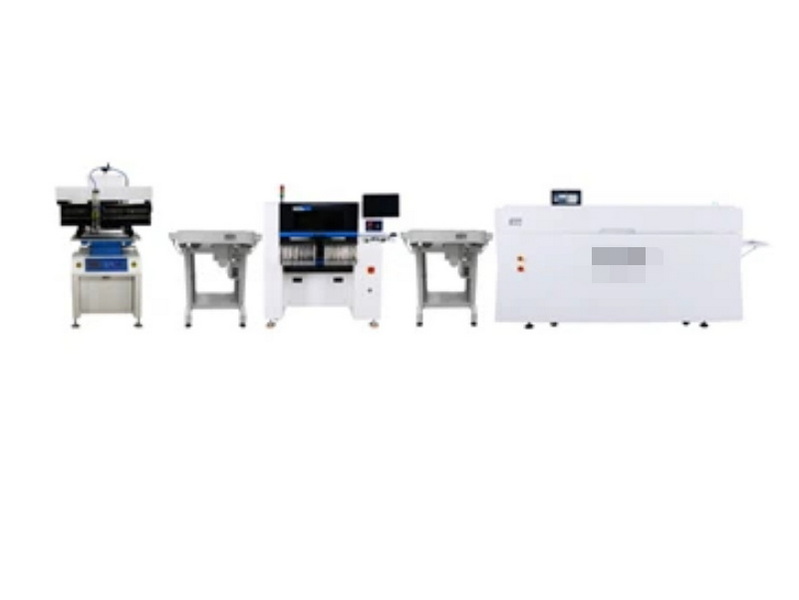
SMT machines (Surface Mount Technology machines) are automated devices used to mount electronic components directly onto printed circuit boards (PCBs). They form the backbone of modern PCB assembly lines and typically include:
- Pick and place machines: Mount components with high precision at high speed.
- Solder paste printers: Apply solder paste accurately on PCB pads.
- Reflow ovens: Melt solder paste to bond components to PCBs.
- SPI/AOI inspection systems: Check solder paste and component placement quality.
- Conveyors and loaders/unloaders: Facilitate board transportation between processes.
Before selecting your SMT machine, define your production requirements clearly. Consider the following:
1. Production Volume — High-volume production requires high-speed SMT placement machines (e.g., over 60,000 CPH). Low-to-medium runs benefit from flexible SMT machines capable of handling multiple component types.
2. PCB Complexity — Boards with fine-pitch components demand advanced vision systems and high-accuracy feeders.
3. Component Variety — Some SMT machines excel at small passive devices like 0402s, while others handle large ICs and odd-form components.
4. Changeover Frequency — If your product portfolio changes frequently, prioritize systems with faster setup and programming times.
Perform a cost-performance analysis instead of focusing solely on price. The total cost of ownership (TCO) includes:
- Initial purchase cost
- Maintenance and spare part availability
- Machine calibration and downtime costs
- Operator training and software support
An entry-level SMT machine might cost less upfront, but ongoing inefficiencies, limited component compatibility, or slow support can make it costlier long-term.
The two most important performance metrics in SMT machines are:
- Speed (CPH – Components Per Hour): Reflects productivity. For example, a high-speed chip shooter handles small components rapidly.
- Accuracy (Placement Precision): Essential for fine-pitch and micro-BGA devices.
Top manufacturers optimize both through advanced servo control, multiple nozzles, and dual-gantry structures.
Modern SMT machines rely on intelligent software for placement optimization, real-time diagnostics, and production tracking. When choosing your machine, focus on:
- Ease of programming and operation
- CAD and Gerber data compatibility
- Real-time error correction and line efficiency reports
- Remote access for maintenance
Software with AI-assisted optimization (for feeder setup, placement head sequencing, and correction) can significantly improve uptime and reduce human error.
Your SMT machine must integrate smoothly with existing or future systems, such as:
- Automatic solder paste printers
- Reflow ovens
- SPI and AOI systems
- Conveyors and magazine loaders
- MES (Manufacturing Execution System)
Compatibility ensures synchronized workflow and data sharing between stages, minimizing manual intervention.
Downtime can be expensive. Working with a manufacturer or vendor that offers reliable support and local spare parts supply is crucial. At Highlywin, we provide:
- 24/7 remote and on-site technical support
- Comprehensive training for operators and engineers
- Guaranteed spare parts supply and preventive maintenance plans
Reputable brands like Yamaha, Panasonic, Juki, Fuji, and ASM are known for precision, reliability, and long-term stability. Evaluate brand reputation by checking:
- User reviews and industry feedback
- Warranty terms and upgrade options
- Machine testing results and accuracy certification
Highlywin partners with world-leading SMT machine manufacturers and provides certified refurbished units that meet ISO and CE standards.
Your SMT line should grow with your business. Consider modular SMT machines that allow adding extra heads, feeders, or vision systems without replacing the entire setup. Flexible models offer:
- Configurable placement modules
- Upgradeable software
- Expandable feeder banks
Automation and AI integration in SMT machines optimize material flow, feeder setup, and real-time error detection. Smart SMT lines use predictive maintenance, AI-driven inspection, and adaptive placement control to:
- Reduce operator intervention
- Boost placement accuracy automatically
- Prevent potential defects before occurrence
Choosing SMT machines with higher energy efficiency, lead-free compatibility, and minimal waste generation helps manufacturers align with sustainability goals. Energy-efficient reflow ovens, low-power servo motors, and optimized airflow systems are becoming standard across modern production lines.
Your supplier is as important as your machine. A professional SMT solution provider like Highlywin offers:
- Turnkey SMT production line setup
- Custom configuration based on client needs
- Global logistics and installation support
- Continuous training and upgrades
With over a decade of experience serving global electronics manufacturers, Highlywin delivers reliable, one-stop SMT solutions tailored for high precision and scalability.
Choosing the best SMT machine for your production is not just about speed or price—it's about balance. You need a machine that matches your production goals, component diversity, budget, and long-term expansion. A well-chosen SMT solution ensures high throughput, minimal rework, and superior product quality.
At Highlywin, we help you evaluate, configure, and deploy SMT equipment that transforms your manufacturing line into a fully optimized, future-ready system.
Answer: An SMT machine automates the placement of electronic components onto a PCB surface with high precision and speed, forming the foundation of the electronic assembly process.
Answer: Calculate your required output (in boards per hour or CPH) and component variety. If you produce many product types, go for flexible modular SMT systems.
Answer: Key factors include vision alignment systems, feeder precision, mechanical stability, and software calibration routines.
Answer: Yes, if sourced from certified suppliers like Highlywin, refurbished machines undergo extensive testing and can match new models in performance at a lower cost.
Answer: Highlywin provides end-to-end service—from equipment selection, installation, and training to full maintenance and upgrade support, ensuring your SMT line operates efficiently.


