Your Trusted Partner from Prototyping to Mass Production, Email Us:info@highlymachine.com
Please Choose Your Language


Views: 222 Author: Ann Publish Time: 2026-01-21 Origin: Site


Content Menu
● Understanding SMT Equipment Performance
● Optimize Line Design and Balancing
● Improve PCB and Process Design for SMT Machines
● Boost SMT Printer and Solder Paste Performance
● Optimize SMT Machine Programming and Feeder Setup
● Reduce Changeover Time and Downtime
● Implement Preventive and Predictive Maintenance
● Use Real-Time Data and OEE Monitoring
● Strengthen Operator Skills and Standard Work
● Leverage Intelligent and Connected SMT Machines
● Partner with SMT Experts Like Highlywin
● FAQ About Optimizing SMT Equipment
>> 1. How can I quickly improve the performance of existing SMT machines?
>> 2. How often should SMT machines be maintained?
>> 3. What role does PCB design play in SMT machine optimization?
>> 4. How does real-time monitoring help SMT machines?
>> 5. When should a factory upgrade to new SMT machines?
Optimizing SMT machines is the fastest way to increase throughput, improve yield, and lower the cost per PCB without necessarily buying new equipment. By combining process control, smart line design, preventive maintenance, and data-driven decision making, factories can unlock much more performance from existing SMT machines and SMT lines. Companies like Highlywin, which specialize in selling SMT/AI/peripheral equipment while providing comprehensive SMT service support and spare parts sales, offer global clients one-stop SMT solutions that make this optimization achievable and sustainable.

SMT equipment performance is usually evaluated using Overall Equipment Effectiveness (OEE), which combines Availability, Performance, and Quality into a single metric. Improving SMT machines means reducing downtime, increasing real placement speed, and lowering defect rates across the line. For SMT machines to deliver peak performance, each factor must be addressed systematically.
Availability measures how often SMT machines are actually running versus stopped due to changeovers, breakdowns, or material shortages. Performance tracks the real output of SMT machines compared with their theoretical speed, measured in components per hour (CPH) or boards per hour. Quality reflects the percentage of good boards emerging from the SMT machines without requiring rework or scrap. In practice, world-class SMT lines achieve OEE above 85%, but many factories operate below 60% due to suboptimal processes.
To benchmark your SMT machines, start by collecting data over a full week across all shifts. This reveals patterns like morning slowdowns from cold starts or evening defects from operator fatigue. Highlywin's service teams often assist clients in establishing these baselines, ensuring SMT machines are evaluated accurately before optimization begins.
Expanding on this, consider cycle time analysis for individual SMT machines. Each SMT machine in the line contributes to total takt time, so even a 5% improvement in one station can boost overall line speed. Regular audits of SMT machine uptime logs help pinpoint recurring issues, such as feeder jams or vision system errors, allowing targeted fixes.
A well-balanced SMT line prevents one SMT machine from becoming a bottleneck and dragging down overall throughput. Proper line design considers product mix, component types, and changeover frequency when configuring SMT machines. Imbalanced lines waste potential, as fast SMT machines idle while slower upstream equipment catches up.
Distribute high-placement-load components across multiple SMT machines to avoid overloading a single placement head. Use modeling tools or simulation software to test different line configurations and feeder allocations, raising components-per-hour (CPH) performance. Design the line for your real mix—high-mix/low-volume versus low-mix/high-volume—instead of just maximum catalog speed.
For high-mix production, modular SMT machines with quick-change feeder banks excel, minimizing setup time between runs. In high-volume scenarios, dedicating SMT machines to specific product families stabilizes output. Highlywin's one-stop solutions include line balancing consultations, where experts analyze client SMT machines and recommend feeder layouts or even machine repositioning for optimal flow.
Further optimization involves takt time matching. Calculate required cycle time per station (customer demand divided by available time), then adjust SMT machine speeds accordingly. Buffer zones between SMT machines absorb minor variations, preventing stoppages. Simulation runs with historical data predict how changes affect throughput, ensuring SMT machines operate near 100% utilization.
Many SMT machine issues stem from PCB and process design rather than the SMT machines themselves. Designing for manufacturability (DFM) makes SMT machines faster and more stable by reducing placement challenges and reflow defects. Optimized designs allow SMT machines to maintain high speeds without compromising accuracy.
Standardize package sizes, such as 0402/0603 for passives, to reduce nozzle changes and feeder variety on SMT machines. Ensure proper pad design and spacing to minimize solder bridges and placement offsets, enabling SMT machines to run at higher speeds without quality loss. Align components in consistent orientations to simplify SMT machine programming and improve reflow profiles.
Panelization strategy also impacts SMT machines—group similar boards to streamline programming and reduce head travel. Fiducial marks must be precisely placed for accurate board alignment on every SMT machine. Solder paste volume requirements should match printer capabilities, avoiding insufficient or excess paste that triggers downstream SMT machine alarms.
Highlywin supports DFM reviews as part of its SMT services, reviewing Gerber files and recommending tweaks that boost SMT machine efficiency by 10-20%. Post-DFM, test runs on demo SMT machines validate changes before full production.
If solder paste printing is unstable, SMT machines downstream can never reach optimal performance. Stable printing reduces rework, false AOI calls, and stops caused by quality issues, keeping SMT machines fed with reliable PCBs. Printer optimization is foundational for any high-performing SMT line.
Control stencil design, aperture ratios, and squeegee pressure to ensure consistent paste volume and shape. Maintain stable printing environment—temperature and humidity—so SMT machines receive PCBs with predictable paste quality. Use SPI (solder paste inspection) and connect its data to SMT machines for closed-loop adjustments in real time.
Stencil cleaning cycles must sync with production volume; automated under-stencil cleaners prevent paste buildup that smears prints. Paste release optimization, often via laser-cut stencils with nano-coatings, improves release by 15-20%, directly benefiting SMT machine throughput. Viscosity control through refrigeration units keeps paste consistent across long runs.
Inline SPI feedback loops adjust printer parameters dynamically, compensating for wear or environmental shifts. This proactive approach ensures SMT machines face fewer print-related defects, maintaining high OEE.
Well-optimized SMT machine programs and feeder setups are critical for high-speed, high-yield production. Poor programming increases non-value-added motion, slowing SMT machines unnecessarily. Feeder optimization reduces errors and changeover times.
Group components by feeder location to minimize head travel and reduce non-productive motion of SMT machines. Use common feeder setups across multiple products to cut changeover time and keep SMT machines running consistently. Regularly review nozzle libraries and placement strategies to match the right nozzles to each package type.
Advanced SMT machines support auto-optimization algorithms that suggest feeder assignments and head paths. For older SMT machines, manual optimization via placement sequence analysis yields similar gains. Feeder pitch standardization across suppliers simplifies setups, as mismatched pitches cause frequent jams.
Calibration of feeder heights and tape tension prevents component misalignment during pickup by SMT machines. Program verification tools simulate runs offline, catching errors before they halt production.
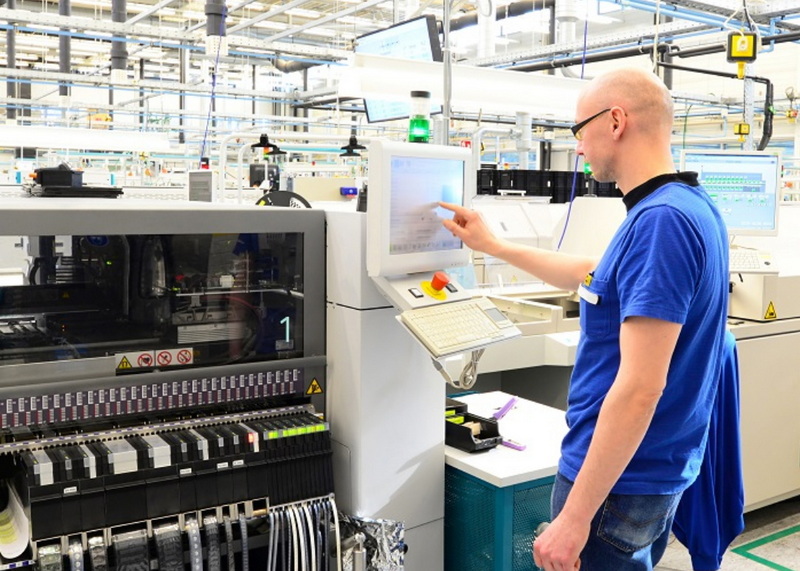
Changeovers, setups, and small stoppages heavily impact SMT machines' Availability. Lean tools like SMED (Single-Minute Exchange of Die) and TPM (Total Productive Maintenance) dramatically improve performance by slashing non-productive time.
Prepare feeders and programs offline so SMT machines stop for the shortest possible time during product changes. Standardize setup steps with checklists so operators perform changeovers quickly and consistently. Implement smart scheduling to group similar products and minimize unnecessary changeovers for SMT machines.
SMED breaks changeovers into internal (machine stopped) and external (machine running) steps, targeting under-10-minute swaps. Quick-release feeder clamps and color-coded carts accelerate physical changes. Standardized program loading via USB or network prevents software glitches.
For SMT machines in high-mix environments, universal feeder carts holding common parts reduce setups by 50%. Predictive scheduling software anticipates changeovers, pre-loading data to SMT machines.
Preventive and predictive maintenance keep SMT machines stable and reduce unexpected breakdowns. Reactive fixes are costly; proactive strategies extend SMT machine life and maintain peak performance.
Establish time- and usage-based plans for cleaning, lubrication, calibration, and part replacement on SMT machines. Train operators for daily autonomous maintenance like nozzle cleaning, filter checks, and inspections. Use sensors for predictive maintenance, detecting vibration, temperature, and error patterns before failure.
Vision system calibration every 500 hours prevents drift that slows SMT machines. Linear scale cleaning maintains axis accuracy. Spare parts inventory for high-wear items like nozzles and belts avoids downtime waits.
IoT-enabled SMT machines send predictive alerts via cloud platforms, allowing remote diagnosis. Highlywin's spare parts service ensures rapid delivery of genuine components, minimizing SMT machine outages.
Continuous monitoring identifies where SMT machines lose performance and prioritizes fixes. Data-driven insights turn guesswork into targeted improvements for SMT machines.
Track OEE, CPH, stoppages, and defect trends per SMT machine, shift, and product. Deploy shop-floor dashboards so operators and engineers react to problems immediately. Analyze data to pinpoint chronic losses like feeder errors or paste defects.
MES integration aggregates data from all SMT machines, enabling root cause analysis. Pareto charts highlight top downtime causes, focusing efforts where they matter. Historical trends guide capacity planning for SMT machines.
Machine learning on SMT machine data predicts failures and suggests optimizations, pushing OEE toward 90%.
Advanced SMT machines underperform without skilled operators and clear procedures. Human factors account for 30% of SMT machine losses.
Develop standard work for printing, placement, reflow, AOI, handling, and SMT machine maintenance. Cross-train operators to cover breaks and shifts without idling SMT machines. Train on troubleshooting, root cause analysis, and quality awareness.
Visual aids at each SMT machine station guide tasks. Ergonomic setups reduce fatigue, sustaining performance. Certification programs ensure competency.
Highlywin offers operator training tailored to specific SMT machines, boosting line efficiency quickly.
Newer SMT machines integrate functions for automatic performance gains. Connectivity transforms standalone SMT machines into smart systems.
Enable closed-loop communication between SMT machines, printers, SPI, AOI, and reflow. Automatic feeder verification reduces errors. Integrate with MES/ERP for seamless scheduling.
AI-driven optimization adjusts paths dynamically. Edge computing processes data locally for real-time tweaks on SMT machines.
Specialized partners provide SMT machines, spares, and optimization expertise. Highlywin's one-stop solutions include audits, upgrades, and training for sustained SMT machine gains.
Optimizing SMT equipment requires coordinated efforts in line design, processes, programming, maintenance, data, and partnerships. Skilled teams leveraging intelligent SMT machines achieve dramatic throughput and quality improvements, driving profitability.
Contact us to get more information!
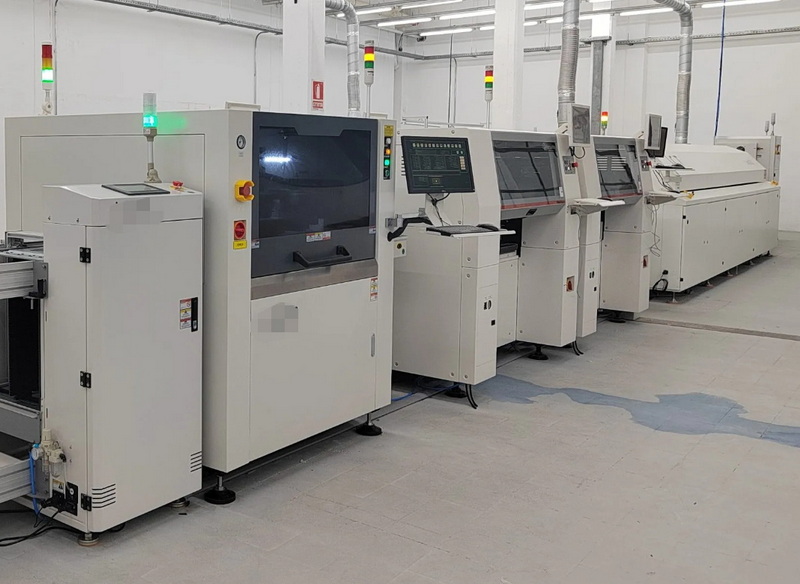
Measure OEE to target biggest losses like downtime or speed issues. Reduce changeovers, standardize setups, and fix quality problems for fast gains on SMT machines.
Daily operator checks, weekly inspections, and monthly deep maintenance suit most SMT machines. Tailor to usage for optimal reliability.
DFM reduces defects, enabling faster SMT machine runs. Standardized packages and pads simplify programming and boost yield.
Dashboards reveal issues instantly, prioritizing fixes for higher OEE on SMT machines.
Upgrade if optimized SMT machines can't meet demand or lack features. Often, process gains unlock 20-40% capacity first.


