Your Trusted Partner from Prototyping to Mass Production, Email Us:info@highlymachine.com
Please Choose Your Language


Views: 222 Author: Ann Publish Time: 2026-01-29 Origin: Site


Content Menu
● Introduction to SMT Machines Performance
● Key Metrics for Evaluating SMT Machines
>> Speed Efficiency of SMT Machines
>> Performance Ratio in SMT Machines
>> Quality Metrics for SMT Machines
● Overall Equipment Effectiveness (OEE) for SMT Machines
>> Availability Assessment in SMT Machines
>> Changeover Time Optimization for SMT Machines
● Advanced Evaluation Techniques for SMT Machines
>> Automated Optical Inspection (AOI) and Solder Paste Inspection (SPI) in SMT Machines
>> Infrared and X-Ray Testing Methods for SMT Machines
>> AI-Driven Predictive Analytics for SMT Machines
● Practical Step-by-Step Evaluation Process for SMT Machines
>> Step 1: Establish Baseline Data for Your SMT Machines
>> Step 2: Benchmark Against Industry Standards for SMT Machines
>> Step 3: Diagnose Bottlenecks in SMT Machines Operations
>> Step 4: Execute Targeted Improvements for SMT Machines
>> Step 5: Continuous Monitoring and Iteration for SMT Machines
● Energy Efficiency and Cost Analysis for SMT Machines
● Flexibility and Scalability in Modern SMT Machines
● Maintenance Strategies for Peak SMT Machines Performance
● Leveraging Highlywin for Superior SMT Machines Solutions
● FAQ
>> 1. What is the ideal OEE target for SMT machines?
>> 2. How do you accurately measure throughput in SMT machines?
>> 3. Why does First Pass Yield matter for SMT machines quality?
>> 4. What role does AOI play in SMT machines performance evaluation?
>> 5. How does Highlywin enhance SMT machines performance?
Evaluating the performance of your SMT machines is essential for maintaining efficiency in electronics manufacturing. Highlywin provides comprehensive SMT machines, AI equipment, peripherals, full-service support, and spare parts sales for global clients seeking one-stop SMT solutions.

SMT machines are the cornerstone of modern PCB assembly lines, enabling precise high-speed component placement. As a leading provider, Highlywin delivers top-tier SMT machines alongside AI-driven tools, peripherals, and complete service support including spare parts. Evaluating SMT machines performance ensures minimal downtime, maximized throughput, and exceptional quality output.
Routine assessments of SMT machines help identify bottlenecks before they escalate into major issues. For example, elite SMT machines from Highlywin consistently achieve over 85% Overall Equipment Effectiveness (OEE), integrating availability, performance, and quality metrics seamlessly. This level of insight allows manufacturers to optimize their SMT machines for competitive advantage in fast-paced markets.
Understanding SMT machines performance goes beyond basic operation; it involves holistic analysis of speed, accuracy, and reliability. Manufacturers using Highlywin SMT machines benefit from integrated diagnostics that track real-time data across entire production lines. By focusing on key performance indicators (KPIs), you can fine-tune SMT machines to handle diverse applications from high-volume consumer electronics to complex automotive assemblies.
Throughput, measured as components per hour (CPH), is a fundamental metric for SMT machines capacity. High-performance SMT machines range from 50,000 to over 200,000 CPH, influenced by feeder configurations and board complexity. Advanced SMT machines employ turbo modes and optimized placement paths to minimize cycle times and elevate throughput.
To accurately evaluate throughput in your SMT machines, compare actual CPH against manufacturer specifications under identical conditions. Feeder capacity plays a critical role; Highlywin SMT machines feature redundant feeders that enhance reliability and sustain high throughput even during extended runs. Monitoring variations helps pinpoint issues like feeder jams or suboptimal nozzle selection specific to your SMT machines setup.
Speed efficiency in SMT machines refers to the effective placement rate during operational cycles, excluding idle periods. Premium SMT machines achieve 80-90% efficiency through sophisticated vision systems and high-precision servo motors. Dynamic software algorithms in these SMT machines adapt to component fragility, preventing damage while maintaining rapid placement speeds.
Benchmark speed efficiency across multiple SMT machines using high-resolution video analysis to detect inconsistencies. Highlywin's AI-enhanced SMT machines deliver 15-20% improvements in speed efficiency, ensuring consistent performance across varied production scenarios. Regular calibration of SMT machines vision systems is vital to sustain these gains over time.
The performance ratio for SMT machines is calculated as (Actual Placements / (Target CPH × Available Hours)) × 100, with top-tier models reaching 85% or higher. This metric accounts for real-world variables like minor stops in SMT machines operations. A declining ratio often signals maintenance needs such as nozzle cleaning or feeder alignment adjustments.
Highlywin customizes performance baselines for individual SMT machines configurations, enabling precise tracking and targeted improvements. By establishing SMT machines-specific targets, manufacturers can realistically assess and enhance operational efficiency without overstraining equipment.
First Pass Yield (FPY) exceeding 98% in SMT machines significantly reduces rework costs and production delays. Defect density below 50 parts per million (PPM) characterizes elite SMT machines, leveraging automated optical inspection (AOI) to detect issues like tombstoning, bridging, or misalignment. Process capability indices (Cp/Cpk) above 1.67 confirm stable performance in SMT machines.
Automated inspection protocols integrated into Highlywin SMT machines ensure defect-free PCB output. Tracking quality metrics over time reveals trends in SMT machines performance, guiding proactive adjustments to soldering profiles or component handling.
OEE for SMT machines combines availability, performance, and quality rates, with world-class benchmarks surpassing 85%. Availability measures uptime percentage; performance evaluates adherence to ideal speeds; quality assesses functional parts ratio. Daily OEE calculations for SMT machines expose specific weaknesses ripe for intervention.
Highlywin's intuitive dashboards consolidate data from interconnected SMT machines, offering predictive failure analytics. This comprehensive view empowers operators to maintain peak OEE across entire SMT machines fleets, minimizing unplanned downtime.
Equipment utilization, defined as (Actual Output / Maximum Possible Output) over 80%, indicates robust SMT machines deployment. Minor stops and idling erode availability; regular calibration and preventive maintenance preserve it. Highlywin SMT machines incorporate strategic redundancies like backup feeders to mitigate single-point failures.
Detailed logging of SMT machines downtime events categorizes losses by cause, from material shortages to mechanical faults. Addressing root causes systematically elevates availability, directly boosting overall SMT machines productivity.
Efficient SMT machines complete job changeovers in under 30 minutes, supporting high-mix production demands. Intelligent feeder systems and quick-change nozzles in SMT machines streamline transitions between board types. Highlywin optimizes these processes for clients running diverse SMT machines applications daily.
Practice changeover simulations on your SMT machines to identify and eliminate non-value-adding steps. Standardized procedures across SMT machines operators ensure repeatable low changeover times, enhancing flexibility.
AOI systems post-placement verify alignments and detect defects in real-time for SMT machines. SPI precedes reflow to confirm solder paste volume and alignment accuracy. Integrating these tools with Highlywin SMT machines enables closed-loop quality control, automatically adjusting placement parameters.
These inline inspections provide quantifiable data for SMT machines performance refinement, reducing escaped defects to near zero.
Infrared thermography monitors soldering profiles during reflow, identifying hot spots or insufficient heating in SMT machines assemblies. X-ray inspection uncovers hidden voids, cracks, or bridging beneath components. Non-destructive nature makes these ideal for routine SMT machines validation.
Highlywin supports integration of advanced testing peripherals with core SMT machines, ensuring comprehensive evaluation without production interruption.
Highlywin's AI platforms analyze historical data from SMT machines to predict failures using metrics like Defects Per Million Opportunities (DPMO). Machine learning continuously refines placement algorithms, yielding 15-20% speed enhancements. Deploying AI across SMT machines networks delivers fleet-wide performance insights and optimization recommendations.
Real-time anomaly detection in SMT machines prevents minor issues from cascading into major stoppages.
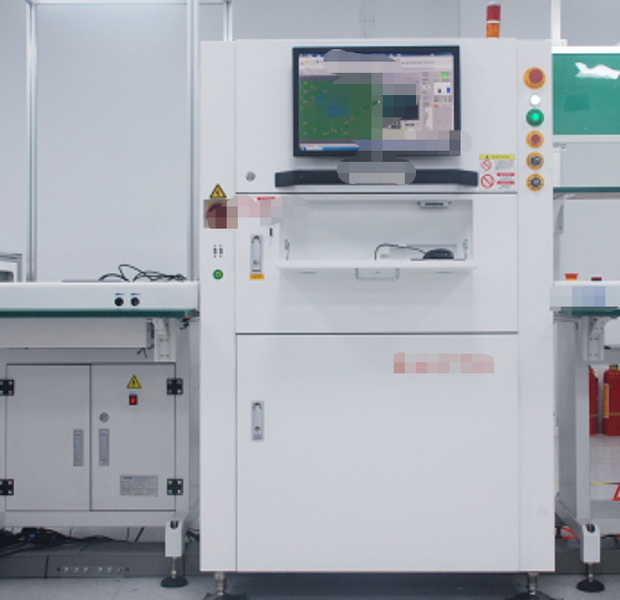
Collect comprehensive logs of CPH, uptime, defects, and changeover times from SMT machines over multiple shifts. Specialized software ensures accurate, timestamped tracking across all SMT machines parameters. Highlywin supplies customized dashboards tailored to specific SMT machines models and production profiles.
Target 85% OEE as the gold standard for high-performing SMT machines. Dissect variances by station, analyzing SMT machines head utilization and feeder efficiency. Video recordings of SMT machines in action provide visual diagnostics for subtle performance gaps.
Scrutinize logs for recurring feeder jams, vision errors, or conveyor stalls in SMT machines. Flexibility testing evaluates SMT machines handling of micro-components like 01005 sizes to large odd-form parts. Balancing workloads across SMT machines lines eliminates upstream bottlenecks.
Implement regular nozzle and servo calibrations on all SMT machines. Upgrading to Highlywin's latest SMT machines reduces energy consumption by 20% per million placements. Sustainability metrics like kWh tracking align SMT machines operations with green manufacturing goals.
Establish weekly reviews of SMT machines KPIs, adjusting targets as production scales. Operator training programs enhance human-SMT machines interaction efficiency. Highlywin's remote diagnostics service fine-tunes SMT machines performance proactively.
Cost per board calculation incorporates SMT machines depreciation, maintenance, and energy costs. Low total cost of ownership favors energy-efficient SMT machines models with rapid ROI. Monitoring kilowatt-hour (kWh) consumption per output unit reveals optimization opportunities.
Highlywin peripherals like smart power management systems complement core SMT machines, achieving holistic efficiency gains.
High-mix capable SMT machines excel with diverse component libraries and rapid program changes. Evaluate modulation speed for varying geometries and pitches. Highlywin customizes SMT machines for specialized needs, from prototyping to mass production.
Scalable architectures allow seamless expansion of SMT machines lines without performance degradation.
Preventive maintenance schedules for SMT machines include weekly feeder cleaning and monthly vision system checks. Calibration prevents placement drift over time. Highlywin's global spare parts inventory ensures rapid SMT machines recovery from failures.
Predictive maintenance leveraging AI vibration analysis forecasts component wear in SMT machines before breakdowns occur. Comprehensive training equips operators to maximize SMT machines longevity and performance.
Highlywin delivers complete SMT machines ecosystems—from sales and installation to ongoing servicing and upgrades. Seamless integration with AOI, SPI, and reflow systems optimizes entire workflows. Global clients rely on Highlywin for dependable SMT machines performance and support.
Systematic evaluation of SMT machines using OEE, throughput, FPY, and advanced diagnostics drives manufacturing excellence. Highlywin's integrated SMT machines, AI tools, peripherals, services, and spares empower clients to achieve and sustain peak performance. Implement these strategies to fully realize your SMT machines investment potential and stay ahead in competitive electronics production.
Contact us to get more information!
The ideal OEE for top-performing SMT machines exceeds 85%, derived from multiplying availability, performance, and quality rates. This benchmark signifies world-class SMT machines operation across high-volume production environments.
Throughput in SMT machines measures components placed per hour (CPH), typically 50,000-200,000+ for advanced models. Compare logged actual CPH against theoretical maximums under controlled conditions for precise evaluation.
FPY above 98% in SMT machines minimizes rework, scrap, and delays while maximizing profitability. High FPY directly correlates with superior SMT machines process control and component handling precision.
AOI provides inline inspection of placements and solder joints in SMT machines, catching defects immediately post-placement. It delivers actionable data for real-time SMT machines adjustments and long-term process refinement.
Highlywin offers AI analytics, rapid spare parts delivery, custom dashboards, and expert servicing for SMT machines. These solutions routinely boost OEE by 15-20%, ensuring optimal SMT machines reliability and efficiency.


