Your Trusted Partner from Prototyping to Mass Production, Email Us:info@highlymachine.com
Please Choose Your Language


Views: 222 Author: Ann Publish Time: 2025-12-12 Origin: Site


Content Menu
● What Is an SMT Pick and Place Machine?
● Why the Right Machine Choice Matters
● Key Factors to Consider When Selecting an SMT Pick and Place Machine
>> 1. Production Volume and Application
>> 4. Feeder Types and Capacity
>> 5. Component Compatibility and Range
>> 6. Software and Programming Environment
>> 7. Vision Systems and Alignment Technology
>> 8. Machine Maintenance and After-Sales Support
>> 9. Cost of Ownership and ROI
>> 10. Scalability and Upgradability
● Advanced Features Worth Considering
● Common Mistakes When Choosing an SMT Pick and Place Machine
● Why Choose Highlywin as Your SMT Partner
● FAQ
>> 1. What is the main purpose of an SMT Pick and Place Machine?
>> 2. How do I estimate the right capacity for my SMT line?
>> 3. Can one SMT Pick and Place Machine handle various component types?
>> 4. How frequently does an SMT Pick and Place Machine require maintenance?
>> 5. Why is Highlywin a reliable supplier for SMT Pick and Place Machines?
Surface Mount Technology (SMT) has drastically changed the landscape of electronic manufacturing by allowing smaller, faster, and more reliable assembly processes. Among the entire SMT production line, the SMT Pick and Place Machine stands as the heart of the operation. It determines how efficiently, accurately, and consistently you can produce high-quality PCB assemblies for various industries—from consumer electronics to automotive, telecommunications, and industrial control systems.
Choosing the right SMT Pick and Place Machine is not simply about selecting the fastest or most expensive system; it's about finding the equipment that matches your production goals, factory scale, and technical capabilities. This guide explores key factors, decision-making principles, and expert advice to help you confidently choose the best solution for your SMT production line.

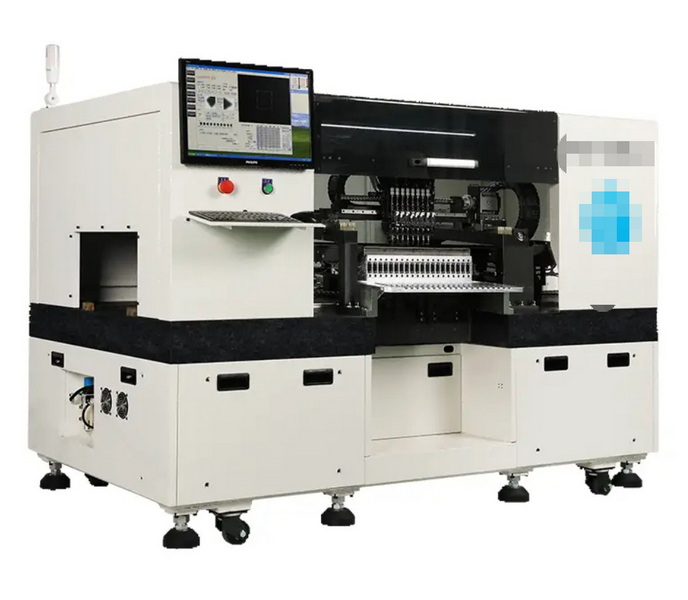
An SMT Pick and Place Machine is a precision robotic device that places electronic components—including resistors, capacitors, transistors, and integrated circuits—onto the surface of a printed circuit board (PCB) during assembly. The process follows solder paste application and occurs before reflow soldering.
These machines use vacuum nozzles or mechanical grippers to “pick” components from feeders and then “place” them accurately at predetermined coordinates on the PCB. The process is automated, ensuring high speed and consistency even for complex boards.
Modern SMT Pick and Place Machines can manage various component sizes ranging from tiny 01005 chips to large ICs and connectors. Advanced machines use optical vision alignment systems and multiple placement heads to ensure maximum precision and throughput.
Selecting the most suitable SMT Pick and Place Machine affects nearly every part of your production process. A machine that aligns with your capacity, component range, and product type ensures:
- Higher placement accuracy and yield — minimizing defects and rework.
- Improved production efficiency — achieving higher output per shift.
- Reduced changeover time and downtime — especially when handling multiple board types.
- Better cost performance — reducing maintenance costs and improving ROI.
- Future scalability — allowing easy expansion as demand grows.
On the other hand, an ill-matched machine can lead to poor productivity, inconsistent quality, maintenance issues, and excessive operational costs. Understanding the production environment and product mix is essential before making your purchase.
Begin by assessing your production scale:
- Low-volume or prototyping manufacturers benefit most from compact and flexible machines that support frequent job changes with minimal setup time.
- Medium-volume manufacturers should consider a balance between speed and flexibility—usually dual-gantry or mid-range modular machines.
- High-volume manufacturing plants require high-speed, multi-head systems capable of operating 24/7 with outstanding placement speeds and automated efficiency.
A clear understanding of your output goals helps determine whether you need a standalone desktop unit or a fully automated multi-machine SMT line.
Each SMT Pick and Place Machine is rated by its placement speed, measured in Components Per Hour (CPH). While CPH indicates the maximum theoretical speed under ideal conditions, the real production speed can vary due to feeder setups, board design, component types, and operator skill.
Typical benchmarks include:
- Prototype and R&D: 2,000–10,000 CPH
- Medium-scale production: 20,000–60,000 CPH
- Mass production lines: Upward of 100,000 CPH
When choosing your machine, always compare actual tested CPH values under conditions similar to your real production line, not just the advertised numbers.
For modern miniaturized electronics, placement accuracy is crucial. Accuracy levels determine whether your machine can handle fine-pitch ICs, micro BGAs, or 01005 passive components.
- General-purpose boards typically require ±0.075 mm accuracy.
- High-density assemblies or products using extremely small parts may need ±0.03 mm or better.
High-end SMT Pick and Place Machines use closed-loop vision systems and component recognition algorithms to ensure perfect placement, even with tiny or odd-shaped components.
Feeders supply components to the pick-and-place head. The total feeder count and configuration influence how many different component types your line can support simultaneously.
Common feeder types include:
- Tape feeders for standard resistors and capacitors.
- Tray feeders for ICs, BGAs, and large connectors.
- Vibratory or bulk feeders for LEDs or nonstandard parts.
When evaluating a machine, check if it supports quick-change feeder systems or intelligent feeders with barcode tracking. These reduce setup time, minimize loading errors, and enhance line flexibility when switching between jobs.
A robust SMT Pick and Place Machine should handle a broad range of component sizes and shapes, ensuring versatility across multiple product lines. Advanced machines are capable of automatically recognizing different component types using image comparison and adaptive picking force.
For enterprises producing diverse electronics—from lighting modules to communication boards—selecting a multi-functional model that supports both fine-pitch and odd-form placement brings long-term benefits.
Ease of programming directly impacts operational efficiency. A high-quality SMT machine should feature intuitive software that allows operators to set up, modify, and run jobs quickly.
Look for software that offers:
- Direct CAD data import.
- Automatic feeder optimization.
- Intelligent placement sequencing.
- Real-time error diagnostics.
- Seamless integration with MES or ERP systems.
Smart programming functions reduce risk and save hours of setup time—particularly essential for manufacturers with frequent product changeovers.
Accurate alignment depends heavily on the machine's vision system. Vision cameras verify both PCB position and component orientation before each placement. The system compensates for any displacement or rotation automatically.
More advanced models include both upward-looking and downward-looking cameras, ensuring superior accuracy across component varieties. They can even detect missing components, incorrect polarity, or feeder issues early in the process to prevent costly assembly defects.
Even the best machine requires ongoing maintenance and calibration. Therefore, it's vital to choose an equipment supplier who provides strong technical support, spare parts availability, and training.
When comparing suppliers, consider:
- Response time for technical support.
- Local or global service centers.
- Availability of preventive maintenance programs.
- Access to spare parts inventory.
At Highlywin, we emphasize continuous support for every SMT Pick and Place Machine we deliver, ensuring long-term performance stability and minimal downtime.
Don't evaluate your purchase based only on the initial price. Instead, consider the total cost of ownership (TCO), which includes:
- Initial purchase and installation cost.
- Power consumption and operating cost.
- Maintenance, software updates, and spare parts.
- Operator training and ongoing service.
Often, a slightly higher upfront investment can pay off through greater speed, reliability, and extended lifespan.
Choose a machine that can evolve alongside your business. A modular SMT Pick and Place Machine offers upgrade options such as additional heads, cameras, or expanded feeder capacity. Investing in scalable machinery ensures that future growth doesn't require full replacement—only enhancement.
Manufacturers aiming to transition from prototype to high-volume production benefit greatly from such modular designs, reducing long-term costs between upgrade cycles.
As SMT technologies evolve, modern machines come equipped with intelligent and digital-ready functions:
- Smart Feeder Recognition: Feeder scanning with automated part verification to prevent placement errors.
- AI-based Component Recognition: Using artificial intelligence to identify new component shapes.
- Remote Monitoring: Cloud-based dashboards providing live status, error logs, and production analytics.
- Automatic Nozzle Cleaner: Cleans vacuum nozzles to maintain consistent suction power and accuracy.
- Integrated Conveyor Communication: Allows seamless synchronization with printers, AOI, and reflow ovens.
These innovations increase productivity, reduce operator error, and provide higher visibility for production managers.
Many companies, especially new entrants into SMT manufacturing, make preventable mistakes when choosing equipment. Avoid these pitfalls:
1. Overestimating speed needs — Buying an ultra-high-speed system with capacity exceeding your real demand can waste both capital and floor space.
2. Ignoring maintenance requirements — Without proper upkeep, even premium machines degrade rapidly.
3. Underestimating setup time — Sometimes workflow efficiency depends more on feeder and software design than pure CPH speed.
4. Lack of operator training — High-end features are useless if your team cannot fully utilize them.
5. Choosing low-cost brands with weak after-sales support — Cheap machines without stable service networks often lead to long-term operational losses.
Investing wisely means balancing cost, practicality, reliability, and future service.
Highlywin provides complete SMT solutions—not just single machines. We combine deep industry experience with a global service structure to support customers across every stage of their manufacturing journey.
Our offerings include:
- Full SMT line design and integration.
- SMT Pick and Place Machines with diverse specifications.
- Spare parts, feeders, and peripheral equipment.
- Technical training, installation, and maintenance service.
- Customized consultation for automation optimization.
Whether you operate a small lab or a full-scale factory, Highlywin can help you select and implement the right equipment configuration for your specific needs. Our mission is to deliver high-efficiency, cost-competitive solutions that help our partners succeed globally.
Selecting an SMT Pick and Place Machine is one of the most important investments in modern electronics manufacturing. The correct choice strengthens production stability, reduces costs, and improves product quality. It requires understanding your production volume, product characteristics, technical expertise, and long-term business goals.
In an era of rapid product diversification and tighter profit margins, flexibility and precision are more valuable than ever. With proper evaluation and the right supplier partnership, your SMT line can operate at maximum performance while remaining adaptable to changing market demands.
Highlywin combines advanced technology, professional service, and global logistics to ensure that every SMT Pick and Place Machine we deliver provides lasting performance and reliability. Our goal is not just to supply equipment—but to empower your entire production process toward smarter, more efficient manufacturing.
The main purpose is to automate the accurate placement of electronic components onto PCBs during assembly, ensuring consistency, speed, and minimal human error in surface mount production.
Start by calculating the number of PCBs you must produce per day, multiplied by the average component count per board. Compare this number with the real placement speed (effective CPH) of the desired machine under typical production conditions.
Yes, modern SMT machines can handle a wide component range—from tiny 01005 passives to large BGAs and connectors—using interchangeable nozzles and smart recognition systems.
Regular cleaning, calibration, and lubrication should occur every 500–1000 production hours. Preventive maintenance programs help extend machine life and minimize unplanned downtime.
Highlywin offers global SMT expertise, comprehensive after-sales service, spare parts availability, and professional guidance, ensuring that customers receive reliable machines, strong technical support, and optimized production performance.


