Your Trusted Partner from Prototyping to Mass Production, Email Us:info@highlymachine.com
Please Choose Your Language


Content Menu
● Understanding SMT and Its Significance
● Factors That Influence SMT Cost
>> 1. Type and Capability of SMT Machines
>> 2. Brand and Country of Origin
>> 3. Line Configuration and Production Scale
>> 4. Technical Requirements and Placement Accuracy
>> 5. Service, Maintenance, and Spare Parts
● Understanding SMT Line Costs and Turnkey Solutions
>> Typical Turnkey SMT Line Costs
● How to Select the Right SMT Machine for Your Production
● Cost-Saving and Optimization Strategies
● Real-World Example: Highlywin's SMT Solution in Action
● The Value of Working with a Professional SMT Partner
● Future Trends in SMT Technology and Cost
● Frequently Asked Questions (FAQ)
>> (1) What is the average cost of an SMT machine?
>> (2) How many SMT machines are required for a full line?
>> (3) What drives SMT line cost the most?
>> (4) How can I optimize SMT production costs?
>> (5) How long does an SMT machine last?
In modern electronics manufacturing, Surface Mount Technology (SMT) has become an essential process for building high-performance and compact electronic devices. Whether you are planning to assemble small prototypes or operate a large-scale factory, understanding how much SMT costs is crucial when determining capital investment and long-term operational expenses.
At Highlywin, we specialize in selling SMT machines, AI, and peripheral equipment, while also offering full-service support, spare parts, and one-stop SMT production solutions for global customers. This article provides a comprehensive breakdown of SMT costs, including contributing factors, price ranges, system setup details, and practical cost management strategies.

Surface Mount Technology (SMT) refers to the method of mounting electronic components directly onto the surface of printed circuit boards (PCBs). This differs from the older through-hole method, which required drilling and manual placement. SMT has revolutionized electronics manufacturing by allowing for smaller components, greater production speeds, and improved reliability.
The core advantage of SMT lies in automation. With computer-controlled SMT machines, manufacturers can place thousands of components per hour with minimal error, achieving higher efficiency and consistency. SMT enables the production of consumer electronics, medical devices, industrial sensors, and telecommunications products with superior precision and compactness.
The overall cost of setting up and operating an SMT production line depends on several interrelated factors that vary from company to company.
Different SMT machines perform specific functions along the production line. A high-speed chip shooter can place small passive components rapidly, while a multifunctional placement machine is designed for larger ICs or odd-shaped components. The more advanced the equipment, the higher the price.
Reputable brands such as Panasonic, Yamaha, Fuji, and ASM typically command premium prices for their SMT equipment. However, Chinese SMT machine manufacturers have significantly improved performance and cost efficiency over the last decade, offering competitive alternatives for budget-sensitive customers.
A minimal SMT setup may include a solder paste printer, one placement machine, and a small reflow oven. Large-scale operations, on the other hand, often deploy multiple placement heads, conveyors, loaders, AOI systems, and inspection stations. As the line grows, so does the total equipment cost.
Certain products, especially in the automotive, aerospace, or medical sectors, require ultra-precise placement accuracy and complex component handling. This increases the need for high-end SMT machines with advanced vision systems and calibration tools, impacting cost directly.
Beyond the initial purchase, ongoing costs such as maintenance contracts, equipment calibration, operator training, and spare part replacement can significantly affect total ownership expenses. Working with suppliers that offer integrated after-sales support, such as Highlywin, ensures better cost control.
Many customers choose turnkey SMT solutions—a ready-to-run package that simplifies setup and commissioning. A turnkey production line from Highlywin typically includes all core devices and accessories:
- Solder paste printing machine
- High-speed SMT machine (pick-and-place)
- Reflow soldering oven
- Conveyor system
- Loader and unloader
- AOI or SPI inspection system
- Industrial computer control station
- On-site setup and training
Turnkey packages are ideal for new facilities, reducing integration time and ensuring all machines operate seamlessly together.
- Entry-level line: $60,000–$100,000 (suitable for startups)
- Mid-speed line: $120,000–$250,000 (for growing factories)
- High-performance line: $300,000–$600,000+ (fully automated mass production)
These packages are often customizable, allowing customers to modify layouts according to space, throughput, and product type.
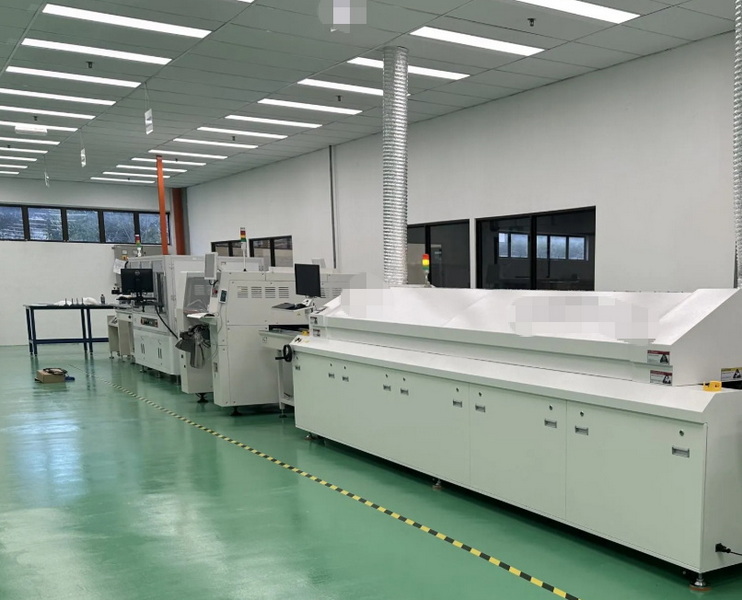
Owning an SMT machine involves more than just the initial investment. There are ongoing expenses associated with production and facility requirements, such as:
- Electricity consumption: Especially for reflow ovens with multiple heating zones.
- Compressed air and vacuum systems: Essential for pick-and-place operations.
- Solder paste and adhesives: Consumables that must be replenished regularly.
- Component storage and humidity control systems.
- Operator wages and training costs.
- Maintenance schedules: Preventive maintenance helps extend machine life.
Managing these operational costs effectively ensures a faster return on investment.
Choosing the right SMT machine depends on your production capacity, PCB design, and product diversity.
When evaluating options, consider the following:
- Component size range: Some machines specialize in fine-pitch or micro-components.
- Feeder capacity: The more feeders available, the greater flexibility for product changes.
- Placement accuracy and speed: Measured in components per hour (CPH).
- Service and technical support: Reliable after-sales service ensures continuous production.
- Software compatibility: Look for intuitive systems compatible with existing CAD or production data.
Highlywin assists manufacturers in selecting optimal equipment setups tailored to their production goals, whether small-scale assembly lines or advanced automation plants.
Many manufacturers seek to balance quality with affordability when investing in SMT machines. The following strategies can significantly reduce overall expenses:
1. Consider refurbished or pre-owned SMT machines. Many used units are in excellent condition and cost 30–50% less than new ones.
2. Start with modular designs. A modular setup allows businesses to expand capacity as demand grows.
3. Optimize production scheduling. Running at consistent utilization levels avoids energy waste and idle time.
4. Automate feeder loading and material handling. Reduced manual intervention lowers labor costs.
5. Invest in preventive maintenance and training. Simple upkeep prevents costly downtime.
6. Collaborate with experienced providers. Working with a supplier offering both machines and service reduces integration issues.
Every factory has unique needs, but adopting smart planning and process optimization ensures sustainable cost efficiency.
A mid-sized consumer electronics manufacturer in Southeast Asia partnered with Highlywin to establish a full SMT production line in 2024.
The setup included:
- 1 automatic solder paste printer
- 2 pick-and-place SMT machines (each 35,000 CPH)
- 1 eight-zone reflow oven
- 1 AOI inspection station
This line achieved 70,000 components per hour capacity with less than 0.5% placement error. The total investment was approximately $180,000 USD, and the company reported full return on investment in 14 months through improved throughput and reduced outsourcing costs.
Such case studies prove that even medium-sized companies can reach international production standards with the right SMT machine configuration and technical support.
Partnering with a reliable SMT supplier goes beyond purchasing equipment. A professional provider offers:
- Expert production consultation and layout planning.
- Training programs for machine operation and maintenance.
- Fast-response technical support and parts supply.
- Software and process optimization services.
At Highlywin, every SMT line project is customized to meet each customer's technical and budgetary requirements. From SMT machine selection to on-site installation, our goal is to build production systems that maximize performance and minimize downtime.
SMT technology continues to evolve rapidly, influencing both performance and pricing. Some key trends include:
- Miniaturization of components: Machines with higher precision continue to emerge, driving certain costs upward but improving long-term efficiency.
- AI-driven placement algorithms: Reducing misalignment and boosting yield rates.
- Smart factory integration: IoT connectivity allows centralized monitoring and predictive maintenance, reducing unplanned downtime.
- Energy-efficient reflow ovens: Lowering operational energy expenses while maintaining stable soldering quality.
- Regional manufacturing growth: Asian suppliers continue to improve technology and competitiveness, maintaining downward pressure on global SMT equipment prices.
Manufacturers planning for the future should consider flexibility and upgrade potential when purchasing SMT systems.
The total SMT cost depends on numerous factors—machine type, line configuration, production capacity, and auxiliary equipment. Initial investment may appear substantial, but an optimized SMT process dramatically enhances production speed, consistency, and profitability.
Selecting the right SMT machines, combined with reliable after-sales service and continuous technical support, guarantees long-term value. Companies that align their SMT investments with production goals can achieve fast payback periods and scalable business growth.
Highlywin helps customers worldwide establish efficient, cost-effective, and high-quality SMT production lines through equipment sales, spare parts supply, technical assistance, and customized project solutions. Whether you're launching your first production line or upgrading an existing factory, Highlywin is your trusted global partner in SMT technology.
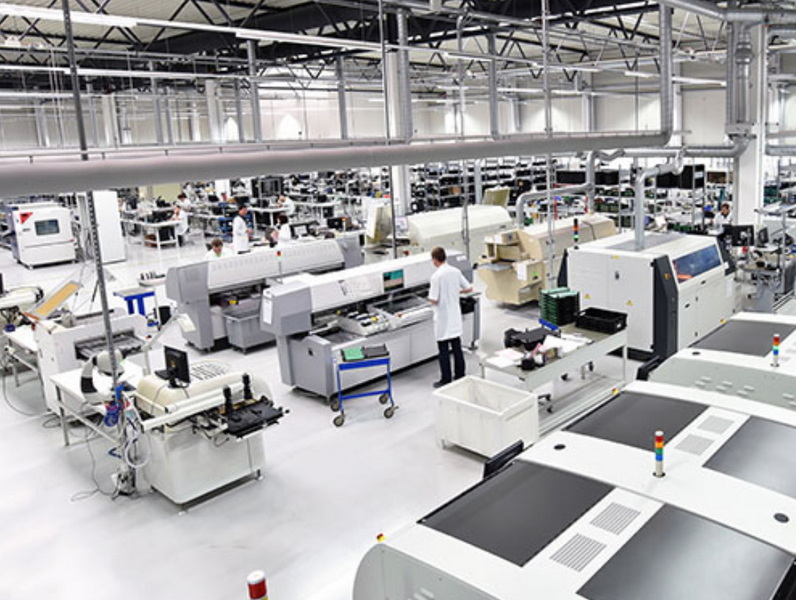
An entry-level SMT machine costs around $10,000–$30,000, while mid-range industrial units range from $70,000 to $150,000. High-end machines with advanced speed and precision can exceed $250,000.
A complete line typically includes one solder paste printer, one or two pick-and-place machines, a reflow oven, and an AOI inspection system. This configuration handles both prototyping and mass production efficiently.
The biggest contributors are machine speed (CPH rate), brand reputation, automation level, and placement accuracy requirements. Additional software and vision systems may also increase costs.
Choose modular lines, train operators effectively, and invest in preventive maintenance. Partnering with suppliers like Highlywin who offer combined sales and service packages further reduces overall spending.
With regular maintenance and appropriate usage, most SMT machines can perform efficiently for 8 to 12 years, sometimes longer depending on operating conditions and upgrades.


