Your Trusted Partner from Prototyping to Mass Production, Email Us:info@highlymachine.com
Please Choose Your Language


Views: 222 Author: Ann Publish Time: 2025-12-14 Origin: Site


Content Menu
● Understanding SMT Components
● Why SMT Component Repair Matters
● Can SMT Components Be Repaired?
● Common Situations That Require SMT Repair
● Step-by-Step Process of SMT Component Repair
>> Step 1 – Inspection and Fault Diagnosis
>> Step 3 – Pad Cleaning and Preparation
>> Step 4 – New Component Placement
>> Step 6 – Post-Rework Inspection and Testing
● Equipment Used in SMT Component Repair
● Factors Affecting Repairability
● When SMT Repair Is Not Practical
● The Role of Experienced Technicians
● Quality Standards in SMT Repair
● How Highlywin Supports Global SMT Repair and Service
● Advantages of Partnering with Highlywin
● Preventive Maintenance – Reducing the Need for Repairs
● Sustainability and the Modern SMT Industry
● Emerging Trends in SMT Repair Technology
● FAQ
>> 1. What are the main causes of SMT component failure?
>> 2. Can damaged pads or traces on a PCB be repaired?
>> 3. Do SMT repairs affect long-term product reliability?
>> 4. How do SMT rework machines differ from standard soldering tools?
>> 5. Why choose Highlywin for SMT repair and service?
Surface Mount Technology (SMT) stands at the heart of modern electronics manufacturing. Every smartphone, computer, and industrial control system relies on SMT machines to mount thousands of miniature components with extreme precision and accuracy. However, even in the most advanced production environments, defects can occur. That raises an important question for electronics manufacturers and repair technicians alike: Can SMT components be repaired?
In this comprehensive guide, we explore the feasibility, techniques, and best practices for repairing SMT components, as well as how professional service providers such as Highlywin help global customers achieve efficient, reliable, and sustainable SMT operations.

SMT components are electronic elements that are mounted directly onto the surface of a printed circuit board (PCB), instead of being inserted through holes. This design allows for smaller, lighter, and more compact assemblies while enabling high-speed automated production using SMT machines.
SMT components vary by size, complexity, and function, including:
- Passive components: resistors, capacitors, inductors.
- Active components: diodes, transistors, integrated circuits (ICs).
- Connectors and sockets: interface points for power or signal communication.
- Optoelectronic components: LEDs, photodiodes, sensors.
Each type adheres to standards like 0402, 0603, or BGA (Ball Grid Array), indicating package size and connection method. These precise components enable the compact and high-performance electronics ubiquitous in today's systems.
In large-scale production, even a small percentage of defects can translate into major financial losses. Disposing of faulty boards outright is not always economically viable, especially when the issue lies in a single component or a minor soldering fault.
Repairing SMT components offers several crucial benefits:
- Cost efficiency: Salvaging expensive boards and components cuts material waste.
- Reduced lead time: Repairs can be done faster than manufacturing new PCBs.
- Sustainability: Repair and rework support environmental goals by minimizing e-waste.
- Operational continuity: Keeps SMT machines and lines running at full capacity.
In short, a capable SMT repair process converts potential scrap into usable, high-quality products.
Yes, most SMT components can be repaired with the right equipment, skill, and process control. The ability to repair depends mainly on the board design, component type, and extent of damage.
Advanced SMT machines designed for rework make the task achievable, but careful handling and accurate temperature profiles are essential to protect the delicate pads and solder joints.
Several types of failures can be corrected through professional SMT repair work:
1. Cold or cracked solder joints caused by poor reflow or mechanical stress.
2. Misaligned components from pick-and-place errors.
3. Bridged pads due to excessive solder paste.
4. Component damage from overheating, ESD, or physical force.
5. PCB pad lifting or trace damage during rework operations.
6. Prototyping modifications, when engineering changes demand part replacement.
Being able to identify these failure modes quickly is the first step toward successful repair.
Successful SMT repair follows a structured process designed to ensure precision and quality.
Technicians begin by inspecting the PCB visually and electronically using magnification tools, AOI (Automated Optical Inspection), or X-ray analysis to detect hidden solder and alignment defects. This step also helps determine whether a repair or replacement is more practical.
The defective SMT component is carefully removed using a hot air rework station, infrared reflow system, or selective soldering tool. Proper temperature control prevents pad delamination and thermal damage. Heat profiles are adjusted according to component type, PCB thickness, and solder alloy.
After removal, the site is cleaned with solder wick and isopropyl alcohol to remove old solder and flux residues. Any lifted pads are repaired using conductive epoxy or copper foil. Maintaining clean and smooth pads ensures reliable reattachment.
A replacement component of matching specification is positioned accurately. This may involve:
- Manual placement using fine tweezers under a microscope.
- Automated insertion via SMT pick-and-place machines for production-scale repairs.
- Alignment verification using magnification systems or vision alignment technology.
Soldering can be accomplished manually (for prototype or small batch) or by reflow oven heating for larger-scale boards. Controlled solder profiles ensure strong mechanical and electrical bonds without overheating.
After re-soldering, the repaired board undergoes thorough AOI, continuity testing, and sometimes functional testing in-circuit. Quality inspectors confirm that reworked areas meet IPC standards (such as IPC-610 for electronic assemblies).
Precision inspection confirms not only solder joint integrity but also ensures that the SMT machine production data remain traceable for process improvement.
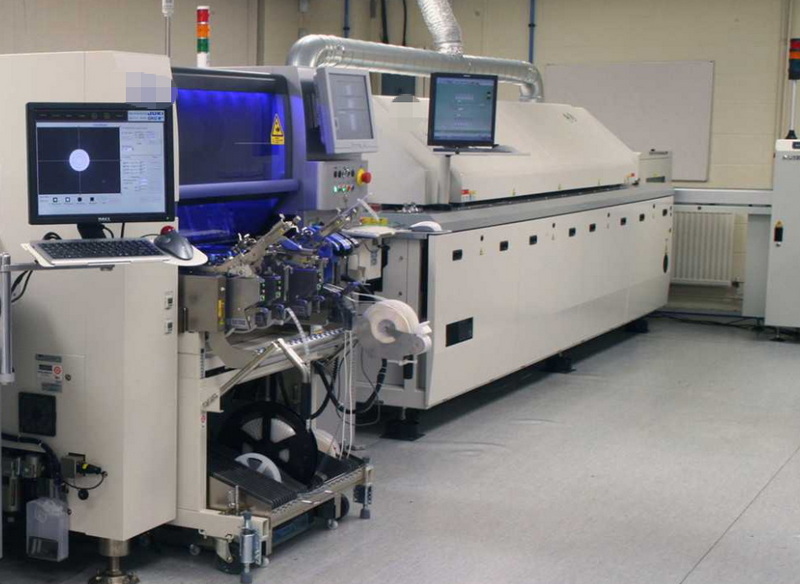
Repairing modern SMT assemblies requires dedicated instruments and environmental control.
Key equipment includes:
- Hot air rework stations with adjustable airflow and temperature.
- Infrared reflow systems for precise preheating and localized soldering.
- Soldering irons with fine tips and ESD protection.
- AOI systems and X-ray inspection machines to evaluate solder joints.
- Microscopes, flux applicators, solder paste printers, and reflow ovens.
Professional factories like Highlywin use these tools to carry out rework at OEM-grade standards, ensuring repeatability and high yield.
Not every defective SMT component can be repaired successfully. Several factors determine repair feasibility:
1. Component size and density: Extremely fine-pitch or micro-BGA components pose challenges for manual rework.
2. PCB layers and vias: Boards with buried vias or internal layers are sensitive to heat and risk delamination.
3. Damage severity: Burnt pads, broken traces, or damaged solder masks reduce recoverability.
4. Economic viability: For some boards, replacement is cheaper than time-intensive rework.
5. Equipment capability: Sophisticated SMT machines make repairs more accurate and predictable.
Proper evaluation before repair ensures that resources are used efficiently.
Despite advanced techniques, there are scenarios where repair is not advisable:
- PCB delamination or charred substrate where structural integrity is compromised.
- Cracked silicon die inside IC packages.
- Repeated rework cycles that weaken pads and copper traces.
- Encapsulated or conformal-coated boards that block access to solder joints.
In such instances, full board replacement or remanufacture ensures reliability. The guiding rule is that repairs must restore functionality without risking long-term reliability.
Skill and experience are paramount in SMT rework. Trained technicians must understand:
- Solder metallurgy and temperature profiling.
- Pad layout and PCB stack-up design.
- ESD precautions and handling standards.
- Flux chemistry and residue cleaning.
- Equipment calibration and nozzle design for specific SMT machines.
Highlywin's technical teams receive continuous training across these domains to ensure professional-level repairs meeting international quality standards.
To maintain product reliability, the electronics industry adopts strict repair and acceptance criteria under standards like:
- IPC-A-610: Acceptability of Electronic Assemblies.
- IPC-7711/7721: Rework, Modification, and Repair of Electronics Assemblies.
- ISO 9001: Quality management system certification.
Following these guidelines ensures that repairs do not introduce new reliability risks and that repaired boards perform equivalently to new ones.
Highlywin is a professional provider specializing in SMT/AI/peripheral equipment, spare parts, and full-service technical solutions. We help global manufacturers build and maintain efficient SMT production lines through repair, calibration, and supply services.
- SMT machine maintenance and calibration for brands such as Yamaha, Panasonic, Fuji, Juki, and Samsung.
- Spare parts and consumable supply, including feeders, nozzles, belts, and filters.
- Feeder calibration and conveyor alignment for accurate component placement.
- Reflow oven and stencil printer servicing for consistent solder performance.
- Technical training to improve engineering and operator skills.
Highlywin's one-stop SMT solutions allow clients to minimize downtime, maximize productivity, and maintain optimal yield performance.
Choosing Highlywin's professional repair and maintenance services ensures measurable benefits:
- Expert diagnosis: Fast root-cause identification using advanced inspection tools.
- OEM-grade spare parts: Guaranteed compatibility and prolonged machine life.
- Reduced downtime: Quick on-site response and global logistics.
- Comprehensive service: From PCB-level repair to full SMT machine upgrades.
- Sustainability: Encouraging rework as part of green manufacturing strategies.
These advantages make Highlywin a trusted partner for electronic manufacturing worldwide.
The best repair is prevention. Regular maintenance of SMT machines significantly reduces breakdowns and rework requirements. A preventive maintenance plan includes:
1. Routine cleaning of feeders, nozzles, and sensors.
2. Lubrication of moving parts for consistent pick-and-place accuracy.
3. Inspection of suction pressure and alignment calibration.
4. Monitoring of solder paste viscosity and printer stencils.
5. Software updates to enhance placement precision.
6. Operator training focused on process control and ESD prevention.
When manufacturers integrate such maintenance into daily operations, both machine reliability and final product quality improve dramatically.
Repair and rework are aligned with environmental sustainability goals. The global push to minimize e-waste and resource consumption encourages manufacturers to restore rather than discard electronic boards.
SMT component repair plays a crucial role in the circular economy by:
- Extending product life cycles.
- Reducing material waste and landfill disposal.
- Lowering production energy consumption.
By choosing repair solutions, manufacturers not only save costs but also support global sustainability and responsible production standards.
The future of SMT repair is becoming more automated and data-driven. Several new trends are revolutionizing the process:
- AI-driven inspection systems that detect defects and guide rework procedures.
- Precision thermal profiling with real-time feedback for accurate solder control.
- 3D printing of PCB pads or masks for custom rework tooling.
- Smart maintenance analytics generated by connected SMT machines.
- Remote diagnostics and augmented reality training to support on-site engineers globally.
Highlywin continually invests in these technological advancements to enhance service quality and speed for SMT repair capabilities.
SMT repair is not only possible—it is a vital part of efficient, sustainable electronics manufacturing. From solder joint defects to component replacement, nearly every issue can be resolved through controlled, professional methods.
The key lies in using the right tools, understanding circuit behavior, and following international quality standards. Whether you need component rework or comprehensive SMT machine servicing, expertise and precision are essential.
With Highlywin's global one-stop solutions—covering equipment supply, repair, training, and spare parts—you can restore productivity, reduce costs, and maintain the highest level of manufacturing reliability in your SMT production line.
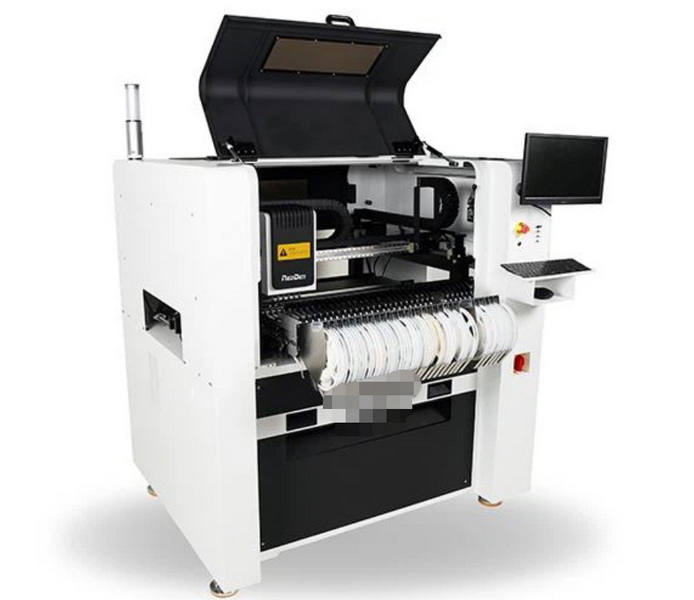
Failures commonly arise from poor soldering, excessive heat during reflow, electrostatic discharge, or vibration stress. These defects often appear as open circuits, solder bridges, or intermittent joints.
Yes. Damaged pads and traces can be rebuilt using copper foil, conductive epoxy, or jumper wires, provided the underlying PCB structure remains intact.
When performed properly and according to IPC standards, SMT repairs restore full functionality without reducing long-term reliability. Improper rework, however, can cause microcracks or weakened solder joints.
Rework machines provide precise temperature control, airflow adjustment, and programmable heating profiles designed for sensitive SMT components, unlike conventional soldering irons used for through-hole parts.
Highlywin combines advanced SMT machines, skilled engineers, OEM-grade parts, and global service support. This ensures faster turnaround, long equipment life, and consistent production results for clients worldwide.


