Your Trusted Partner from Prototyping to Mass Production, Email Us:info@highlymachine.com
Please Choose Your Language


Views: 222 Author: Ann Publish Time: 2025-12-22 Origin: Site


Content Menu
● Core Speed Metrics for SMT Pick And Place Machines
● Precision and Accuracy in SMT Pick And Place Machines
● Throughput and Overall Equipment Effectiveness (OEE)
● Defect Rates and Yield Optimization
● Uptime, Reliability, and MTBF/MTTR
● Changeover and Setup Efficiency
● Component Handling and Flexibility Metrics
● Vision and Inspection System Capabilities
● Energy Consumption and Environmental Metrics
● Cost of Ownership and ROI Calculations
● Integration, Scalability, and Advanced Analytics
● FAQ
>> 1. What is CPH in SMT Pick And Place Machines?
>> 2. How is OEE calculated for SMT Pick And Place Machines?
>> 3. Why track defect rates in SMT Pick And Place Machines?
>> 4. What makes vision critical for SMT Pick And Place Machines?
>> 5. How to minimize changeover in SMT Pick And Place Machines?
SMT Pick And Place Machines are the heartbeat of electronics assembly lines, dictating production efficiency, quality, and cost-effectiveness. Highlywin, as a premier supplier of SMT/AI/peripheral equipment and full-service SMT solutions, equips global clients with top-tier SMT Pick And Place Machines and spare parts for seamless operations. Mastering key performance metrics ensures optimal selection and operation of SMT Pick And Place Machines, maximizing return on investment.

Speed remains the cornerstone metric when evaluating SMT Pick And Place Machines, primarily quantified by Components Per Hour (CPH). High-performance SMT Pick And Place Machines from Highlywin deliver upwards of 90,000 CPH in optimal conditions, enabling high-volume manufacturing without compromising quality. Theoretical CPH represents the machine's maximum capability under ideal scenarios, while actual CPH accounts for real-world variables like feeder loading and component variability.
Cycle time, the duration for a single pick-and-place cycle, directly influences overall line speed in SMT Pick And Place Machines. Advanced models reduce this to microseconds per component through high-precision servo motors and optimized head movements. Placement rate per nozzle head also matters; multi-head SMT Pick And Place Machines with 8-12 heads parallelize operations, boosting throughput significantly. For instance, turret-style SMT Pick And Place Machines excel in radial symmetry placements, ideal for chip resistors and capacitors.
In high-mix environments, effective placement speed considers changeover impacts, but baseline CPH sets the benchmark for comparing SMT Pick And Place Machines across vendors. Highlywin's SMT Pick And Place Machines integrate intelligent speed ramping, adapting CPH dynamically to board complexity for sustained performance.
Accuracy defines the reliability of SMT Pick And Place Machines, measured as placement precision, often ±15μm at 3σ for leading models. Highlywin SMT Pick And Place Machines employ AI-driven vision systems for real-time 3D pad alignment, achieving sub-micron offsets even on warped boards. Repeatability, the consistency across thousands of cycles, targets under 10μm variation, crucial for fine-pitch QFN and BGA components.
Theta rotation accuracy, below 0.5 degrees, prevents misalignment in polarized parts like LEDs on SMT Pick And Place Machines. Vision system resolution—typically 1MP+ cameras with coaxial lighting—ensures part posture detection exceeds 99.9%. These metrics correlate directly with downstream soldering yields; superior SMT Pick And Place Machines minimize gravestoneing and bridging defects.
Feeder-to-nozzle centering precision further refines evaluation of SMT Pick And Place Machines, where tolerances under 50μm prevent pickup errors. Highlywin enhances this with auto-calibration routines, maintaining peak accuracy over extended runs.
Throughput encapsulates total components placed per shift, but OEE provides a holistic view for SMT Pick And Place Machines: OEE = Availability × Performance × Quality. Top SMT Pick And Place Machines target 85%+ OEE, with Highlywin models achieving this via robust uptime and minimal stops. Availability tracks runtime versus planned production, aiming for 95%+ in reliable SMT Pick And Place Machines.
Performance percentage = (Actual CPH / Ideal CPH) × 100, typically 70-85% factoring minor pauses. Quality rate measures defect-free placements, over 99.5% in elite SMT Pick And Place Machines. Net throughput, excluding rejects, highlights feeder efficiency and changeover smoothness.
Line balancing metrics ensure SMT Pick And Place Machines sync with upstream printers and downstream reflow ovens. Highlywin's modular SMT Pick And Place Machines scale throughput seamlessly across single or multi-line setups.
Defect rates expose weaknesses in SMT Pick And Place Machines, categorized as pickup failures (vacuum loss), placement offsets, and tombstoning. Elite SMT Pick And Place Machines maintain pickup defect rates below 0.1%, with Highlywin leveraging patented nozzle designs for odd-form handling. Placement defects under 50 PPM define benchmark performance, tracked via inline SPI/AOI feedback.
First Pass Yield (FPY) >99% signals robust SMT Pick And Place Machines; low FPY indicates vision or motion issues. Spillage analysis—mispicks by feeder type—pinpoints root causes in SMT Pick And Place Machines. Common culprits include sticky tapes or worn nozzles, mitigated by predictive diagnostics.
Rework rates post-placement underscore SMT Pick And Place Machines quality; under 100 PPM ensures cost savings. Highlywin integrates real-time defect logging for continuous improvement.
Uptime = (Operating Time / Total Time) × 100 targets 98% for production-grade SMT Pick And Place Machines. Mean Time Between Failures (MTBF) over 5,000 hours characterizes durable SMT Pick And Place Machines from Highlywin, supported by redundant systems. Mean Time To Repair (MTTR) under 30 minutes minimizes disruptions through modular designs.
Reliability curves from field data guide long-term evaluation of SMT Pick And Place Machines. Vibration and thermal sensors predict failures proactively. Remote IoT monitoring in modern SMT Pick And Place Machines enables 24/7 oversight, slashing unplanned downtime by 40%.
Spare parts availability accelerates MTTR; Highlywin's global inventory ensures next-day delivery for critical components in SMT Pick And Place Machines.
Changeover time under 8 minutes distinguishes versatile SMT Pick And Place Machines for high-mix production. Highlywin SMT Pick And Place Machines use AI feeder recognition, reducing setup by 50-70% via drag-and-drop interfaces. Feeder exchange metrics include slot compatibility and auto-mapping speed.
Program transfer time for new jobs should not exceed 2 minutes in advanced SMT Pick And Place Machines. Nozzle change efficiency—under 1 minute per set—supports diverse component sizes. These metrics prove vital for NPI and frequent SKU changes.
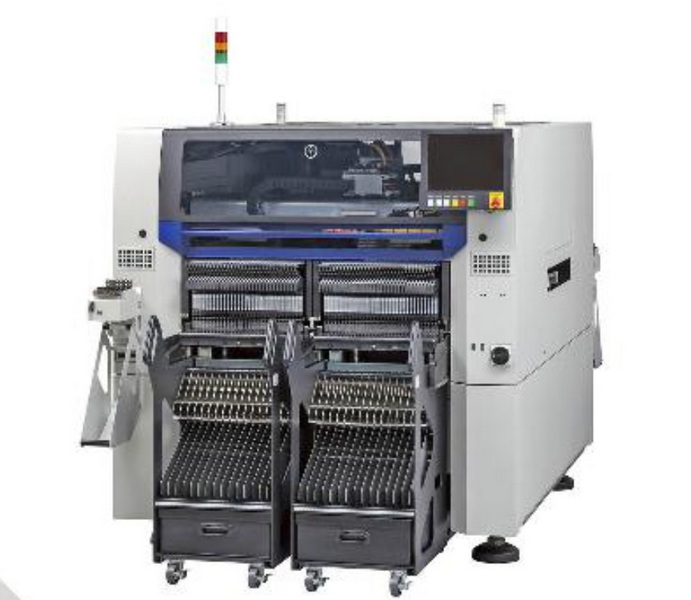
Flexibility metrics gauge SMT Pick And Place Machines' range: from 01005 chips to 50x50mm odd-forms. Feeder capacity (24-120 slots) and nozzle versatility (20+ types) define capability. Highlywin SMT Pick And Place Machines handle QFN, BGA, connectors, and LEDs without reconfiguration.
Maximum board size (up to 1.5m x 0.8m) and multi-stage support enable large-panel processing. Tray feeder integration expands SMT Pick And Place Machines for custom parts. Min/max component height (0.2-25mm) ensures broad applicability.
Vision performance in SMT Pick And Place Machines includes recognition speed matching CPH and error rates <0.1%. 3D profiling compensates warpage, vital for SiP modules. Highlywin's dual-camera systems verify part presence pre-placement.
Post-placement verification loops feedback to refine future cycles in SMT Pick And Place Machines. OCR for marking inspection adds traceability.
Energy efficiency: kWh per million placements under 5 for green SMT Pick And Place Machines. Highlywin models cut power 20% via linear motors. Footprint under 2m² optimizes factory space.
Noise levels <70dB and CE compliance meet standards for SMT Pick And Place Machines.
Total Cost of Ownership (TCO) = Acquisition + Operation + Maintenance over lifecycle. ROI for SMT Pick And Place Machines = (Productivity Gains - Costs) / Investment, payback under 12 months. Highlywin minimizes TCO through low spares costs and high uptime.
Depreciation and scalability factor into long-term value of SMT Pick And Place Machines.
MES/ERP integration tracks KPIs in real-time for SMT Pick And Place Machines. Scalability metrics assess multi-machine synchronization. AI analytics predict spillage and optimize feeders.
Highlywin's ecosystem unifies SMT Pick And Place Machines with printers, ovens, and AOI.
Evaluating SMT Pick And Place Machines demands a balanced assessment of speed (CPH), accuracy (±15μm), OEE (85%+), defects (<50 PPM), uptime (98%), changeover (<8 min), flexibility, vision, energy, and TCO. Highlywin's SMT Pick And Place Machines dominate these metrics, offering one-stop solutions for global manufacturers. Prioritizing these ensures superior yields, efficiency, and profitability in electronics production.
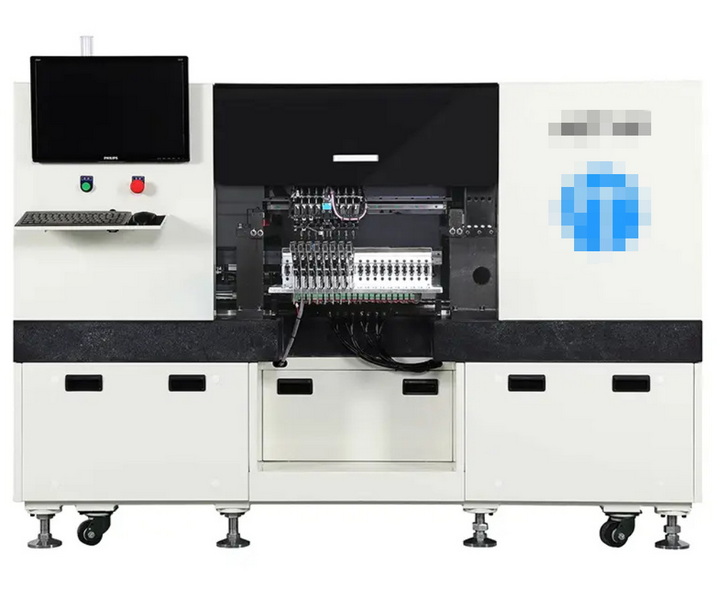
CPH measures components placed per hour, with top SMT Pick And Place Machines exceeding 90,000 CPH under ideal conditions.
OEE = Availability × Performance × Quality, targeting 85%+ for efficient SMT Pick And Place Machines operations.
Low defect rates (<50 PPM) reduce rework and costs, ensuring high FPY in SMT Pick And Place Machines.
Vision achieves >99.9% recognition, enabling precise placement on varied boards in SMT Pick And Place Machines.
AI feeders and modular designs cut changeover to under 8 minutes for flexible SMT Pick And Place Machines production.


