Your Trusted Partner from Prototyping to Mass Production, Email Us:info@highlymachine.com
Please Choose Your Language


Views: 222 Author: Ann Publish Time: 2026-01-10 Origin: Site


Content Menu
● Why SMT Accessories Fail So Frequently
● Recognizing Early Symptoms of SMT Accessories Problems
● Detailed Troubleshooting for Feeder Issues in SMT Accessories
>> Diagnosing Feeder Malfunctions
● Nozzle and Vacuum Circuit Challenges in SMT Accessories
>> Identifying Nozzle and Vacuum Faults
>> Comprehensive Repair Strategies
● Sensor and Vision System Troubleshooting for SMT Accessories
>> Pinpointing Sensor Failures
>> Proven Fixes and Calibrations
● Conveyor, Belt, and Motor Maintenance for Reliable SMT Accessories
>> Repair and Prevention Protocols
● Optimizing Inventory Management for SMT Accessories
● Implementing a World-Class Preventive Maintenance Program
● Highlywin's Comprehensive SMT Accessories Solutions
● FAQ About Common Issues with SMT Spare Parts and Accessories
>> 1. What Causes Most Feeder Failures in SMT Accessories?
>> 2. How Do I Extend Nozzle Life in SMT Accessories?
>> 3. Why Do SMT Accessories Sensors Fail Frequently?
>> 4. Best Practices for Conveyor Belt SMT Accessories?
>> 5. How Does Highlywin Improve SMT Accessories Uptime?
In the high-stakes world of electronics manufacturing, Surface Mount Technology (SMT) lines demand precision and reliability from every component, especially the often-overlooked SMT Accessories that keep production flowing. Highlywin, a leading provider of SMT/AI/peripheral equipment and comprehensive service support, delivers one-stop SMT solutions—including high-quality SMT Accessories and spare parts—to global clients facing common production bottlenecks. These SMT Accessories, from feeders and nozzles to sensors and belts, frequently fail due to wear, contamination, or improper maintenance, causing costly downtime and defects that no factory can afford.

SMT Accessories endure relentless mechanical stress, dust exposure, and thermal cycling in 24/7 production environments, accelerating degradation far faster than main machine components. Factories often underestimate how these SMT Accessories—feeders handling millions of tape advances, nozzles executing thousands of pick-and-place cycles per hour, and sensors scanning PCBs continuously—accumulate micro-damage that snowballs into major failures. Without proactive care, even premium SMT Accessories from top brands will underperform, spiking error rates and scrap yields.
Neglect typically stems from three root causes. First, mechanical wear erodes precision surfaces like sprockets in feeders, tips on nozzles, and belts in conveyors, leading to inconsistent motion and positioning errors. Second, contamination from solder paste flux, adhesive residues, and ambient dust clogs vacuum paths, optical paths, and sliding mechanisms within SMT Accessories, reducing vacuum hold and detection accuracy. Third, human factors like rough handling during changeovers, skipped calibrations, or mismatched spare parts installation exacerbate issues, turning minor wear into full breakdowns.
Data from industry reports shows that SMT Accessories account for up to 60% of unplanned line stoppages, far outpacing core machine faults. Addressing these proactively not only restores efficiency but also extends the lifespan of your SMT Accessories investment, making it a smart strategy for any electronics manufacturer relying on high-volume PCB assembly.
Sharp operators spot SMT Accessories issues early through telltale signs in machine feedback, visual inspection, and production metrics, preventing escalation to full line halts. For instance, a gradual climb in "pick miss" rates often signals nozzle wear or vacuum leaks before outright feeder failure occurs. Similarly, intermittent conveyor stops with "sensor dirty" alerts point to contaminated SMT Accessories optics rather than electrical faults.
Key symptoms across SMT Accessories categories include:
- Placement defects: Tombstoning, shifting, or polarity errors linked to nozzles, vacuum systems, or feeder pitch inconsistencies.
- Feeding interruptions: Tape jams, empty pocket detection failures, or "feeder bank empty" false alarms from misaligned or worn SMT Accessories feeders.
- Transport anomalies: PCB skewing, double-board detection misses, or edge clamping failures due to belt slip or sensor drift in conveyor SMT Accessories.
- Motion irregularities: Vibration, unusual noise, or axis homing errors from degraded motors, belts, or linear guides within SMT Accessories assemblies.
- Vision and detection failures: Repeated "fiducial not found" or component recognition errors from dirty cameras or outdated libraries in SMT Accessories vision modules.
Tracking these via daily logs helps correlate symptoms to specific SMT Accessories, enabling targeted swaps from spare stock rather than blind troubleshooting.
Feeders represent the backbone of component supply in SMT lines, and their reliability directly dictates placement throughput—making feeder-related SMT Accessories problems among the most disruptive. Common culprits include sprocket teeth worn smooth after 2-5 million feeds, sticky cover-tape sensors blinded by residue, and tension arms that no longer hold consistent peel force.
Start with error code analysis: "Feeder Jam" often means physical obstruction, while "Pitch Error" indicates sprocket wear or motor step loss. Physically inspect tape path for debris, verify sprocket engagement via manual advance, and test sensor outputs with the machine's diagnostic mode. Run a short test strip of known-good tape to isolate whether the issue tracks with the feeder itself or upstream tape quality.
1. Cleaning Protocol: Disassemble non-motorized sections, use compressed air followed by isopropyl alcohol on lint-free wipes for sprockets, tracks, and peel arms—critical for maintaining SMT Accessories performance.
2. Mechanical Adjustments: Re-tension peel arms to spec (typically 0.5-1.0N), align cover-tape chute, and lubricate pivot points sparingly with OEM-approved grease.
3. Sensor Recalibration: Teach feeder-empty and tape-break sensors anew, ensuring clean optics and proper LED alignment within the SMT Accessories unit.
4. Advanced Repairs: Replace worn motor encoders, gears, or full feeder cassettes if backlash exceeds 0.1mm; stockpile high-use sizes like 8mm and 12mm as priority SMT Accessories.
Post-fix, run 1000-cycle validation to confirm stability before resuming production. Regular feeder audits every 500,000 feeds prevent recurrence.
Nozzles and vacuum systems are precision SMT Accessories where even 0.01mm wear translates to dropped components and yield loss, especially on fine-pitch or odd-form parts. Vacuum leaks from cracked O-rings or clogged filters compound issues, dropping hold force below the 20-60kPa needed for reliable transport.
Monitor vacuum gauge readings during picks—drops below threshold confirm path blockages. Inspect nozzles under magnification for tip chips, inner wall scoring, or deformation, common after 50,000-200,000 cycles depending on component hardness. Swap suspected nozzles to verify if pick errors migrate with the part.
- Vacuum Path Maintenance: Dislodge clogs in pick-head filters, manifold screens, and tubing using ultrasonic baths or specialized picks; replace porous filters quarterly.
- Nozzle Restoration: For salvageable tips, use diamond files or reamers per OEM specs, but discard any with >0.05mm distortion—better to install fresh SMT Accessories nozzles.
- O-Ring and Seal Renewal: Every six months, overhaul pick-head O-rings and gaskets; use vacuum decay tests to quantify leaks post-service.
- System-Wide Optimization: Balance multi-nozzle vacuum across heads, calibrate pick heights per component profile, and log usage to schedule replacements proactively.
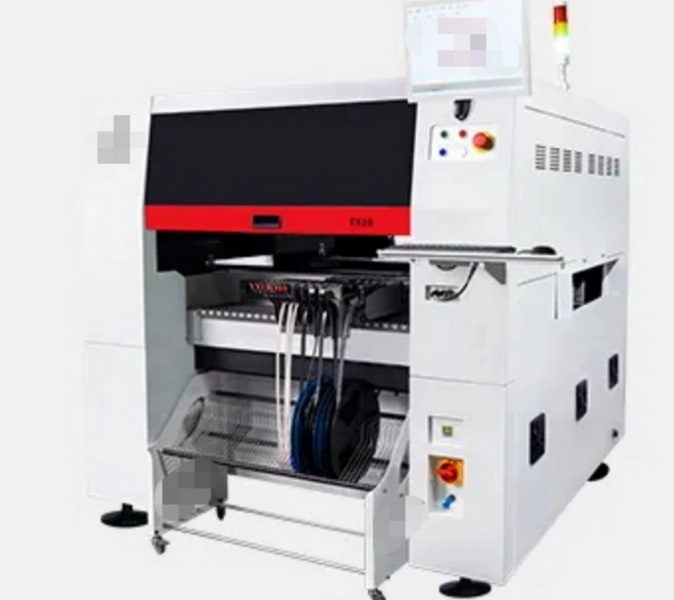
Sensors and cameras in SMT Accessories provide essential feedback loops, but fingerprints, flux vapor, or misalignment render them unreliable, triggering phantom stops or undetected defects. Loader edge sensors, fiducial cameras, and co-planarity detectors are particularly prone to drift in dusty or humid plants.
Cycle diagnostics through machine software to log response times; erratic outputs flag dirty lenses or loose mounts. For vision systems, compare pre/post-clean images—blurry fiducials or low-contrast components confirm contamination.
- Optical Cleaning: Micro-fiber swabs with 99% IPA for lenses; avoid tissue paper that sheds particles on SMT Accessories surfaces.
- Mechanical Checks: Tighten mounts, reseat connectors, and test continuity on wiring harnesses to rule out intermittent faults.
- Vision Re-Teaching: Re-profile fiducials and components under current lighting; update libraries for new reels to match SMT Accessories capabilities.
- Environmental Controls: Install air curtains and dehumidifiers near sensitive SMT Accessories to cut contamination by 80%.
Conveyor belts and motors form the transport backbone of SMT Accessories, where stretch, slippage, or overheating leads to board jams and axis errors. Belts harden after 6-12 months, motors fail from unlubricated bearings, amplifying vibration that damages upstream SMT Accessories.
Audible squeals or PCB misalignment signal belt issues; thermal cameras spot hot motors early. Measure belt tension (typically 10-20N) and track slip via encoder feedback.
- Belt Replacement: Swap at first crack or elongation >2%; align pulleys precisely during install.
- Motor Overhauls: Brushless types need bearing packs every 10,000 hours; monitor current draw for early warning.
- Guide and Rail Care: Clean and lube side guides weekly; shim for levelness to prevent PCB skew.
- Tensioning Best Practices: Use spring-loaded adjusters on critical SMT Accessories belts for auto-compensation.
Strategic stocking of SMT Accessories bridges maintenance and uptime—stockouts amplify minor issues into days-long outages. ABC analysis prioritizes high-failure items like 8/12mm feeders and universal nozzles.
- Critical Stock Kits: 2-week buffers of top 20 SMT Accessories per line, stored ESD-safe near machines.
- Digital Tracking: RFID/part-number logs predict needs from usage data.
- Supplier Partnerships: Highlywin offers next-day global dispatch for multi-brand SMT Accessories.
PM schedules transform reactive fixes into scheduled micro-downtimes: daily wipes for nozzles/feeders, weekly vacuum checks, monthly belt swaps. Train cross-shift teams on checklists, analyze MTBF data to refine intervals for your SMT Accessories mix.
Highlywin stocks OEM-compatible SMT Accessories worldwide, plus audits, kits, and 24/7 support to minimize your risks.
Proactive management of SMT Accessories—from vigilant cleaning and timely replacements to smart inventory—eliminates 80% of common failures, ensuring SMT lines hit OEE targets above 90%. Partner with Highlywin for seamless access to these vital components and expertise.
Worn sprockets, sensor contamination, and tension loss top the list; daily cleaning and cycle tracking prevent 90% of issues.
Ultrasonic cleans weekly, matched sizing, and vacuum monitoring double lifespan to 200k+ cycles.
Dust/flux buildup and vibration misalignment; IPA wipes and quarterly cal keep them reliable.
Monthly tension checks, annual swaps, and debris sweeps maintain transport accuracy.
Global stock, custom kits, and troubleshooting support cut downtime by 50% for clients.


