Your Trusted Partner from Prototyping to Mass Production, Email Us:info@highlymachine.com
Please Choose Your Language


Content Menu
● ICT Workflow Within SMT Machines Lines
● Variations of ICT Techniques for SMT Machines
● Key Advantages Driving ICT Adoption in SMT
● Essential ICT Hardware and Software Components
● Overcoming Common ICT Challenges in SMT Machines
● ICT Compared to Complementary SMT Tests
● Best Practices for ICT Deployment with SMT Machines
● Emerging Innovations in ICT for Next-Gen SMT Machines
● Real-World Highlywin ICT Case Studies
● FAQ
>> 1. What does ICT stand for in SMT?
>> 2. How does ICT fit into SMT machines production lines?
>> 3. What benefits does ICT provide for SMT machines users?
>> 4. Which ICT types suit different SMT machines applications?
>> 5. Why partner with Highlywin for SMT machines and ICT?
In the dynamic realm of Surface Mount Technology (SMT), ICT stands for In-Circuit Testing, a pivotal automated process that verifies the electrical integrity and functionality of printed circuit boards (PCBs) assembled using advanced SMT machines. As Highlywin, a premier supplier of SMT machines, AI equipment, peripherals, and full-spectrum SMT services including spare parts sales, we empower global clients with comprehensive one-stop SMT solutions that seamlessly incorporate ICT for unmatched quality and efficiency. This in-depth exploration delves into ICT's fundamentals, applications, integration with SMT machines, and future potential, underscoring its indispensable role in modern electronics manufacturing.

ICT, or In-Circuit Testing, emerged as a response to the complexities of high-density PCB assembly in SMT machines environments, where manual checks prove inadequate. It employs specialized test fixtures equipped with spring-loaded probes—often called bed-of-nails—to make electrical contact with designated test points on the PCB, measuring parameters like resistance, capacitance, voltage, and current. This method excels in detecting assembly defects introduced during SMT machines operations, such as solder bridges, open joints, missing components, or incorrect values, ensuring boards function as intended before final assembly.
In SMT machines production lines, ICT typically occurs post-reflow soldering, after components have been precisely placed by high-speed pick-and-place SMT machines. The process begins with loading the PCB into a custom fixture aligned with the board's netlist, derived from design files like Gerber data. Automated test equipment (ATE) then applies stimuli—DC voltages, digital patterns, or analog signals—to isolated circuits, comparing responses against golden board standards. Faults are isolated to specific nets or pins with pinpoint accuracy, often displaying results on intuitive GUIs that highlight issues for operators. Highlywin's ICT systems synchronize perfectly with our SMT machines, enabling real-time data exchange to fine-tune upstream processes like stencil printing and feeder calibration.
The precision of ICT stems from its ability to test in-circuit, meaning components remain powered and interconnected, mimicking real-world conditions unlike isolated part testing. For instance, it verifies polarity on diodes and transistors placed by SMT machines, detects wrong-way capacitors, and confirms programmable logic devices (PLDs) are correctly installed. In high-volume SMT machines runs, this translates to test times as low as 30-60 seconds per board, supporting throughputs exceeding 10,000 units per shift while maintaining fault coverage above 95%.
Integrating ICT into SMT machines workflows demands meticulous planning from PCB design through production. Designers must allocate sufficient test points—ideally 20-30 per square inch—for probe access, avoiding dense BGA areas handled by specialized techniques. Once designed, Highlywin fabricates custom fixtures using CNC machining for pogo-pin arrays, ensuring <1 mil alignment tolerances critical for fine-pitch SMT machines components like 01005 resistors.
During operation, SMT machines sequence—solder paste deposition via screen printers, component placement by multi-head SMT machines, reflow ovens, and conveyor transfer to ICT stations—feeds boards automatically. ICT software, programmed via CAD netlists, executes vector-based tests for digital ICs and parametric sweeps for passives, logging data to manufacturing execution systems (MES). If faults occur, bad boards divert to rework stations equipped with tools for SMT machines defect correction, such as hot air stations or selective soldering irons. Corrective actions loop back, adjusting SMT machines parameters like placement force or reflow profiles to prevent recurrence.
Highlywin enhances this with AI-driven analytics, where ICT data from thousands of SMT machines-produced boards trains machine learning models to predict yield drops, preemptively optimizing nozzle changes or vision system calibrations. This closed-loop intelligence minimizes downtime, boosts first-pass yields to 99.5%, and slashes scrap rates, delivering ROI within months for our global clients.
ICT manifests in diverse forms tailored to SMT machines complexity levels. Bed-of-nails testers dominate high-volume lines, with fixed probes contacting hundreds of points simultaneously for ultra-fast testing. Manufacturing Defect Analyzers (MDA), a subset, prioritize basic opens/shorts checks, ideal for cost-sensitive consumer boards from entry-level SMT machines. Full ICT expands to guided probe diagnostics, where operators use handheld probes for interactive fault chasing on complex assemblies.
Flying probe ICT offers fixtureless flexibility, employing movable robotic probes for prototyping or low-volume SMT machines runs, reducing setup costs by 70%. Boundary-scan ICT leverages IEEE 1149.1 JTAG protocols embedded in modern ICs, enabling software-controlled testing of inaccessible nodes like under-BGA solder balls common in advanced SMT machines. Functional ICT pushes further, powering entire board sections to simulate operation, verifying interactions between SMT machines-placed MCUs, memory, and sensors.
Hybrid systems combine these, such as MDA with boundary-scan for mid-range SMT machines, achieving comprehensive coverage without excessive fixturing. Highlywin portfolios span all variants, with modular ICT platforms that scale from benchtop units for R&D to inline systems for 100k+ UPH SMT machines factories.
The paramount advantage of ICT in SMT machines ecosystems is fault localization precision, identifying defects to individual pins amid millions of joints, far surpassing visual AOI limits. This accelerates debug, cutting mean time to repair (MTTR) by 80% and enabling targeted rework that preserves valuable components. Economically, ICT averts field failures costing 10-100x more than in-factory fixes, safeguarding brand reputation for Highlywin clients in automotive, telecom, and medical sectors.
High test throughput aligns seamlessly with relentless SMT machines paces, processing dense boards with 0201 passives and QFNs in seconds. Parametric accuracy—measuring to 0.1% on resistors, 1pF on capacitors—ensures compliance with specs, vital for high-reliability applications. Moreover, ICT generates rich datasets fueling statistical process control (SPC), correlating defects to SMT machines variables like humidity or paste viscosity for continuous improvement.
Environmentally, reduced rework lowers energy consumption and waste, aligning with sustainability goals. For Highlywin users, ICT integration amplifies our one-stop SMT solutions, bundling services like firmware updates and spare probes to sustain peak performance.
Core ICT hardware includes the test head with driver/sensor cards, fixture interface, and power supplies calibrated for SMT machines voltages (3.3V to 48V). Probes endure 10 million cycles, with gold-plated tips minimizing contact resistance. Modern units boast 8,192 channels, supporting double-sided testing via clamshell fixtures.
Software ecosystems feature netlist compilers, test generators, and debug tools with 3D fault visualization. Vectorless testing algorithms detect opens without golden boards, while AI modules auto-classify faults from SMT machines trends. Highlywin's proprietary software links ICT to ERP systems, automating spare parts orders for probes or driver boards.
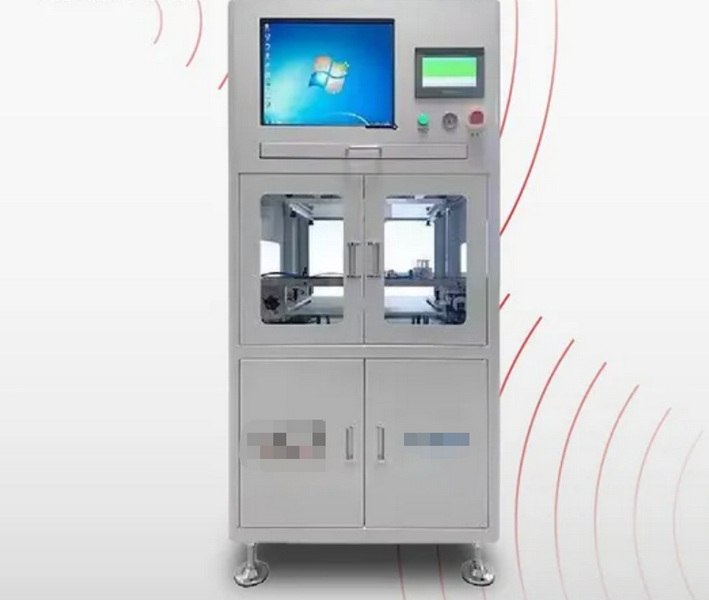
Fixture costs and lead times challenge high-mix SMT machines, addressed by universal grids and rapid prototyping services from Highlywin. Test escapes on high-speed signals prompt vectorless and MDT enhancements. Programming dense boards consumes hours; automated tools from Gerber-to-test in minutes streamline this.
Mechanical wear from SMT machines vibrations necessitates predictive maintenance via probe cycle counters. Highlywin's remote IoT monitoring flags issues proactively, dispatching spares globally.
While ICT dominates electrical testing, AOI catches pre-reflow visuals, X-ray inspects hidden voids, and functional tests validate systems. ICT's strength lies in in-circuit granularity, complementing others in layered strategies.
Begin with DFM analysis ensuring testability, select ICT type per volume, and validate with known-good boards. Train operators on fault protocols, integrate with SMT machines MES, and audit data quarterly. Highlywin turnkey services handle all, from fixture design to validation.
AI predicts faults from SMT machines telemetry, wireless probes enable flex-circuit testing, and 5G-cloud analytics enable global fleet optimization. Quantum-inspired sensors promise sub-micron accuracy. Highlywin pioneers these, future-proofing client SMT machines investments.
An EV maker using Highlywin SMT machines halved defects via ICT, scaling to 200k boards/month. A 5G module producer cut test escapes 65% with flying-probe ICT. These validate ICT's transformative impact.
ICT remains the gold standard for ensuring SMT machines deliver defect-free PCBs, blending precision testing with actionable insights for superior yields and reliability. Highlywin's integrated SMT machines, ICT systems, services, and spares form the ultimate one-stop ecosystem, propelling global manufacturing excellence. Adopt ICT today to future-proof your operations.
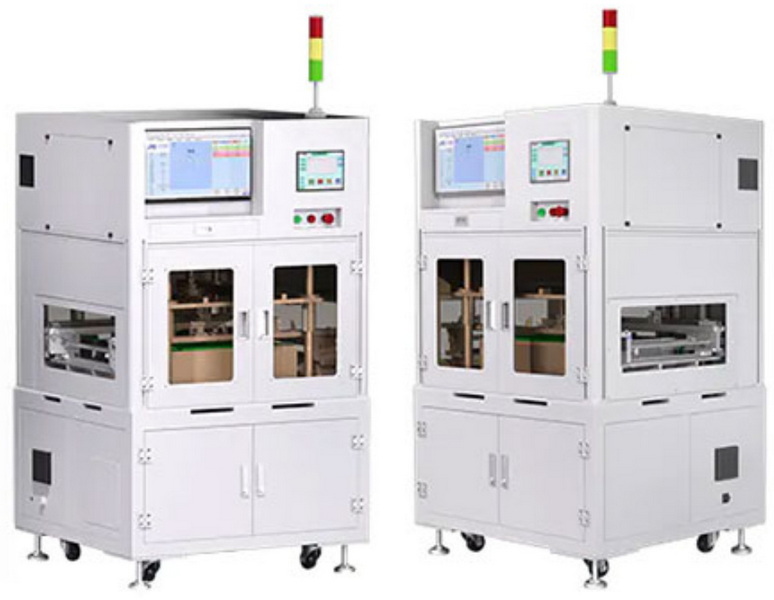
ICT stands for In-Circuit Testing, an automated electrical verification process for PCBs assembled by SMT machines, detecting defects like opens, shorts, and wrong components.
ICT stations follow reflow in SMT machines sequences, using fixtures to probe and test boards, feeding data back to optimize placement and soldering for higher yields.
ICT delivers precise fault isolation, rapid throughput, cost reductions via less rework, and data-driven improvements, elevating SMT machines efficiency.
Bed-of-nails for volume, flying probe for prototypes, boundary-scan for dense BGAs—all available via Highlywin for versatile SMT machines needs.
Highlywin offers complete SMT machines, ICT integration, global services, and spares in one-stop solutions, ensuring seamless, high-performance production.


