Your Trusted Partner from Prototyping to Mass Production, Email Us:info@highlymachine.com
Please Choose Your Language


Views: 222 Author: Ann Publish Time: 2025-12-12 Origin: Site


Content Menu
● What Is an SMT Pick And Place Machine?
>> Key features of SMT Pick And Place Machines include:
● Consistency and Quality Control
● Cost Considerations and Return on Investment
● Environmental and Energy Efficiency
● Flexibility in Manufacturing
● The Evolution of SMT Automation
● Choosing the Right SMT Pick And Place Machine
● Why Highlywin's One-Stop SMT Solution Matters
● FAQ
>> 1. What does an SMT Pick And Place Machine do?
>> 2. Is manual assembly still practical for production?
>> 3. How much does an SMT Pick And Place Machine cost?
>> 4. What maintenance does an SMT Pick And Place Machine require?
>> 5. How does automation improve overall product quality?
In modern electronics manufacturing, efficiency, accuracy, and reliability define success. With the growing complexity and miniaturization of electronic devices, manufacturers are under constant pressure to improve production speed while maintaining precision. This challenge has made automation an essential factor in surface mount technology (SMT) production lines. Among the many automation tools available, the SMT Pick And Place Machine plays a pivotal role by increasing throughput, reducing errors, and ensuring consistent quality.
At Highlywin, we provide global customers with one-stop SMT solutions, including SMT/AI equipment, peripheral devices, spare parts, and comprehensive technical support. This article explores how the SMT Pick And Place Machine compares with manual assembly, analyzing key parameters such as speed, precision, cost, and long-term reliability to determine which method leads to true manufacturing efficiency.

An SMT Pick And Place Machine is an automated assembly device that accurately positions electronic components on printed circuit boards (PCBs). It uses a combination of robotic arms, vacuum nozzles, and computer-controlled vision systems to pick components from feeders and place them precisely onto predetermined board locations before the soldering process.
These machines are capable of placing a wide range of components—from micro-sized resistors to large integrated circuits—with impressive speed and repeatability. Depending on the model, production capacity can exceed 100,000 components per hour (CPH), a level unattainable with manual methods.
- Automated vision alignment with camera inspection.
- Multi-head placement for parallel component mounting.
- Accurate coordinates and programmable positioning systems.
- Advanced feeder systems that reduce downtime during production.
- Intuitive software interfaces for programming and error correction.
Such precision allows SMT technology to dominate industries like consumer electronics, telecommunications, automotive modules, and aerospace systems.
Manual assembly involves human operators physically placing components onto a PCB using tweezers, microscopes, and soldering tools. It was the standard approach before automation became widely accessible. Today, manual assembly remains relevant for low-volume production, prototype development, and specialized repair work.
However, the manual process heavily depends on the operator's skill, eyesight, and coordination. Even with experienced technicians, fatigue, inconsistency, and limited speed can significantly affect yield and overall productivity. Manual assembly is also more sensitive to environmental conditions such as lighting quality and workstation ergonomics, which influence accuracy and efficiency.
Speed is one of the most obvious differences between the two methods. SMT Pick And Place Machines can operate continuously and perform identical tasks at immense speed without fatigue. A single high-speed line can place tens of thousands of components per hour, drastically increasing throughput and shortening production cycles.
In contrast, manual assembly is much slower. A skilled operator might place 1,000 to 1,500 components per hour, and that rate declines with time and complexity. For high-volume manufacturing, relying solely on human labor becomes impractical and economically unsustainable.
The time saved through automation allows manufacturers to accept larger orders, meet global demand, and maintain competitive pricing—all while ensuring consistent quality.
Precision determines product reliability. Even slight misplacement of components on dense PCBs can cause electrical shorts or incomplete connections. SMT Pick And Place Machines achieve placement accuracy typically within ±0.01 mm, ensuring flawless alignment between pads and components. This accuracy is achieved through integrated vision systems that automatically inspect placement and apply corrections in real time.
Manual assembly lacks this level of precision. Human error—whether due to hand tremors, visual misjudgment, or inconsistent pressure—can produce defects or rework. Over prolonged shifts, the chance of error grows significantly. While experienced workers can perform well on simple boards, machine precision is irreplaceable for complex or miniaturized circuits.
From a business perspective, labor efficiency is one of the strongest reasons to invest in automation. Once programmed, a single operator can manage multiple SMT Pick And Place Machines, overseeing reel changes and system monitoring rather than manual placement tasks. This efficiency drastically reduces the number of workers needed for large-scale production.
Manual assembly, however, requires several operators for each line to handle picking, placing, and inspecting components. Even if labor costs appear lower initially, the slow speed and higher error rate make manual assembly more expensive over time. Additionally, turnover, training, and quality control become recurring challenges.
In high-volume operations, the investment in an SMT Pick And Place Machine pays for itself quickly through increased output, reduced rework, and minimized dependency on manual labor.
Consistency is the backbone of quality. SMT Pick And Place Machines ensure repeatable and stable performance due to their automated control systems. Every component placed follows identical parameters for height, pressure, and alignment. Many systems integrate automated optical inspection (AOI) that immediately flags missing parts or deviations, allowing for rapid correction.
Manual assembly, though flexible, cannot guarantee identical outcomes—particularly across shifts or between different operators. Variations in assembly quality can lead to increased defect rates, higher inspection costs, and potential product recalls.
Automation ensures uniformity across every batch, improving both customer satisfaction and long-term reliability of the final product.
Although purchasing a new SMT Pick And Place Machine represents a significant capital investment, it is important to view it as a long-term productivity tool. The reduction in labor costs, fewer defects, and improved production speed lead to increased profitability. Machines can run 24/7 with minimal downtime, further maximizing efficiency.
Manual assembly may seem inexpensive to start, as it requires only tools and human labor. However, when scaling production, it becomes the costlier option. Increased manpower, longer assembly time, and lower yield add up quickly, making automation the more economical choice in almost every large-scale production scenario.
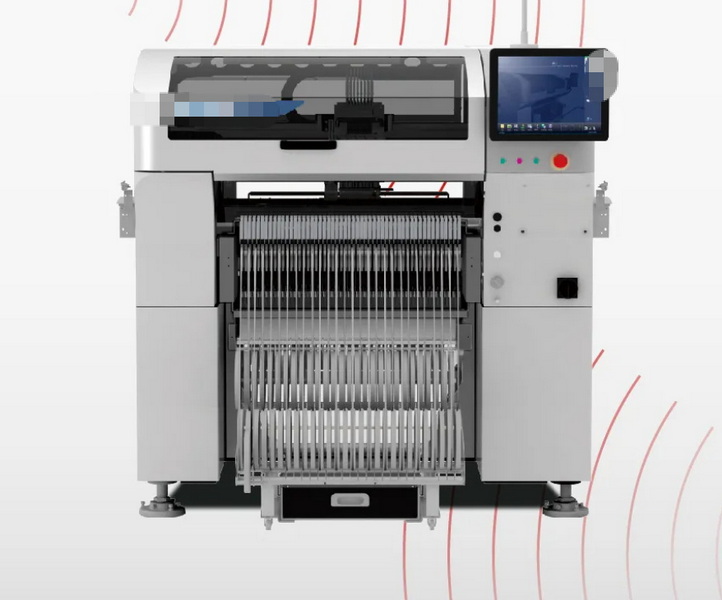
A typical Highlywin customer that transitioned from manual assembly to a semi-automated SMT line reported the following within the first three months:
- Production output increased by more than 800%.
- Defect rates dropped from 2.4% to 0.2%.
- Staffing requirements decreased by over 70%, freeing technicians to focus on quality assurance and testing.
Modern SMT Pick And Place Machines incorporate energy-efficient servo systems and power management technologies. Machines can automatically adjust motor operation based on workload, minimizing unnecessary power consumption. Intelligent standby modes further reduce electricity use during idle periods.
On the other hand, manual assembly involves longer working hours, more lighting, and constant human activity, resulting in increased overall energy use. Automated systems thus contribute not only to production efficiency but also to a more sustainable manufacturing process.
Flexibility in product changeover is another important advantage. Advanced SMT lines allow for quick software-based adjustments, enabling manufacturers to switch production between different boards or products with minimal downtime. Highlywin SMT Pick And Place Machines are designed for such agility, allowing short production runs or frequent design updates without retooling the entire line.
Manual assembly offers more flexibility for entirely custom projects or prototypes, but scaling those prototypes into mass production quickly reveals the limitations of human-dependent precision. With ever-shorter product lifecycles in consumer electronics, the ability to reconfigure lines quickly gives automation a decisive advantage.
Modern SMT Pick And Place Machines are designed for reliability. Periodic preventive maintenance—such as cleaning nozzles, calibrating vision sensors, and updating control software—keeps them operating at peak efficiency. Many machines now include built-in diagnostic systems that predict component wear and alert operators before a fault occurs.
In contrast, manual assembly depends entirely on the operator's performance and availability. Illness, turnover, or human fatigue can lead to unpredictable downtimes. Machines, when properly maintained, deliver predictable and stable performance for years, minimizing stoppages in production.
The evolution from manual assembly to automated SMT systems marks a fundamental transformation in the electronics industry. Early pick and place systems were slow, expensive, and limited in component handling capability. Today's SMT Pick And Place Machines are equipped with AI-assisted vision, multi-nozzle configurations, feeder optimization algorithms, and line management software that maximizes throughput across the entire factory floor.
Automation extends beyond placement as well — integrating solder paste printers, reflow ovens, AOI systems, and conveyors into an interconnected smart line. Highlywin provides all these subsystems, ensuring that customers can implement a complete one-stop SMT production environment.
This integration minimizes human intervention, improves traceability through barcode and MES synchronization, and enables predictive quality control. As Industry 4.0 continues to grow, such connected automation systems will become the foundation of next-generation electronics production.
Selecting the right SMT Pick And Place Machine depends on production needs, component variety, and desired throughput. Here are several factors to consider:
1. Placement Speed (CPH) – Match the machine's placement speed with the expected production volume.
2. Component Compatibility – Ensure it supports all component sizes and types, from 0201 chips to large BGA packages.
3. Feeder Capacity – Larger capacity shortens setup time and reduces feeder swaps during production.
4. Vision System – Advanced cameras and lighting ensure accurate placement for micro components.
5. Software Interface – Look for intuitive programming tools that simplify setup and allow offline preparation.
6. After-Sales Support – Reliable technical service and readily available spare parts reduce downtime.
Highlywin offers a complete range of SMT equipment, from entry-level models ideal for startups to high-speed modular machines designed for mass production lines. Each comes backed by detailed training, installation support, and ongoing service assistance.
When investing in SMT automation, equipment alone is not enough. Proper integration, training, and support define long-term success. Highlywin's one-stop SMT solution covers every step of implementation — consulting, equipment selection, factory layout design, installation, calibration, programming, spare parts, and technical guidance.
Whether your company is establishing its first SMT line or upgrading existing infrastructure, Highlywin's engineers bring extensive experience to help you achieve higher efficiency, speed, and reliability across your entire production ecosystem.
Comparing SMT Pick And Place Machines with manual assembly reveals a clear conclusion: automation delivers superior speed, precision, consistency, and profitability. While manual assembly retains value for prototypes and small-batch projects, it cannot compete with the scale and dependability required for modern electronics manufacturing.
The SMT Pick And Place Machine represents not only a tool but a strategic investment in smarter, faster, and leaner production. By adopting advanced SMT automation and reliable support from Highlywin, manufacturers can ensure world-class quality and meet the growing global demand for compact, high-performance electronic products.
Embracing automation today positions your business for the future of electronics — one built on precision, productivity, and innovation.
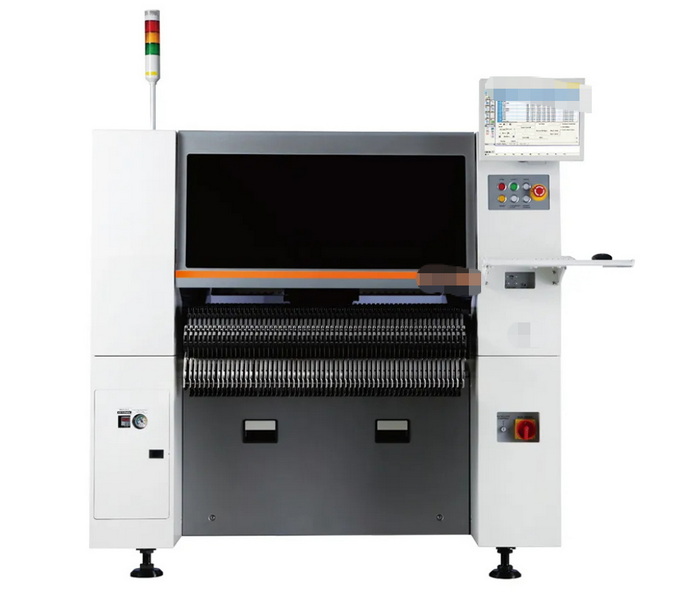
An SMT Pick And Place Machine automatically selects, positions, and mounts electronic components on PCBs using robotic precision and camera-guided alignment systems.
Manual assembly is suitable for prototypes or low-volume runs, but it cannot meet the demands of large-scale or high-speed manufacturing due to limited speed and operator fatigue.
Costs vary widely depending on model and speed. Entry-level models may start around $20,000, while high-speed multi-head systems exceed $200,000 but deliver substantially higher throughput and ROI.
Regular cleaning of nozzles, calibration checks, software updates, and replacement of worn parts are recommended. Highlywin offers global maintenance and spare part supply to ensure minimal downtime.
Automation minimizes placement errors, ensures consistent solder joint alignment, and reduces the influence of human variability. The result is improved product uniformity, fewer defects, and longer device reliability.


