Your Trusted Partner from Prototyping to Mass Production, Email Us:info@highlymachine.com
Please Choose Your Language


Views: 222 Author: Ann Publish Time: 2026-01-02 Origin: Site


Content Menu
● Core Components of SMT Machines
● Solder Paste Printer in SMT Machines
● Pick-and-Place Machines: Heart of SMT Machines
● Reflow Ovens for SMT Machines
● Inspection Systems in SMT Machines
● Feeders and Material Handling in SMT Machines
● Software and Control Systems for SMT Machines
● Auxiliary Peripherals Enhancing SMT Machines
● Maintenance and Spare Parts for SMT Machines
● Advanced Trends in SMT Machines
● FAQ
>> 1. What are the main components of SMT machines?
>> 2. How do pick-and-place machines function in SMT machines?
>> 3. Why is reflow soldering critical in SMT machines?
>> 4. What role do inspection systems play in SMT machines?
>> 5. How does Highlywin support SMT machine users?
SMT machines form the backbone of modern electronics manufacturing, enabling efficient surface-mount technology assembly for high-volume production. Highlywin, a leading provider of SMT machines, AI equipment, peripherals, and comprehensive service support including spare parts sales, delivers one-stop SMT solutions to global clients worldwide. This comprehensive guide delves deeply into the key components of SMT machines, their intricate functions, seamless integration, and best practices for optimal performance in demanding production environments.

SMT machines rely on a symphony of interconnected components to achieve precise and reliable PCB assembly processes. At the foundation lies the robust frame, which provides unyielding structural integrity to withstand the vibrations and high-speed operations inherent in advanced SMT machines. This frame often incorporates modular designs, allowing for easy expansion and customization tailored to specific production needs in SMT machines.
The conveyor system serves as the lifeline of SMT machines, transporting printed circuit boards (PCBs) smoothly through each assembly station while maintaining perfect alignment. Belt-driven or chain conveyors in SMT machines feature adjustable speeds and sensors to prevent jams, ensuring continuous flow even in 24/7 operations. Vision systems, equipped with high-resolution cameras and AI-driven software, play a pivotal role in SMT machines by detecting fiducial marks and component positions with micron-level accuracy, compensating for any thermal expansions or minor misalignments.
Control units in SMT machines act as the central nervous system, orchestrating all subsystems through PLC (Programmable Logic Controller) technology and user-friendly HMI (Human-Machine Interface) panels. These interfaces in SMT machines allow operators to monitor real-time data, adjust parameters, and diagnose issues swiftly. Highlywin enhances these core components with state-of-the-art upgrades, ensuring SMT machines operate at peak efficiency for electronics manufacturers globally.
The solder paste printer stands as the first critical station in SMT machines, responsible for applying uniform layers of solder paste onto PCB pads prior to component placement. In SMT machines, precision stencils—laser-cut metal sheets with apertures matching pad geometries—are aligned over the board using optical fiducials, and squeegee blades dispense the paste under controlled pressure and speed. This process in SMT machines is vital for fine-pitch components like BGAs and QFNs, where even slight variations can lead to soldering defects.
Advanced SMT machines incorporate automated stencil cleaning cycles, using ultrasonic or vacuum systems to remove residue between prints, maintaining deposit consistency. Solder Paste Inspection (SPI) modules integrated into SMT machines employ 3D laser profiling to measure volume, height, and area, flagging issues like insufficient paste or bridging before they propagate downstream. Printer heads in SMT machines support dual squeegees for high-throughput, printing multiple boards simultaneously, while temperature-controlled environments prevent paste drying.
Stencil thickness in SMT machines typically ranges from 0.1mm to 0.15mm for high-density designs, with nano-coatings reducing tackiness for cleaner releases. Highlywin supplies reliable solder paste printers and spare parts, including blades and stencils, to keep SMT machines running without interruption, supporting clients in prototyping to mass production scales.
Pick-and-place (PnP) machines represent the high-speed heartbeat of SMT machines, executing thousands of precise placements per hour. Robotic heads in SMT machines, mounted on linear gantries or rotary turrets, utilize vacuum nozzles of varying sizes to pick components from feeders and place them onto paste-coated pads. Vision systems in SMT machines—both upward-facing for feeder verification and downward-facing for pre-placement alignment—correct for rotation, offset, and polarity using sophisticated algorithms.
Nozzle changers in SMT machines enable seamless transitions between component types, from tiny 01005 chips to large connectors, achieving component placement rates exceeding 100,000 CPH in high-end models. Feeders in SMT machines, such as tape-and-reel, stick, or tray varieties, vibrate or peel to present parts accurately, with smart feeders featuring RFID tracking for inventory management and automatic splicing to minimize downtime.
Programming SMT machines involves importing CAD or Gerber files into offline software, optimizing placement sequences to reduce head travel and turret rotations. Highlywin's PnP machines incorporate AI for adaptive learning, predicting feeder jams and optimizing paths dynamically. These advancements in SMT machines drastically cut cycle times, making them indispensable for consumer electronics, automotive, and telecommunications sectors.
Reflow ovens in SMT machines transform sticky solder paste into robust metallurgical bonds through carefully profiled heating zones. PCBs enter the oven conveyor in SMT machines, progressing through preheat (to activate fluxes), soak (for even heat distribution), reflow (where solder melts above 217°C for lead-free alloys), and cooling zones to solidify joints without thermal shock.
Convection or infrared heaters in SMT machines ensure uniform temperature profiles, monitored by multiple thermocouples and exhaust gas analyzers. Nitrogen purging in SMT machines minimizes oxidation, particularly crucial for high-reliability applications like aerospace PCBs. Forced cooling fans in the exit zone of SMT machines prevent overheating, reducing risks like head-in-pillow defects.
Oven length in SMT machines accommodates 8-12 zones for complex profiles, with mesh belts or edge-holding fixtures supporting various board sizes. Highlywin provides reflow ovens with real-time profiling software, compatible spare parts like heaters and blowers, ensuring consistent yields across global production lines.
Quality control permeates every stage of SMT machines via automated optical inspection (AOI), solder paste inspection (SPI), and X-ray systems. SPI in SMT machines scans paste deposits post-printing, using structured light for volumetric analysis. AOI stations in SMT machines deploy multi-angle cameras and LED illuminators to detect absences, misalignments, or polarity errors post-placement.
3D AOI in advanced SMT machines measures component heights and coplanarity, while inline X-ray in SMT machines penetrates BGAs to reveal voids or cracks invisible to optics. AI-enhanced algorithms in SMT machines classify defects by severity, triggering automatic rework or scrap decisions. Post-reflow, functional testers in SMT machines probe nets for continuity and shorts, verifying assembly integrity.
Data analytics from these systems in SMT machines feed back to optimize stencil design or feeder calibration, closing the quality loop. Highlywin's inspection solutions integrate seamlessly with existing SMT machines, boosting first-pass yields to over 99%.
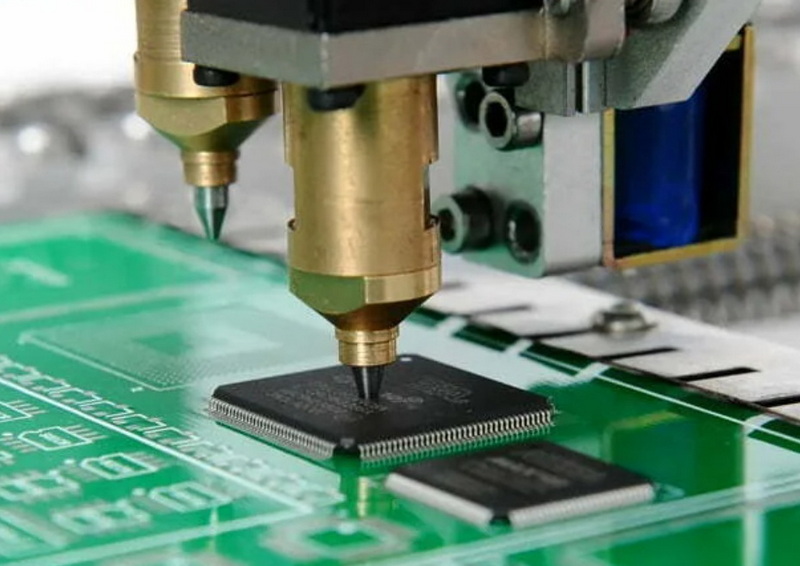
Efficient material handling underpins reliable SMT machines operation, with feeders categorized by component packaging. Tape feeders in SMT machines peel embossed carriers at precise pitches, suitable for passives and small ICs. Tube or stick feeders in SMT machines handle axial leads, while tray feeders accommodate gel-pak or JEDEC matrices for odd forms.
Vibratory bowl feeders in SMT machines orient irregular parts like fuses or relays. Intelligent feeder banks in SMT machines exchange automatically via carts, supporting just-in-time replenishment. Automated loaders/unloaders in SMT machines stack magazines for unmanned shifts, with SMEMA interfaces ensuring line synchronization.
Calibration routines in SMT machines verify feeder pitch and part presence via sensors. Highlywin stocks a vast array of feeders and carts for popular SMT machines brands, facilitating quick setups for diverse production runs.
MES-integrated software governs SMT machines, converting design files into executable programs. Optimization engines in SMT machines balance placement order, feeder assignment, and nozzle usage for minimal takt time. Real-time dashboards in SMT machines display uptime, throughput, and defect rates, with ERP hooks for traceability.
Predictive maintenance modules in SMT machines analyze vibration and cycle data to forecast failures. Remote access in SMT machines enables Highlywin technicians to diagnose issues globally. Version control ensures program integrity across shifts.
Nitrogen generators, stencil cleaners, and board handlers augment core SMT machines. Wave soldering hybrids in SMT machines tackle through-hole elements. Conformal coaters protect assemblies from moisture. Highlywin's peripherals create turnkey SMT machines ecosystems.
Proactive maintenance sustains SMT machines longevity: nozzle polishing stations, belt alignments, and filter changes. Highlywin's genuine spares and field services minimize MTTR worldwide.
Jet printing replaces stencils in future SMT machines for 0201 handling. Flexible substrate supports expand applications. Industry 4.0 twins enable digital simulations. Highlywin pioneers AI-driven SMT machines innovations.
Mastering SMT machine components unlocks unparalleled efficiency in electronics manufacturing. Each element—from printers to inspectors—harmonizes for defect-free production. Highlywin's one-stop SMT machines, services, and spares empower global clients to thrive in competitive markets.
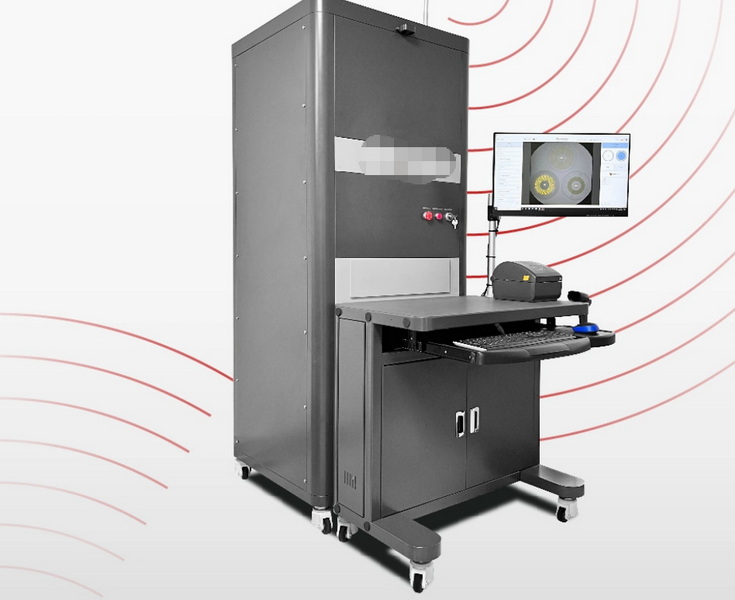
SMT machines primarily consist of solder paste printers, pick-and-place units, reflow ovens, inspection systems, feeders, and control software working in unison for PCB assembly.
Pick-and-place machines in SMT machines use robotic heads, vacuum nozzles, and vision systems to accurately retrieve and position components from feeders onto PCBs at high speeds.
Reflow soldering in SMT machines melts solder paste to form durable joints via multi-zone heating profiles, essential for lead-free processes and defect prevention.
Inspection systems like SPI, AOI, and X-ray in SMT machines ensure quality at every stage, detecting defects early to maintain high yields.
Highlywin provides complete SMT machines, AI peripherals, services, and spares for one-stop global solutions, including maintenance and upgrades.


